
Free
Start with Free Generations
Try your first design prompt on Virse credits. New users can generate up to 10 outputs, enough to see whether the phrasing and structure work before relying on it for a real project.
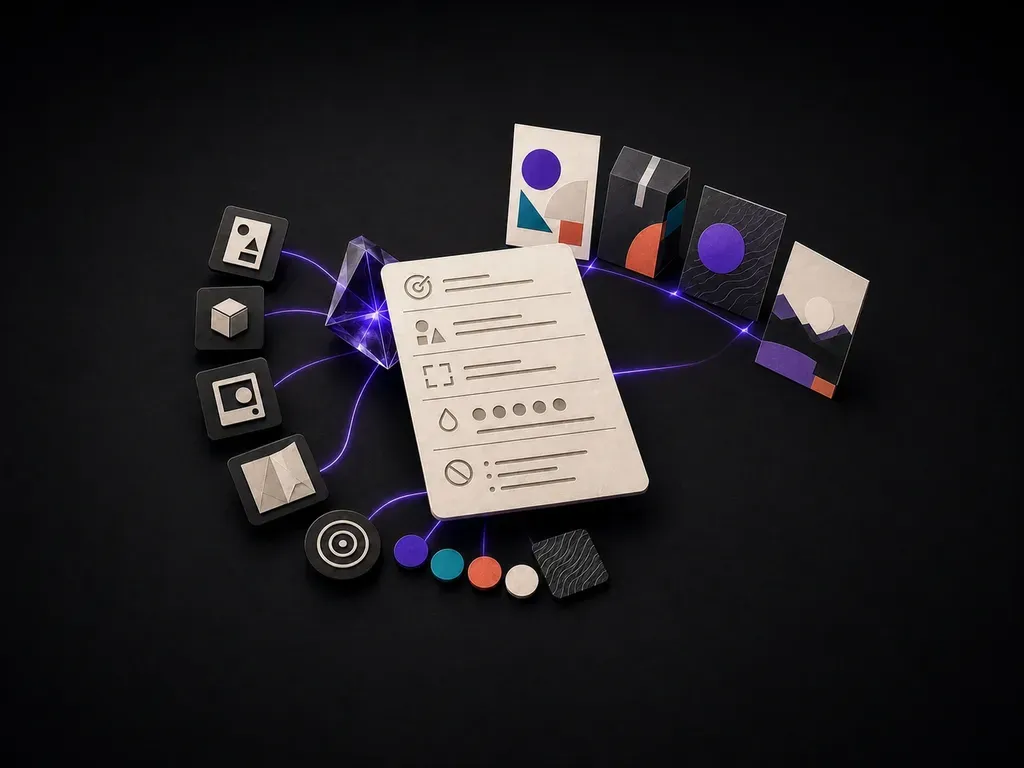
List your design goal, audience, format, brand colours and text constraints to generate a structured prompt that image models can follow accurately, starting on free Virse credits.
A design prompt generator's job is holding down every practical constraint of a design task at once, format, size, brand colour, required content, in one paragraph an image model won't quietly drop half of. In Virse you list the constraints, generate a phrasing, and check the result against the brief before you trust it—built around three core workflow advantages:
· Locks every brief constraint: Packs subject, medium, composition, hex palette, lighting, and negative space into one structured prompt.
· Model-ready phrasing: Translates vague stakeholder feedback into concrete visual descriptors image models actually obey.
· Prompt + visual verification: Test the generated prompt directly on the Virse canvas to confirm it hits every requirement.
A good design prompt has to hold purpose, audience and constraints together in language an image model can actually parse. Getting the structure right is what makes that possible.
Try your first design prompt on Virse credits. New users can generate up to 10 outputs, enough to see whether the phrasing and structure work before relying on it for a real project.
Virse brings 40+ AI models into one workspace with unlimited usage on paid plans so you can test the same prompt across multiple models.
Your notes, generated prompts and test images stay together on an infinite canvas. Virse keeps the brief in context, so a later revision builds on the same prompt rather than starting over.
Compare casual one-line prompts against constraint-locked design prompts on the Virse canvas.
Ad-Hoc One-Line Prompts
Virse Design Prompt Generator
Write out the design type, the goal, the audience, the content it needs to carry, the size and any constraints.
Pick social and marketing, print and packaging, or a short and portable version, matching where the prompt will actually be used.
Run it and get a structured, ready-to-paste paragraph back, organised so an image model can parse purpose, style and constraints clearly.
Run the prompt through an image model on the same canvas, then adjust the wording where the result drifted from what you meant.
List your deliverable type, subject, brand palette, lighting style, and where copy needs to sit:
· Hero banner with copy space: Goal: 16:9 website hero for ceramic cookware. Subject: sage Dutch oven on oak table. Constraint: empty left 40% for white headline.
· Consistent 3D icon prompt recipe: Goal: SaaS security icon set. Style: matte clay 3D, isometric 30-degree angle, deep navy #0F172A & mint #34D399, pure white ground.
· Editorial product campaign shot: Goal: 4:5 Instagram ad for amber glass perfume. Lighting: harsh late-afternoon Mediterranean sun across travertine stone.
People who need a design brief that an image model can actually follow.
Turn a campaign idea into a prompt structured for consistent social or ad visuals.
Write clearer prompts for exploration work without hand-tuning wording by trial and error.
Generate a usable design prompt without design or prompting experience.
Write clearer prompts for personal design projects across whatever AI tool they use.
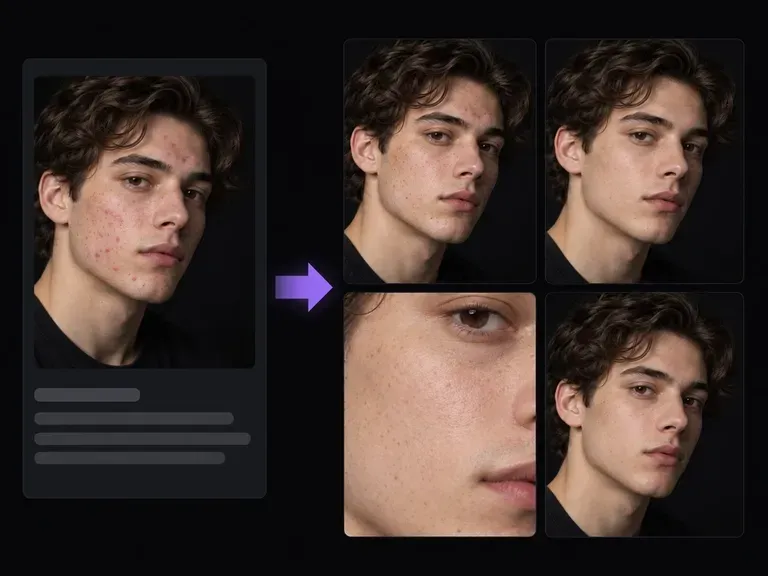
Upload a portrait or headshot and describe which temporary marks to clear and which permanent features to preserve. This AI blemish remover softens acne, spots, stray flyaways, and skin glare while keeping natural pore micro-texture and freckles intact.
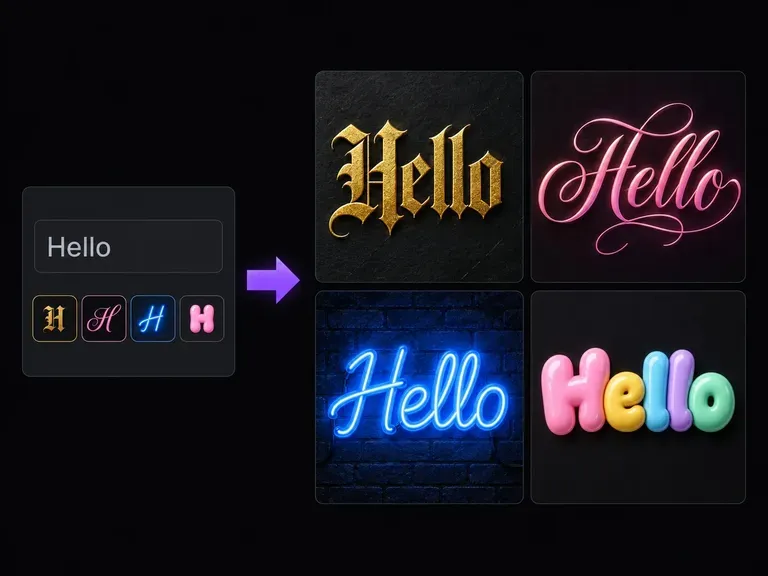
Turn a single display word or short two-word title into high-resolution lettering art. This fancy text generator renders 3D liquid chrome, carved stone, glowing neon, warm wood grain, and hand-brushed script graphics for posters, book covers, and social headers.
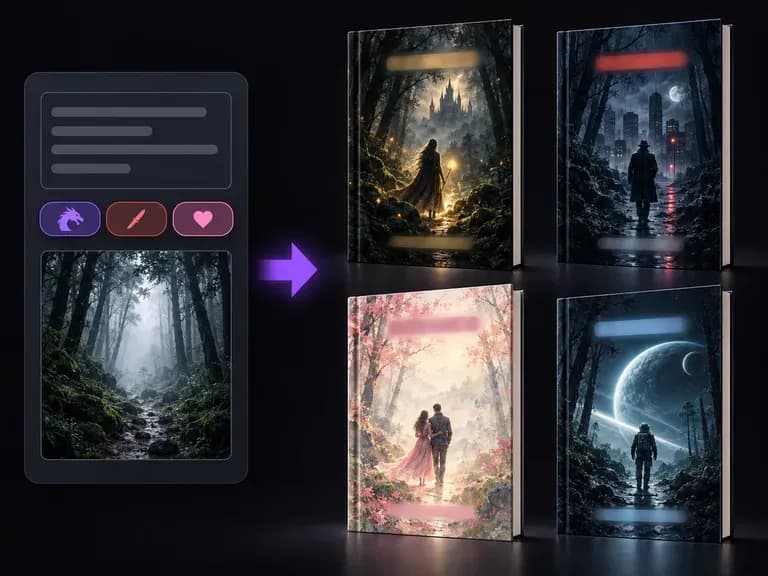
Enter your title, author name, genre, and mood to generate original 2D front-cover concepts. Unlike a 3D mockup wrapper, this book cover generator creates front cover artwork, focal imagery, and title hierarchy for Kindle, Wattpad, Audible, and KDP 6x9 editions.
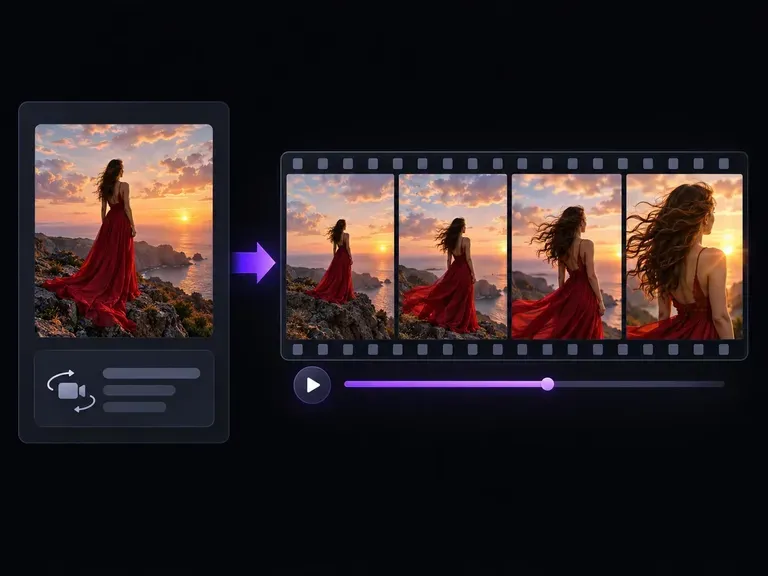
Bring static portraits, product shots, and concept art to life with our AI photo to video generator. Upload a single image, describe how the subject and camera should move, and generate a short video clip with dimensional parallax and atmospheric motion.
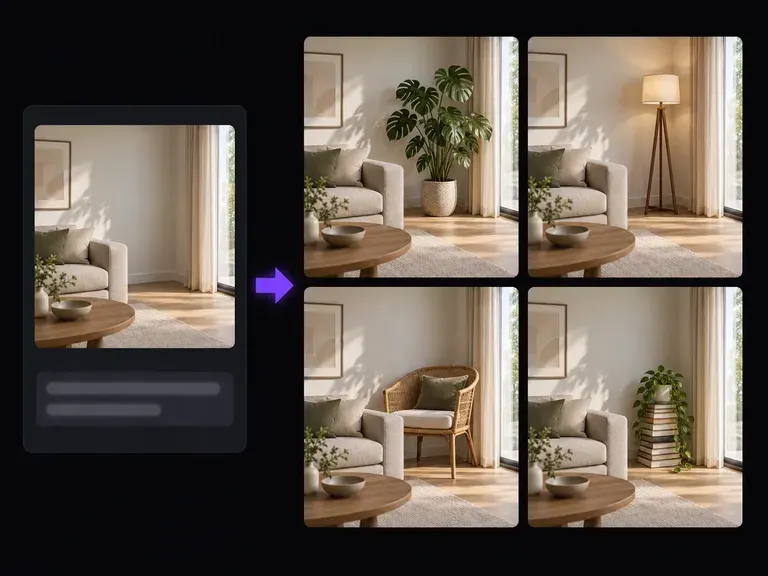
Test a leafy plant on a desk corner, a new sofa cushion, or a different tabletop material. Upload your photo and state both what to change and its position in frame. Virse runs generative fill from your prompt to evaluate the composition.
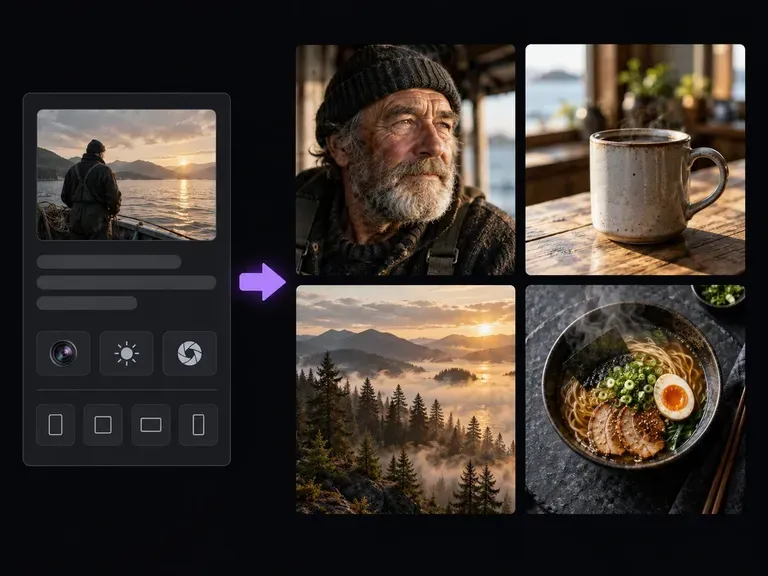
Direct photo-style concepts with our realistic AI image generator by specifying camera focal length, directional lighting, and physical surface materials. Render editorial portraits with natural skin pores, tabletop product still lifes, and sunlit interior scenes.
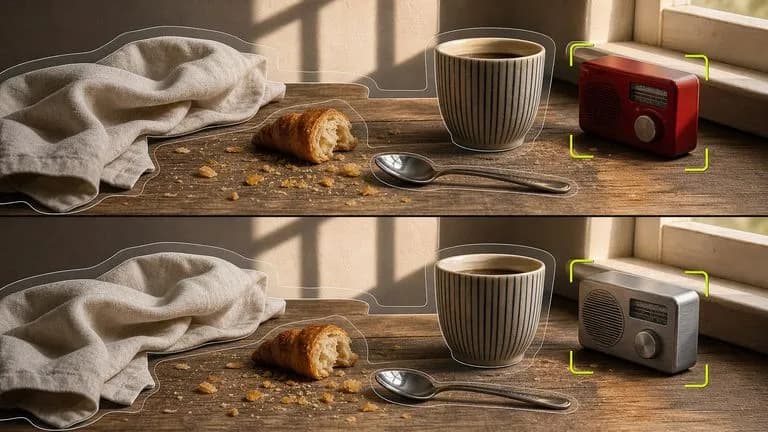
Black Forest Labs' editing models, FLUX Kontext Pro and Kontext Max, built to apply one described change while the rest of the frame survives untouched.

ByteDance's newest Seedream generation, available as Seedream 5.0 Pro and Seedream V5 Lite, both taking the same written brief.
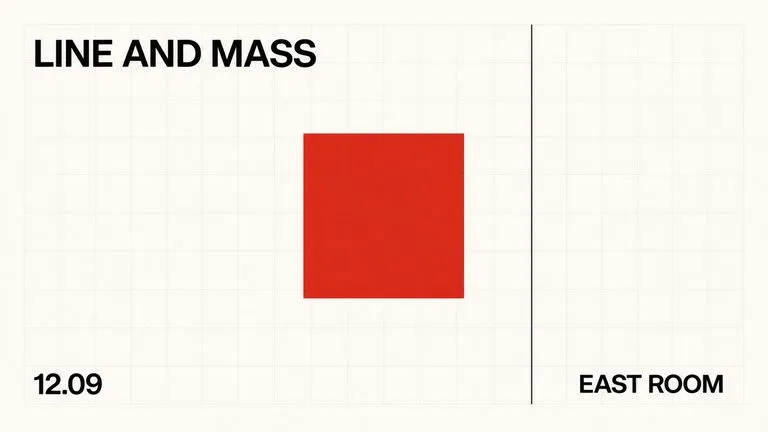
A text-to-image foundation model trained from scratch around layout, with bounding-box placement, hex colour conditioning, and native 2K output.
Create and edit stills with FLUX 3 Image at 1K, 2K or 4K. Switch to FLUX 3 Video for 5–20-second scenes at 720P or 1080P with native audio, on the same Virse canvas.
Generate and edit images with Nano Banana 2.1 in Virse. Choose 1K, 2K or 4K output and use up to 14 reference images to guide the subject, setting and materials.
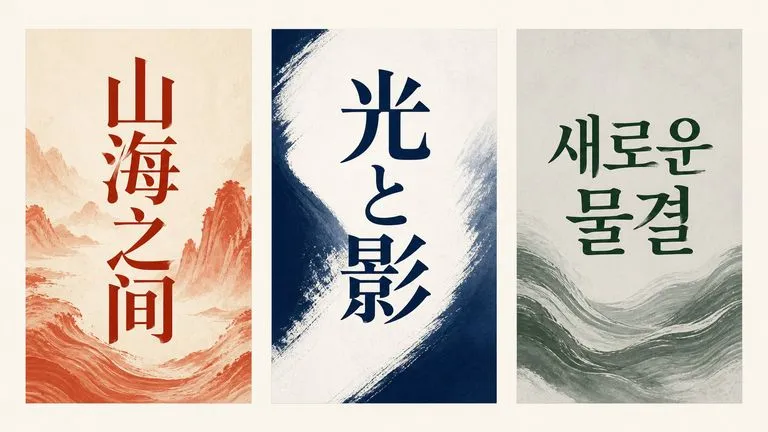
Alibaba's Qwen Image 3.0 Pro renders type as language across a dozen scripts, holding legibility down to ten pixels in dense layouts.
List the format, colours and constraints your design actually has to meet, and get a prompt that keeps track of all of them at once.