
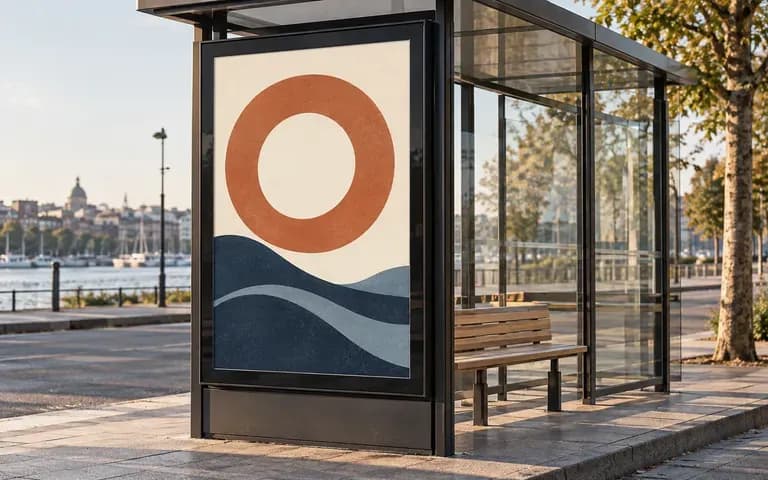
Shelter display
Focus on the portrait panel
Provide the finished portrait ad and a shelter reference. The resulting scene shows the design in the display area with its surrounding frame.
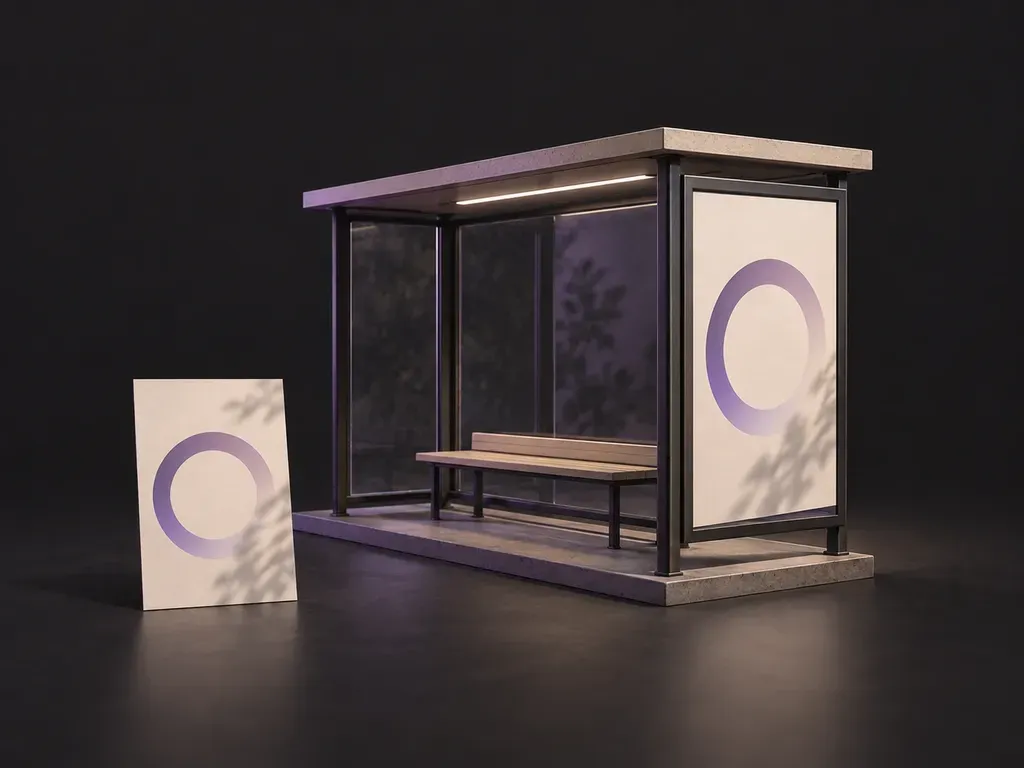
A shelter ad sits inside a frame on a busy street. Add your finished portrait artwork, shelter reference and lighting notes. Virse creates a bus shelter mockup for discussing the display and its surroundings.
A bus shelter mockup places finished portrait artwork in a shelter display panel. Virse uses your ad, shelter reference and lighting notes to create a static bus stop advertising preview for a campaign discussion.
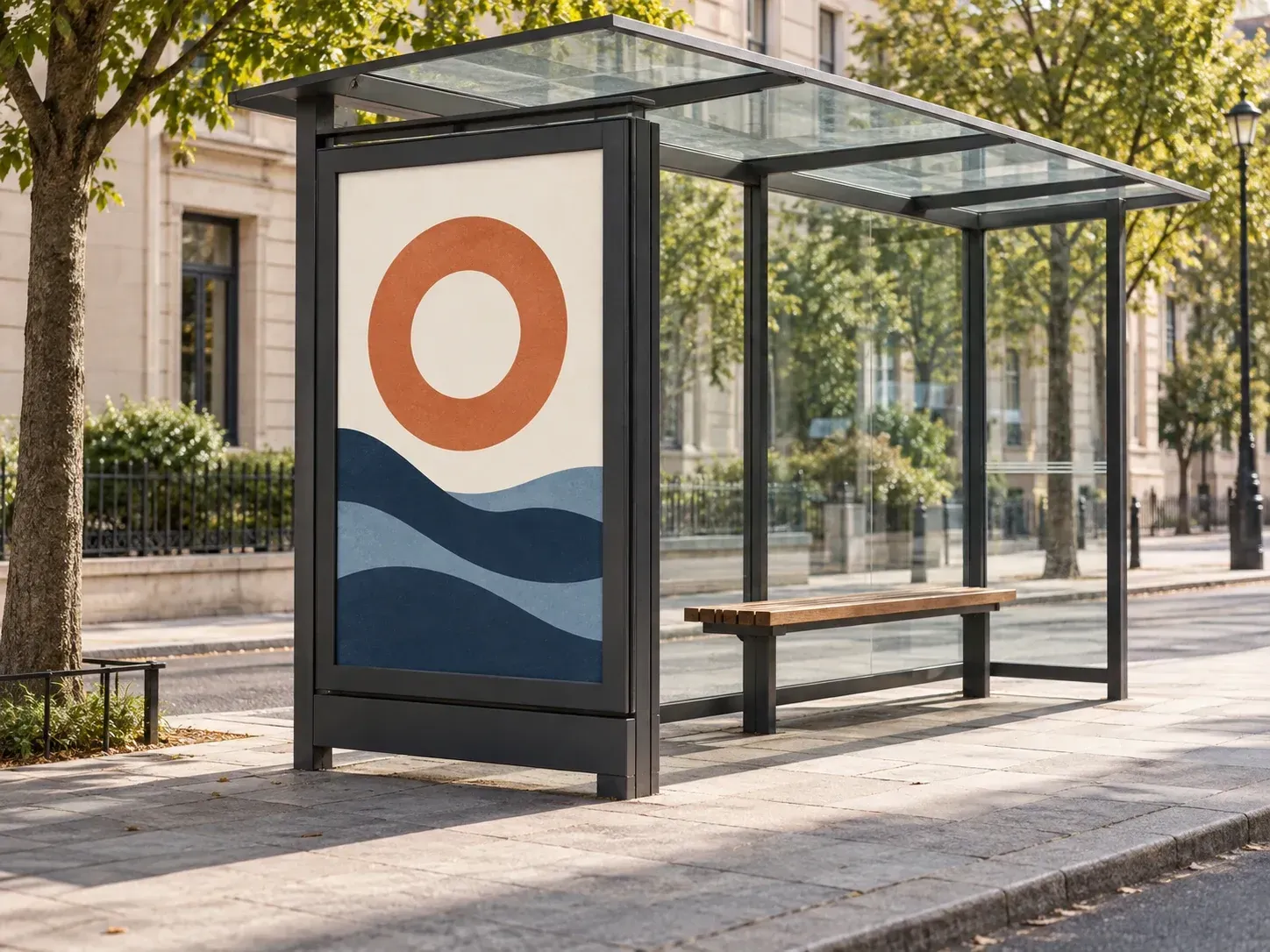
Keep the shelter in the picture so reviewers can judge the placement as a whole.
Provide the finished portrait ad and a shelter reference. The resulting scene shows the design in the display area with its surrounding frame.
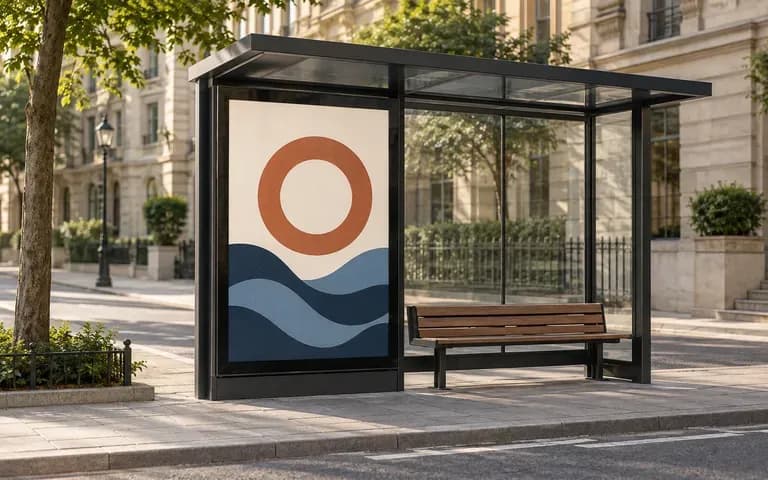
Describe the city setting and provide a reference for the approach to the shelter. The image gives the placement a context for a campaign presentation.
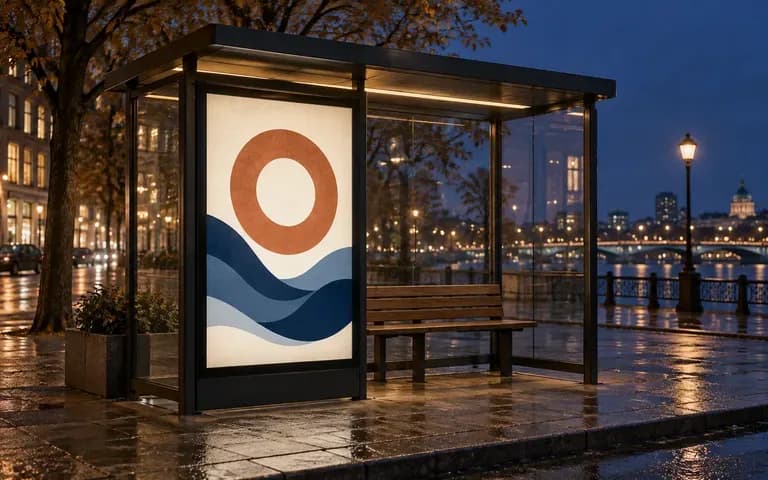
Use lighting notes to request a daytime panel or a backlit evening treatment. Inspect reflections and the visible artwork as part of the review.
Use completed vertical artwork with the headline, imagery and logo already arranged.
Add a shelter photo or reference. Describe the city surroundings, viewpoint and lightbox or daylight appearance.
Create a still image of the advertisement in the shelter display.
Check text, cropping, frame edges and reflections against your original artwork. Use the reviewed scene to explain the concept.
For teams working on a specific portrait placement at street level.
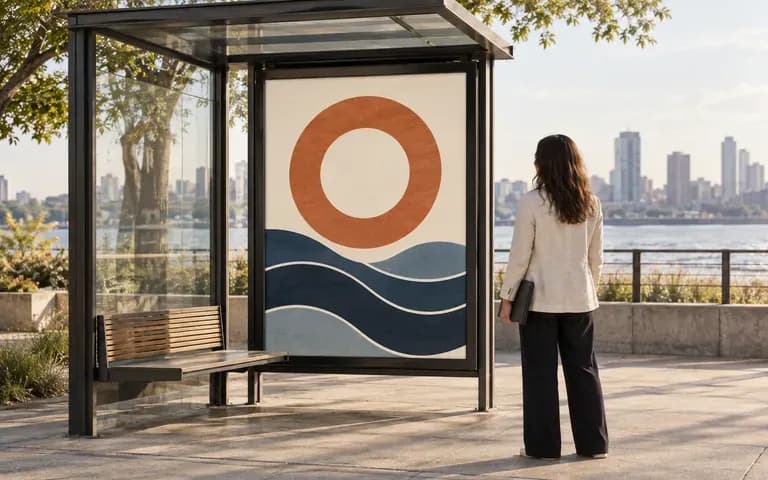
Check how finished portrait creative looks within a shelter display frame.
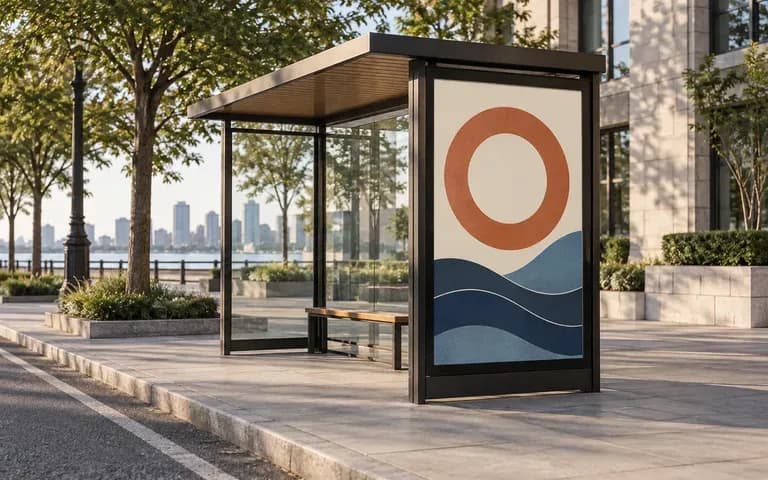
Illustrate the creative concept alongside a separately confirmed placement plan.
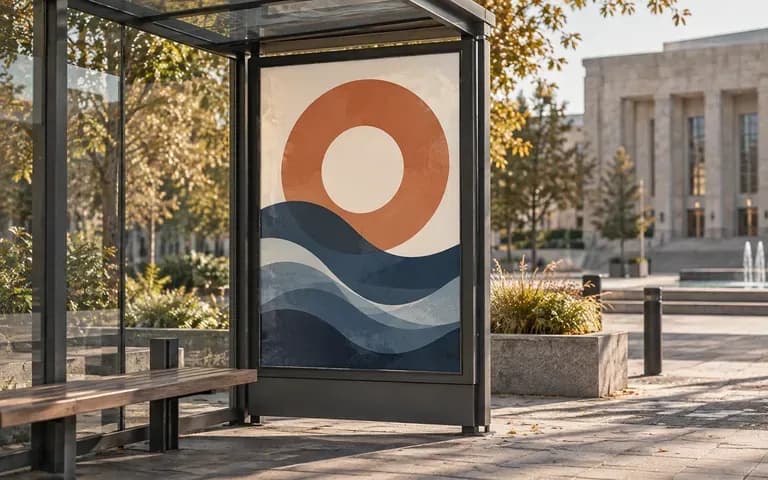
Present a local campaign idea within a recognizable type of street setting.
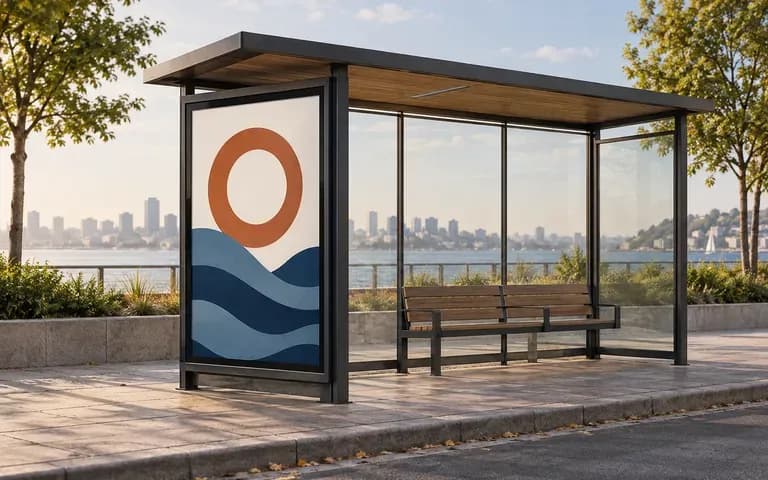
Give a client a view of the panel and surrounding shelter during a pitch.
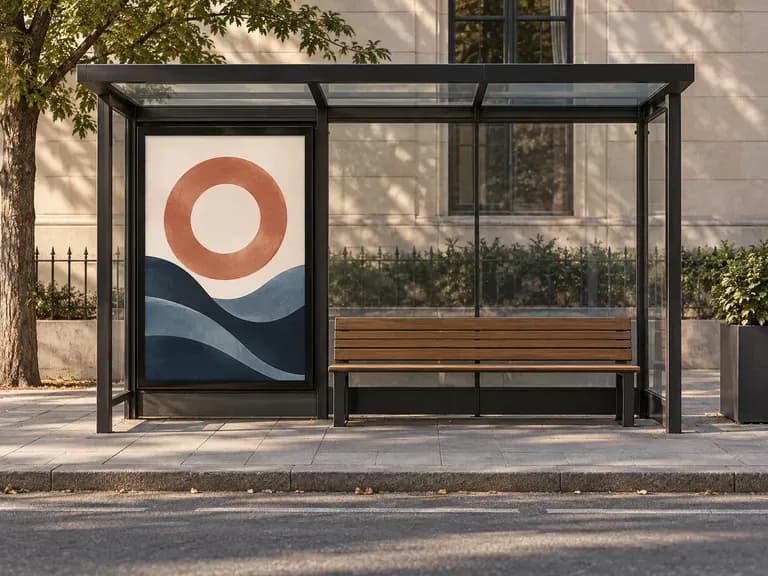
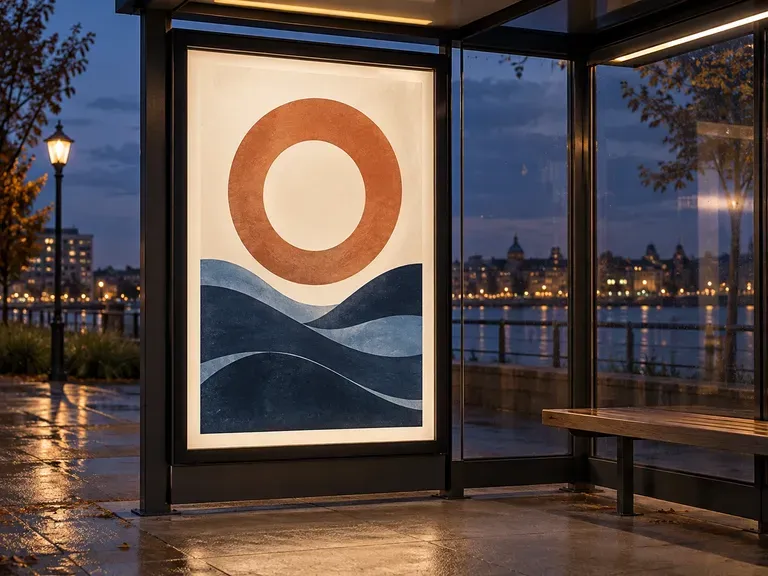
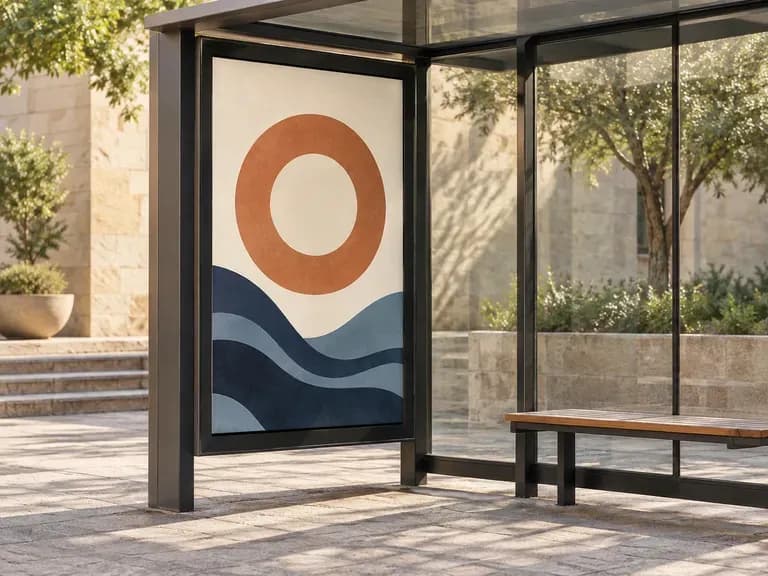
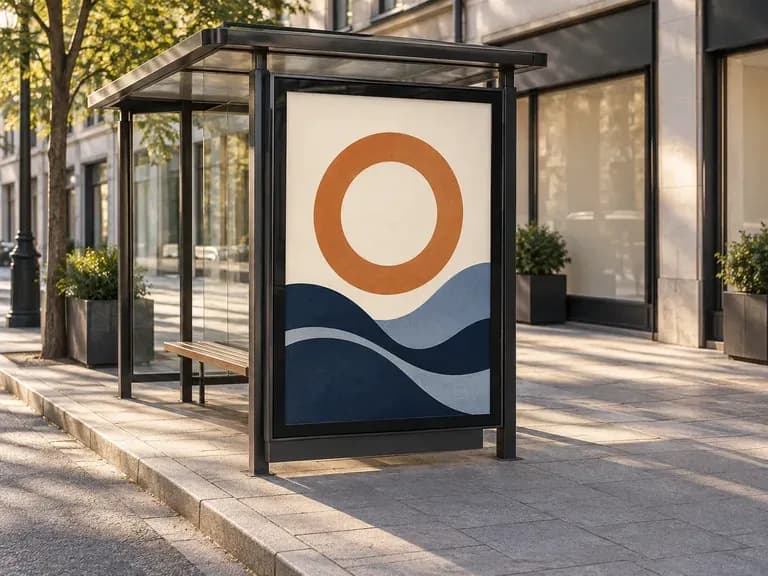
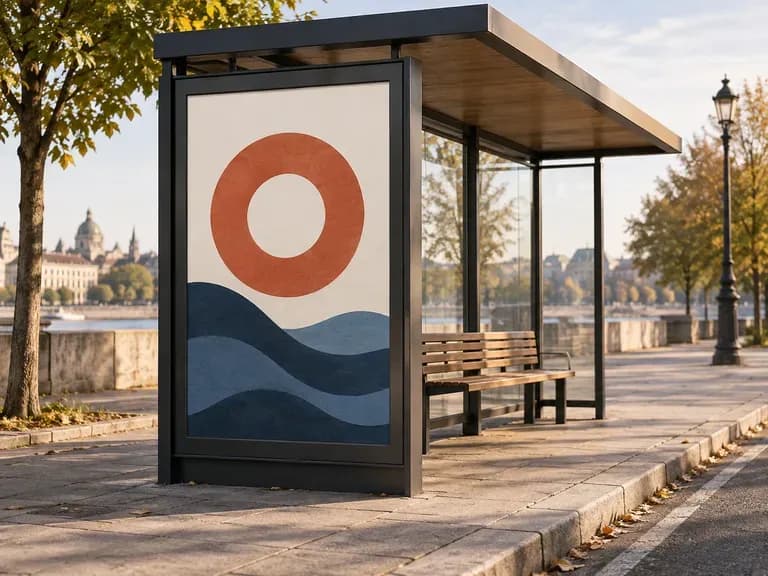
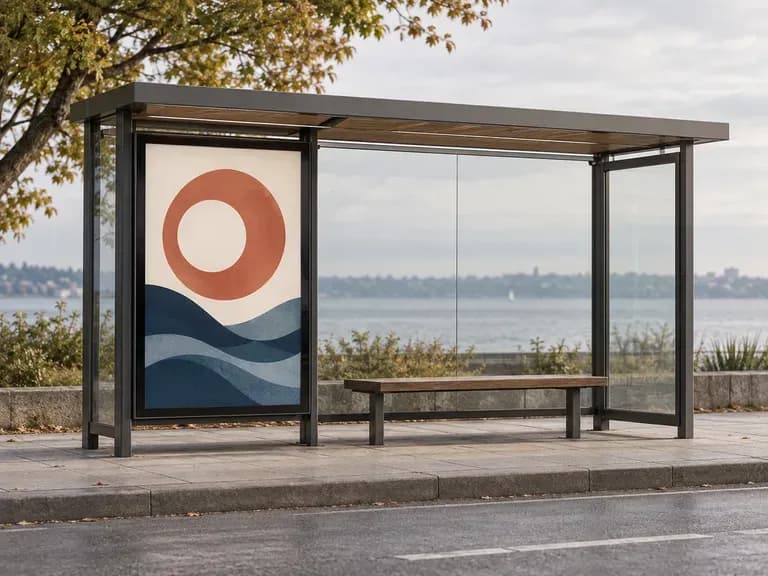
Add the portrait design and a shelter reference to create a scene for your next campaign discussion.