
Qwen Image Edit와 FLUX.2 Klein 9B 비교: 상업적 사용에 더 좋은 AI 이미지 편집기는?
 Yifan Zhao14분 읽기 ·
사실적인 시각 표현, 정체성 보존, 제작에 바로 활용할 수 있는 결과가 필요한 상업 이미지 편집 작업 흐름에는 일반적으로 FLUX.2 Klein 9B가 더 강력한 선택입니다. 정밀한 제어와 구도 보존이 필요한 체계적인 편집에는 Qwen Image Edit가 더 적합합니다. 올바른 선택은 팀이 시각적 사실성과 편집 정확성 중 무엇을 우선하는지에 달려 있습니다.
상업 팀에게 AI 이미지 편집은 더 이상 매력적인 이미지를 만드는 데 그치지 않습니다. 대량의 시각 콘텐츠를 만들면서 제품 세부 사항, 인물 정체성, 브랜드 일관성, 제작 효율성을 유지하는 것이 더 큰 과제입니다. 일관되지 않은 AI 편집은 수동 수정 증가, 캠페인 지연, 신뢰하기 어려운 브랜드 자산으로 이어질 수 있습니다. 많은 팀이 브리프부터 납품까지의 AI 디자인 작업 흐름을 폭넓게 탐색하며 콘셉트에서 최종 제작까지 창작 자산의 흐름을 개선하고 있습니다.
현대적인 창작 작업 흐름에는 둘 이상의 AI 모델이 필요합니다. Virse는 디자이너가 하나의 협업 환경에서 서로 다른 AI 기능을 결합하도록 돕습니다. 유료 요금제는 Nano Banana 2와 GPT Image 2를 포함한 40개 이상의 AI 모델, 무제한 사용, 무제한 팀 좌석을 제공합니다. 신규 사용자는 무료 크레딧으로 Nano Banana 2 이미지 10장 또는 Seedance 2.0 영상 1개를 생성할 수 있어 제작 규모를 확대하기 전에 AI 기반 창작 작업 흐름을 더 쉽게 탐색할 수 있습니다. 팀은 최고의 AI 디자인 도구, 창작 작업 흐름을 위한 AI 디자인 에이전트, 그래픽 디자인에 AI를 사용하는 방법에 관한 자료를 통해 다양한 솔루션을 비교할 수도 있습니다.
AI 생성 시각 자료가 상업 제작의 일부가 되면서 팀은 캠페인, 제품, 브랜드 자산 전반의 일관성을 유지할 더 탄탄한 시스템이 필요합니다. 디자인 시스템, AI 디자인 프롬프트, 체계적인 창작 작업 흐름 등을 이해하면 더 신뢰할 수 있는 AI 지원 제작 과정을 구축하는 데 도움이 됩니다.
Qwen Image Edit와 FLUX.2 Klein 9B: 상업용 AI 이미지 편집에서 어떤 차이가 있나요?
AI 이미지 편집은 단순한 시각 수정에서 제작 작업 흐름의 과제로 발전했습니다.
전문 팀은 다음만 묻지 않습니다.
‘AI가 이 이미지를 바꿀 수 있을까?’
이들은 다음을 묻습니다.
- 모델이 원래 제품을 보존할 수 있나요?
- 편집 후에도 같은 인물을 유지할 수 있나요?
- 결과가 브랜드 기준에 부합하나요?
- 작업 흐름을 수백 개의 자산으로 확장할 수 있나요?
상업적으로 유용한 AI 이미지 편집기는 여러 기능의 균형을 맞춰야 합니다.
기능 | 상업 편집에서 중요한 이유 |
|---|---|
정체성 보존 | 모델, 제품, 브랜드 자산의 일관성 유지 |
소재 사실성 | 제품이 물리적으로 그럴듯해 보이도록 보장 |
지시 준수 | 요청한 변경이 올바르게 적용되는지 결정 |
시각 품질 | 자산을 제작에 바로 쓸 수 있는지에 영향 |
확장성 | 팀의 효율적인 콘텐츠 제작 가능 여부 결정 |
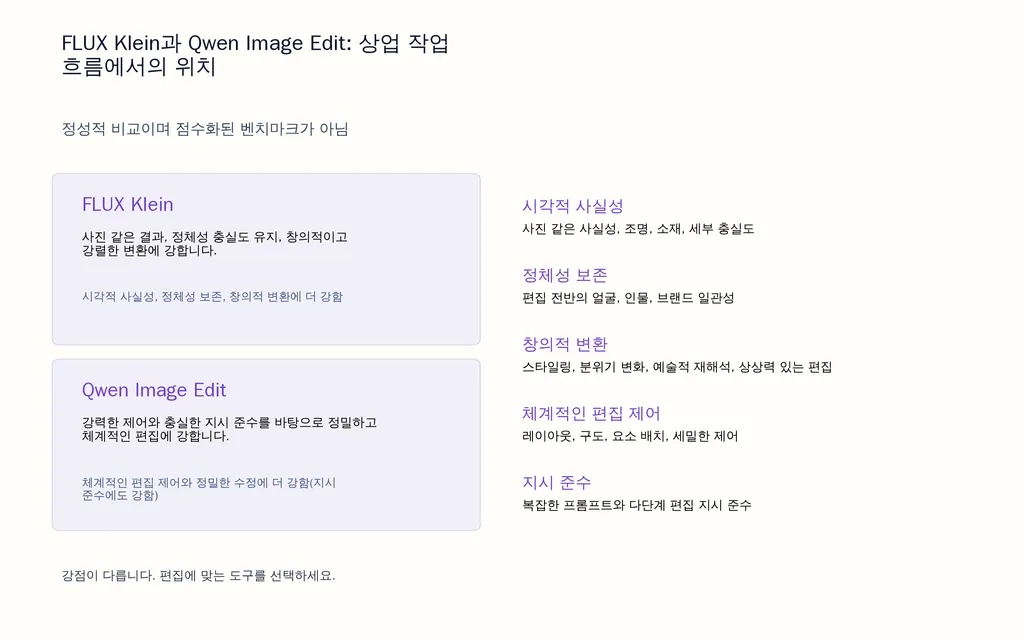
FLUX.2 Klein 9B와 Qwen Image Edit는 서로 다른 우선순위에 맞춰 최적화되어 있습니다.
FLUX Klein은 사실적인 시각 제작에 집중하고 Qwen Image Edit는 체계적인 편집 제어와 지시 이해에 집중합니다.
기업에게 더 적절한 질문은 ‘어느 모델이 이기는가?’가 아닙니다.
더 적절한 질문은 다음과 같습니다.
해결해야 할 작업 흐름 문제에 어떤 AI 편집기가 맞나요?
FLUX.2 Klein 9B 리뷰: 상업 이미지 편집에 강한 이유
FLUX Klein은 사실적인 상업 시각 제작에 집중
상업 이미지 편집의 기준은 실험적인 AI 창작과 다릅니다.
시각적으로 창의적인 이미지가 자동으로 유용한 비즈니스 자산이 되는 것은 아닙니다.
전문 팀은 다음과 같이 느껴지는 이미지가 필요합니다.
- 사실적
- 신뢰할 수 있음
- 일관적
- 고객에게 바로 보여 줄 수 있음
이는 다음에 특히 중요합니다.
- 전자상거래 제품 이미지
- 패션 캠페인
- 광고 시각 자료
- 브랜드 마케팅 자료
분석에 포함된 제3자 비교 연구에 따르면 FLUX Klein은 상업적 시각 품질을 우선하는 시나리오에서 강점을 보입니다.
이유는 실용적입니다.
고객은 시각적 세부 사항으로 제품을 판단합니다.
- 유리의 반사
- 직물 질감
- 소재 표면 품질
- 조명 일관성
이러한 세부 사항이 인위적으로 보이면 구도가 매력적이어도 이미지는 상업적으로 실패할 수 있습니다.
AI 디자인 작업 흐름 관점에서 상업적 성공은 인상적인 이미지보다 신뢰할 수 있는 자산을 생성하는 데 더 달려 있습니다.
반복 가능한 창작 과정을 구축하는 팀에게 사실적인 생성과 체계적인 제작 방법의 결합은 점점 더 중요해지고 있습니다. AI 기반 그래픽 디자인 기법과 효과적인 AI 디자인 프롬프트 전략을 포함하는 작업 흐름은 일관성을 높이고 수동 조정을 줄이는 데 도움이 됩니다.
사례: 제품 사진 편집을 위한 FLUX Klein
전자상거래 이미지 작업 흐름에서 소재 사실성이 중요한 이유
AI 이미지 편집의 가장 가치 있는 활용 중 하나는 기본 제품 사진을 마케팅에 바로 쓸 수 있는 시각 자료로 바꾸는 것입니다.
일반적인 작업 흐름:
원본 제품 사진
↓
AI 장면 편집
↓
다양한 캠페인 변형
↓
사람의 디자인 검토
↓
마케팅 배포
예시는 다음과 같습니다.
- 고급 환경에 배치한 스킨케어 제품
- 고급 라이프스타일 장면에 등장하는 시계
- 캠페인 시각 자료에 맞춘 식품
연구 자료에 포함된 제3자 비교 사례에서 FLUX Klein은 다음 영역의 장점을 보였습니다.
- 소재 외관
- 조명 사실성
- 상업 사진 품질
이러한 장점은 다음과 관련된 제품에 특히 유용합니다.
- 유리
- 금속
- 화장품
- 반사 표면
전자상거래 팀의 목표는 단순히 새 배경을 만드는 것이 아닙니다.
목표는 고객이 보는 것을 신뢰하게 만드는 제품 특성을 보존하는 것입니다.
좋은 AI 제품 이미지는 AI가 만든 콘셉트가 아니라 전문 사진처럼 보여야 합니다.
전자상거래와 광고 작업 흐름에서 FLUX Klein이 자주 선호되는 이유
상업 팀에는 창의성뿐 아니라 일관성이 필요
기업이 AI로 완벽한 이미지 한 장을 만들기 원한다는 오해가 흔합니다.
실제로 상업 팀에는 다음이 필요한 경우가 많습니다.
- 수십 가지 제품 변형
- 여러 캠페인 형식
- 계절별 마케팅 자산
- 현지화된 콘텐츠 버전
과제는 다음을 유지하는 것입니다.
- 제품 정확성
- 브랜드 정체성
- 시각적 일관성
FLUX Klein은 최종 결과가 전문 사진처럼 보여야 하는 작업 흐름에 잘 맞습니다.
대표적인 용도는 다음과 같습니다.
- 전자상거래 제품 시각 자료
- 광고 캠페인
- 라이프스타일 마케팅 이미지
- 브랜드 소셜 미디어 콘텐츠
하지만 사실적인 결과는 상업 편집의 한 부분일 뿐입니다.
어떤 작업 흐름에는 다른 강점이 필요합니다.
무엇을 바꾸고 무엇을 그대로 둘지 정밀하게 제어하는 것입니다.
여기서 Qwen Image Edit가 경쟁력을 발휘합니다.
Qwen Image Edit 리뷰: 체계적인 AI 편집이 유리한 영역
Qwen Image Edit는 제어된 수정에 집중
모든 상업 편집 작업에 극적인 시각 변화가 필요한 것은 아닙니다.
많은 전문 작업 흐름에는 정밀성이 필요합니다.
예시:
- 배경만 교체
- 물체 하나 제거
- 제품 요소 하나 변경
- 원래 레이아웃 보존
- 기존 구도 유지
이 작업에는 강력한 지시 준수 능력이 필요합니다.
AI 디자인 작업 흐름 논의를 검토한 결과 많은 팀은 아이디어 생성보다 AI 수정을 제어하는 데 더 어려움을 겪습니다.
과제는 다음과 같습니다.
‘요청한 부분만 정확히 바꾸고 나머지는 수정하지 마.’
Qwen Image Edit는 팀이 다음을 우선하는 작업 흐름에 더 적합합니다.
- 체계적인 수정
- 구도 보존
- 참조 기반 편집
- 제어된 변경
벤치마크 분석: AI 이미지 테스트마다 우승자가 다른 이유
AI 모델 비교는 서로 다른 능력을 측정하는 경우가 많음
AI 이미지 모델 비교가 일관되지 않아 보이는 이유 중 하나는 평가마다 서로 다른 목표에 집중하기 때문입니다.
모델은 한 범주에서 더 잘하고 다른 범주에서는 못할 수 있습니다.
연구 자료에는 두 가지 비교 방향이 포함되어 있습니다.
시각 품질 중심 평가
이 평가는 다음을 강조합니다.
- 사실성
- 사진 품질
- 소재 세부 사항
- 상업적 외관
이러한 시나리오에서는 FLUX Klein이 강점을 보이는 경우가 많습니다.
디자인 지능 중심 평가
이 평가는 다음을 강조합니다.
- 복잡한 프롬프트 이해
- 텍스트 렌더링
- 체계적인 디자인 작업
- 정보 구성
이러한 영역에서는 Qwen Image 모델이 장점을 보입니다.
이미지 편집 벤치마크 비교
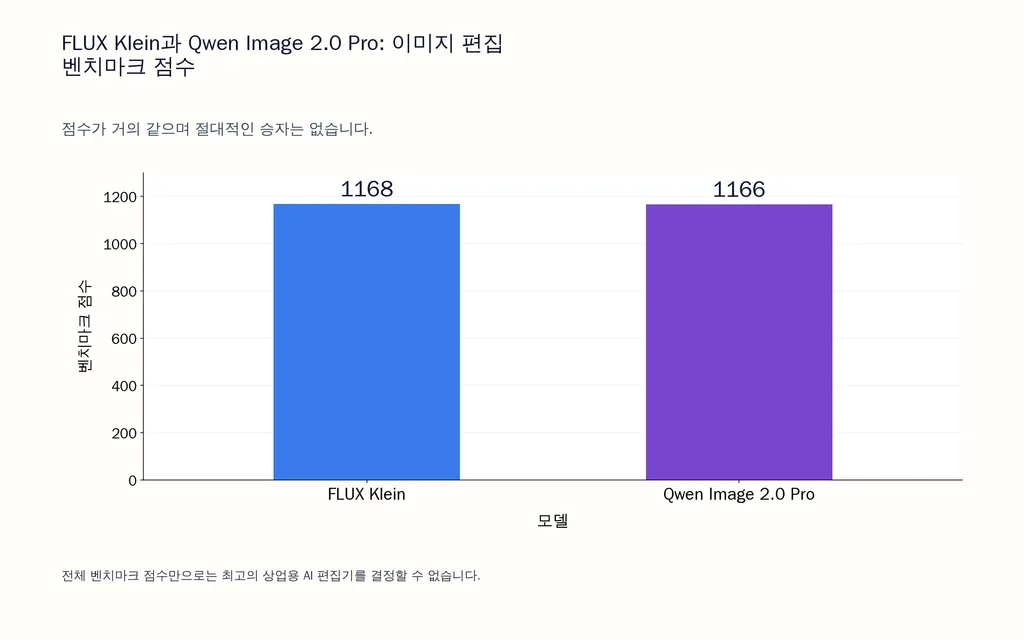
연구 자료에 포함된 이미지 편집 평가 데이터는 다음과 같습니다.
- FLUX Klein: 1168
- Qwen Image 2.0 Pro: 1166
차이는 매우 작습니다.
이는 중요한 결론을 시사합니다.
전체 벤치마크 점수만으로는 최고의 상업용 AI 편집기를 결정할 수 없습니다.
실제 결정은 제작 작업에 달려 있습니다.
사실적인 제품 광고를 만드는 브랜드는 FLUX Klein을 선호할 수 있습니다.
체계적인 시각 수정을 하는 팀은 Qwen Image Edit의 도움을 받을 수 있습니다.
AI 이미지 편집의 미래는 보편적인 승자 하나를 찾는 것이 아닙니다.
적절한 AI 기능을 적절한 창작 작업 흐름에 연결하는 것입니다.
정체성 보존과 패션 편집을 위한 FLUX Klein과 Qwen Image Edit 비교
정체성 보존이 상업용 AI 이미지 편집의 핵심 과제인 이유
전문 패션, 광고, 브랜드 작업 흐름에서 가장 어려운 AI 편집 문제는 새 이미지를 생성하는 것이 아닙니다.
원래 정체성을 유지하면서 기존 이미지를 수정하는 것입니다.
상업 팀은 승인된 자산을 편집해야 하는 경우가 많습니다.
- 의상 변경
- 캠페인 환경 조정
- 계절별 변형 만들기
- 여러 마케팅 버전 제작
편집된 이미지는 다음을 보존해야 합니다.
- 동일한 인물
- 동일한 브랜드 느낌
- 동일한 시각 품질
- 동일한 고객 인지도
AI 작업 흐름 논의를 검토한 결과 정체성 일관성은 기업이 AI 이미지 편집을 도입할 때 가장 중요하게 고려하는 사항 중 하나입니다.
모델, 제품, 브랜드 자산이 더 이상 일관돼 보이지 않으면 시각적으로 인상적인 결과도 쓸모가 없습니다.
사례: 상업 모델 편집을 위한 정체성 전이
FLUX Klein은 복잡한 인물 편집 시나리오에서 강점을 보임
제3자 이미지 편집 평가에는 까다로운 정체성 전이 작업이 포함되었습니다.
요구 사항은 다음과 같았습니다.
- 한 사람의 정체성 보존
- 의상 특성 유지
- 다른 참조 이미지에서 포즈 정보 전이
이 시나리오에서 FLUX Klein은 다음을 더 잘 유지했습니다.
- 얼굴 정체성
- 의상 외관
- 전체 시각적 일관성
손과 같은 섬세한 부분은 여전히 추가 보정이 필요할 수 있다는 한계가 있었습니다.
Qwen Image Edit는 체계적인 이미지 이해에 강점을 보였지만 이 특정 정체성 교체 시나리오는 그만큼 효과적으로 완료하지 못했습니다.
상업적 교훈은 중요합니다.
패션 전자상거래와 광고 작업 흐름에서 가장 가치 있는 지표는 단순히 이미지 품질이 아닙니다.
바로 다음입니다.
AI가 인물을 알아볼 수 있게 유지하면서 자산을 수정할 수 있는가?
사례: 패션 전자상거래를 위한 AI 의상 교체
최고의 AI 의상 편집기는 의상뿐 아니라 인물도 보존해야 함
가상 의상 교체는 AI 생성과 AI 제작의 차이를 가장 명확히 보여 주는 예 중 하나입니다.
패션 회사는 다음을 만들고자 할 수 있습니다.
- 한 모델의 여러 의상
- 계절별 제품 변형
- 현지화된 광고 캠페인
AI는 다음을 유지해야 합니다.
- 신체 구조
- 얼굴 일관성
- 포즈
- 조명
- 사실적인 직물 표현
FLUX Klein 접근 방식
FLUX Klein은 최종 이미지가 전문 캠페인 사진처럼 보여야 하는 패션 작업 흐름에 더 잘 맞는 경우가 많습니다.
강점:
- 사실적인 인물 외관
- 자연스러운 피부 질감
- 더 높은 소재 일관성
- 인물과 환경의 더 나은 조화
잠재적 제약:
모델이 명시적으로 요청하지 않은 창작 변경을 추가할 때가 있습니다.
예시:
- 추가 액세서리
- 예상치 못한 스타일 세부 사항
- 작은 시각적 수정
Qwen Image Edit 접근 방식
편집 목표에 더 제어된 변경이 필요할 때 Qwen Image Edit가 유용할 수 있습니다.
강점:
- 상세한 지시 이해
- 구조적 관계 유지
- 구체적인 수정 요구 준수
잠재적 제약:
매우 사실적인 인물 정체성 보존에는 추가 검토가 필요할 수 있습니다.
상업적 시사점
선택은 작업 흐름의 목표에 달려 있습니다.
다음 요구에는:
‘사실적인 새 패션 캠페인 이미지를 만들어 줘.’
FLUX Klein이 더 강력한 선택인 경우가 많습니다.
다음 요구에는:
‘원래 구조를 보존하면서 특정 요소만 수정해 줘.’
Qwen Image Edit의 경쟁력이 높아집니다.
사례: 스타일 변환과 창의적 이미지 편집
창의적 변환과 제작 편집에는 서로 다른 AI 강점이 필요
기존 이미지를 새로운 시각 스타일로 바꾸는 것도 상업적 활용 사례입니다.
예시:
- 사진을 일러스트로 변환
- 캠페인 콘셉트 탐색
- 소셜 미디어 시각 자료 조정
- 브랜드 스타일 실험
이 작업들은 전자상거래 편집과 다릅니다.
평가 기준은 다음과 같습니다.
- 예술적 해석
- 스타일 일관성
- 시각적 인상
창의적 변환을 위한 FLUX Klein
더 강한 시각적 표현이 목표일 때 FLUX Klein은 강점을 보이는 경향이 있습니다.
장점:
- 더 풍부한 스타일 해석
- 더 극적인 변환
- 더 강한 예술적 결과
적합한 활용:
- 엔터테인먼트 캠페인
- 창의적 광고 콘셉트
- 시각 탐색
제어된 변환을 위한 Qwen Image Edit
디자이너가 원래 이미지 구조를 보존해야 할 때 Qwen Image Edit가 유용합니다.
장점:
- 제어된 변경
- 참조 보존
- 예측 가능한 수정
적합한 활용:
- 제품 업데이트
- 체계적인 수정
- 브랜드 자산 조정
FLUX Klein과 Qwen Image Edit: 상업 활용 사례 비교
상업 시나리오 | 권장 모델 | 이유 |
|---|---|---|
제품 광고 이미지 | FLUX Klein | 높은 사실성과 상업 시각 품질 |
전자상거래 제품 시각 자료 | FLUX Klein | 사진 스타일 결과에 더 적합 |
패션 모델 편집 | FLUX Klein | 테스트된 시나리오에서 높은 정체성 일관성 |
AI 의상 교체 | FLUX Klein | 사실적인 인물 수정에 더 적합 |
제어된 배경 변경 | Qwen Image Edit | 정밀한 대상 편집에 유용 |
레이아웃 보존 수정 | Qwen Image Edit | 원래 구조가 중요할 때 더 적합 |
창의적 시각 탐색 | FLUX Klein | 더 강한 시각 변환 |
체계적인 디자인 수정 | Qwen Image Edit | 지시 중심 작업 흐름에 더 적합 |
기업은 AI 이미지 편집 작업 흐름을 어떻게 구축해야 할까요?
최적의 상업 작업 흐름은 서로 다른 AI 기능을 결합
모든 디자인 문제를 해결할 단일 AI 모델을 찾으려는 것은 흔한 실수입니다.
전문 창작 작업 흐름에는 보통 여러 단계가 있습니다.
- 콘셉트 탐색
- 자산 편집
- 품질 검토
- 제작 규모 확대
서로 다른 AI 모델이 다른 단계를 지원할 수 있습니다.
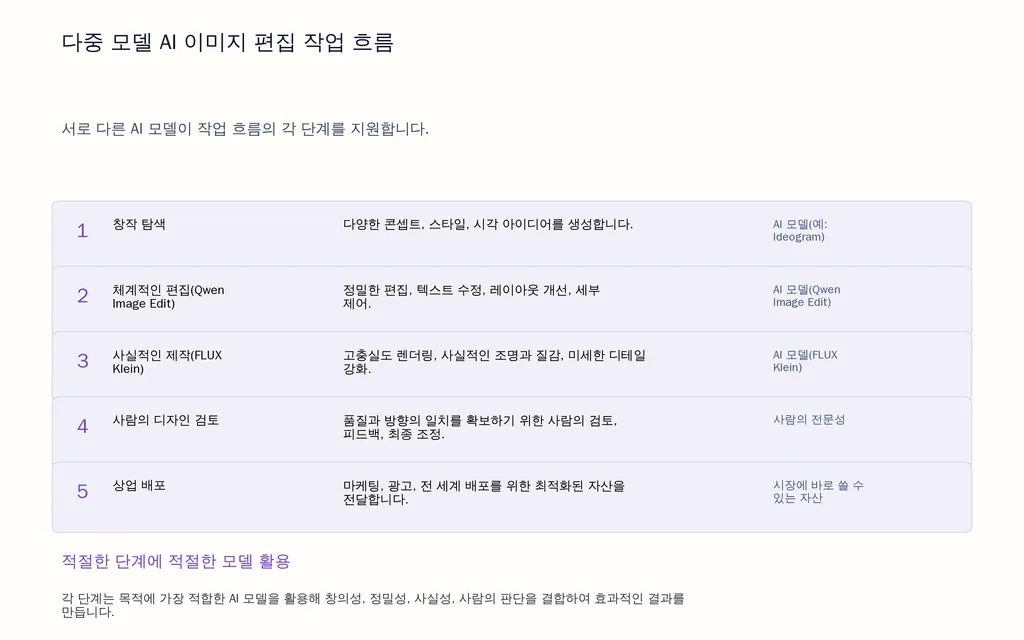
작업 흐름 예시: 전자상거래 제품 콘텐츠 제작
1단계: 원본 제품 자산 준비
팀은 다음으로 시작합니다.
- 제품 사진
- 브랜드 지침
- 캠페인 요구 사항
목표는 무엇을 그대로 유지해야 하는지 정의하는 것입니다.
2단계: 창작 방향 탐색
AI는 다음 테스트를 도울 수 있습니다.
- 환경
- 캠페인 콘셉트
- 시각적 변형
팀에 참조 기반의 제어된 탐색이 필요할 때 Qwen Image Edit가 유용할 수 있습니다.
3단계: 최종 상업 시각 자료 제작
FLUX Klein은 다음을 지원할 수 있습니다.
- 사실적인 제품 장면
- 광고 이미지
- 완성도 높은 캠페인 자산
4단계: 사람의 디자인 검토
전문적인 검토는 여전히 중요합니다.
팀은 다음을 확인해야 합니다.
- 제품 정확성
- 브랜드 일관성
- 고객 인식
AI는 실행을 가속하지만 자산의 상업적 적합성은 창작 판단이 결정합니다.
작업 흐름 예시: 패션 캠페인 제작
패션 팀은 제한된 승인 사진으로 많은 시각적 변형을 만들어야 하는 경우가 많습니다.
실용적인 작업 흐름:
원본 모델 이미지
↓
AI 의상 및 환경 편집
↓
품질 검토
↓
캠페인 조정
↓
다중 채널 게시
주요 과제는 인상적인 이미지 한 장을 만드는 것이 아닙니다.
전체 컬렉션에서 일관성을 유지하는 것입니다.
그래서 정체성 보존, 작업 흐름 제어, 확장 가능한 제작이 개별 이미지 품질보다 더 중요합니다.
비용과 확장성: 대규모 제작을 위한 AI 편집 모델 선택
제작량은 기업의 AI 모델 평가 방식을 바꿈
개인 제작자에게는 시각 품질이 주요 요소일 수 있습니다.
기업에게는 확장성도 똑같이 중요해집니다.
캠페인 이미지 몇 장을 만드는 회사는 최상의 결과를 우선할 수 있습니다.
수천 개의 자산을 만드는 회사는 다음도 고려해야 합니다.
- 비용 효율성
- 제작 속도
- 팀 접근성
- 작업 흐름 안정성
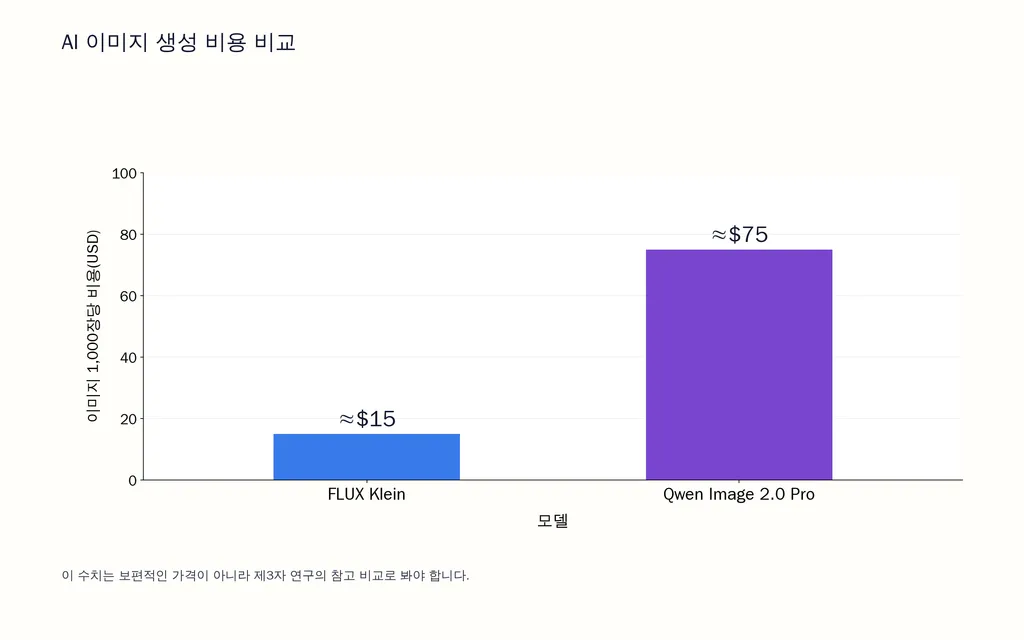
연구 자료에 포함된 제3자 비용 비교 데이터에 따르면:
이미지 생성:
- Qwen Image 2.0 Pro: 이미지 1,000장당 약 $75
- FLUX Klein: 이미지 1,000장당 약 $15
이미지 편집:
- Qwen: 이미지 1,000장당 약 $75
- FLUX: 이미지 1,000장당 약 $17
이 수치는 보편적인 가격이 아니라 제3자 연구의 참고 비교로 봐야 합니다.
비즈니스 시사점은 명확합니다.
소규모 프로젝트에서는 품질 차이가 주된 요소일 수 있습니다.
대규모 제작에서는 비용 차이가 전체 AI 콘텐츠 작업 흐름에 영향을 줄 수 있습니다.
비즈니스에 맞게 Qwen Image Edit와 FLUX Klein을 선택하는 방법
실용적인 의사결정 체계
다음과 같이 묻는 대신:
‘어떤 AI 이미지 편집기가 더 좋을까?’
다음을 물어보세요.
‘어떤 유형의 상업 문제를 해결하고 있는가?’
다음이 우선이라면 FLUX Klein을 선택하세요.
- 사실적인 상업 사진
- 전자상거래 제품 시각 자료
- 광고 수준 이미지
- 패션 캠페인 제작
- 인물 정체성 일관성
- 대규모 시각 제작
다음이 우선이라면 Qwen Image Edit를 선택하세요.
- 정밀한 이미지 수정
- 체계적인 편집 지시
- 구도 보존
- 참조 기반 변경
- 제어된 수정
다음 경우 두 모델을 함께 사용하는 것을 고려하세요.
작업 흐름에 다음이 포함될 때:
- 창작 탐색
- 체계적인 편집
- 최종 시각 제작
상업용 AI 디자인의 미래는 서로 다른 AI 시스템이 각기 다른 창작 역할을 맡는 다중 모델 작업 흐름으로 나아가고 있습니다.
최종 권장 사항: 상업용 AI 편집을 위한 FLUX Klein과 Qwen Image Edit 비교
FLUX.2 Klein 9B와 Qwen Image Edit는 서로 직접 대체하는 모델이 아닙니다. 상업용 AI 이미지 편집에 대한 두 가지 접근을 나타냅니다. FLUX는 사실적인 시각 제작에, Qwen은 체계적인 편집 제어에 집중합니다.
전자상거래, 광고, 패션 캠페인, 브랜드 시각 자료에는 FLUX Klein이 더 강력한 선택인 경우가 많습니다. 상업적 성공이 사실성, 정체성 일관성, 제작 품질에 크게 달려 있기 때문입니다. 원래 구조를 안정적으로 유지해야 하는 정밀한 수정에는 Qwen Image Edit가 유용한 대안을 제공합니다.
AI 이미지 편집의 미래는 하나의 보편적인 승자가 결정하지 않습니다. 가장 뛰어난 창작 팀은 전문화된 AI 기능과 사람의 디자인 판단을 결합하는 작업 흐름을 구축하고 제작 과정의 각 단계에 맞는 모델을 선택할 것입니다.
자주 묻는 질문
AI 이미지 편집에는 FLUX가 Qwen보다 더 좋은가요?
사실적인 시각 표현, 제품 품질, 정체성 보존이 필요한 상업 편집에는 일반적으로 FLUX Klein이 더 좋습니다. 정밀한 제어와 원래 구도 유지가 더 중요한 체계적인 편집에는 Qwen Image Edit가 더 적합합니다.
전자상거래 제품 사진에 가장 좋은 AI 이미지 편집기는 무엇인가요?
제품 사진은 사실적인 소재, 조명, 상업적 표현에 달려 있으므로 FLUX Klein은 전자상거래에 강력한 선택인 경우가 많습니다. Qwen Image Edit는 제어된 제품 수정에 유용할 수 있습니다.
FLUX Klein이 Qwen Image Edit보다 정체성을 더 잘 보존하나요?
연구에 포함된 일부 제3자 정체성 전이 테스트에서 FLUX Klein은 인물 정체성과 의상 일관성을 더 잘 유지했습니다. 하지만 결과는 이미지 유형, 편집 복잡성, 필요한 보존 수준에 달려 있습니다.
기업은 FLUX와 Qwen을 함께 사용해야 하나요?
네. 다중 모델 작업 흐름은 하나의 AI 편집기에 의존하는 것보다 더 좋은 결과를 제공할 수 있습니다. 팀은 Qwen으로 체계적인 편집을 하고 FLUX로 사실적인 상업 이미지를 제작할 수 있습니다.
Virse 블로그의 다른 글
워크플로
GPT Image 2.5 Noise and Oversharpening: Why Some Images Still Look AI-Generated
2026년 10월 9일 by Yifan Zhao
워크플로
GPT Image 2.5 Keeps Changing My Image: How to Use a "Keep List" for Reliable Edits
2026년 10월 9일 by Yifan Zhao
워크플로
GPT Image 2.5 Editing Drift: Why Images Get Blurry, Cropped or Worse After Multiple Edits
2026년 10월 9일 by Yifan Zhao