30 Sticker Design Ideas by Style and Use
Vincent11 分钟阅读 ·
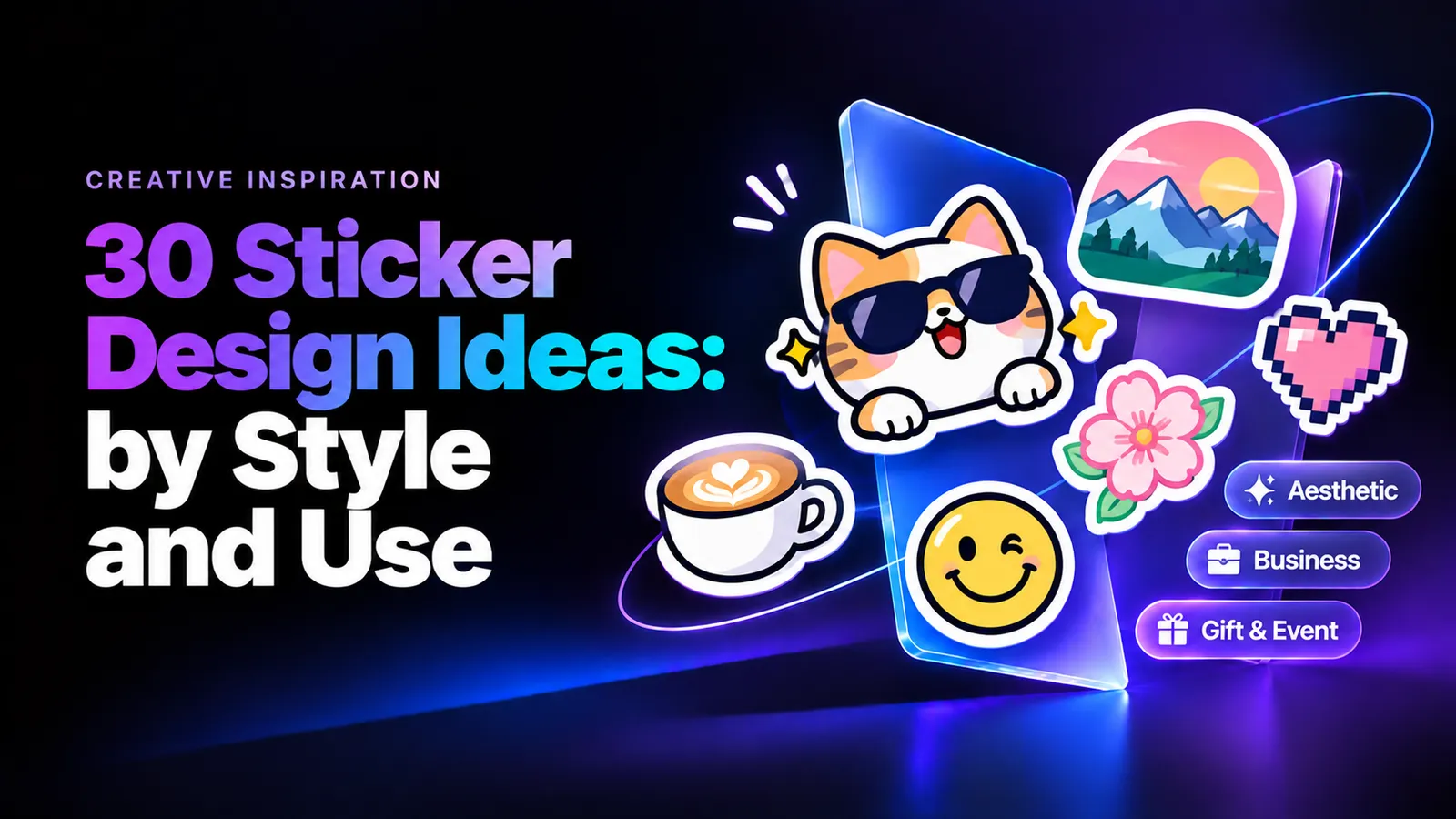
The best sticker design ideas include cute animals, kawaii food, retro illustrations, funny quotes, personalized artwork, and aesthetic sticker sheets. Bold graphics work well for laptops and water bottles, while smaller illustrations and coordinated collections suit journals, scrapbooks, and gifts. A clear graphic design style helps make each sticker recognizable.
But finding an original idea is only the beginning. Even beautiful artwork can fail as a physical sticker when colors clash, details disappear in print, or the design doesn't match its intended audience. Our research into independent creators and sticker buyers identified recurring challenges with style consistency, printing, cutting, and understanding customer preferences. Turning artwork into a finished product also requires thoughtful design-to-product planning.
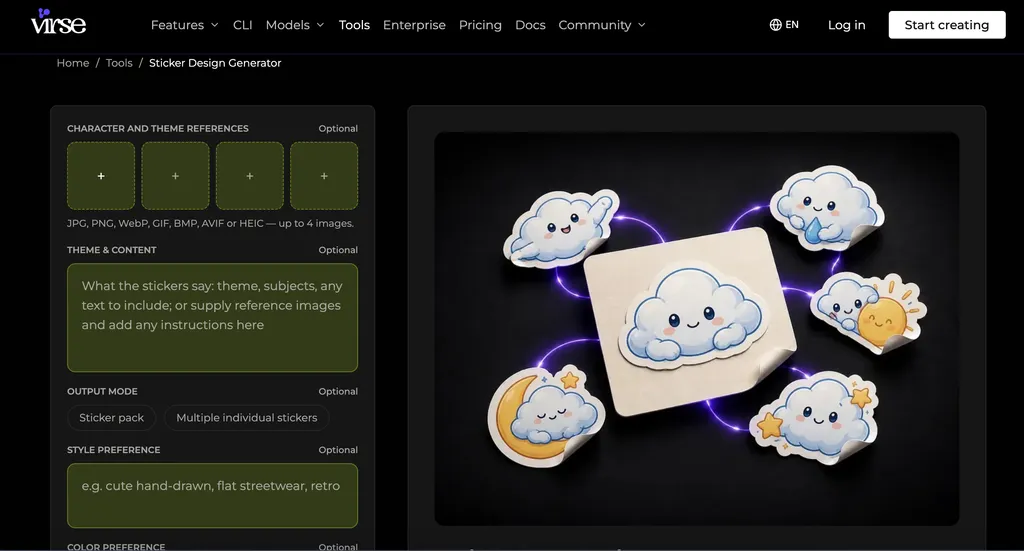
With Virse, you can turn scattered inspiration into cohesive visual concepts on an infinite AI canvas. Explore multiple AI image models, compare creative directions side by side, and refine designs while keeping references and variations connected. Whether you're developing cute characters or a complete aesthetic collection, AI graphic design workflows give you a way to bring your ideas together.
What Are the Best Sticker Design Ideas?
The best sticker design ideas combine a recognizable subject, a consistent visual style, and a clear intended use. Cute characters, vintage illustrations, expressive typography, personalized artwork, and functional sticker sheets are all strong starting points.
Our review of user questions found considerable variation in preferences. Some collectors favor colorful animals, while others prefer botanical illustrations, minimalist graphics, or sarcastic phrases.
Sticker Style | Best Design Ideas | Ideal Uses |
Cute & Kawaii | Animals, food, pastel characters | Journals, gifts |
Retro & Aesthetic | Sunsets, botanical art, Y2K graphics | Laptops, notebooks |
Funny & Expressive | Quotes, typography, doodles | Personal collections |
Nature & Personalized | Forests, pets, hobbies | Water bottles, gifts |
Functional | Planner icons, labels, trackers | Journals, sticker sheets |
Custom | Travel graphics, packaging, celebrations | Businesses, events |
A successful sticker doesn't need complicated artwork. It needs a clear idea that connects with its intended audience.
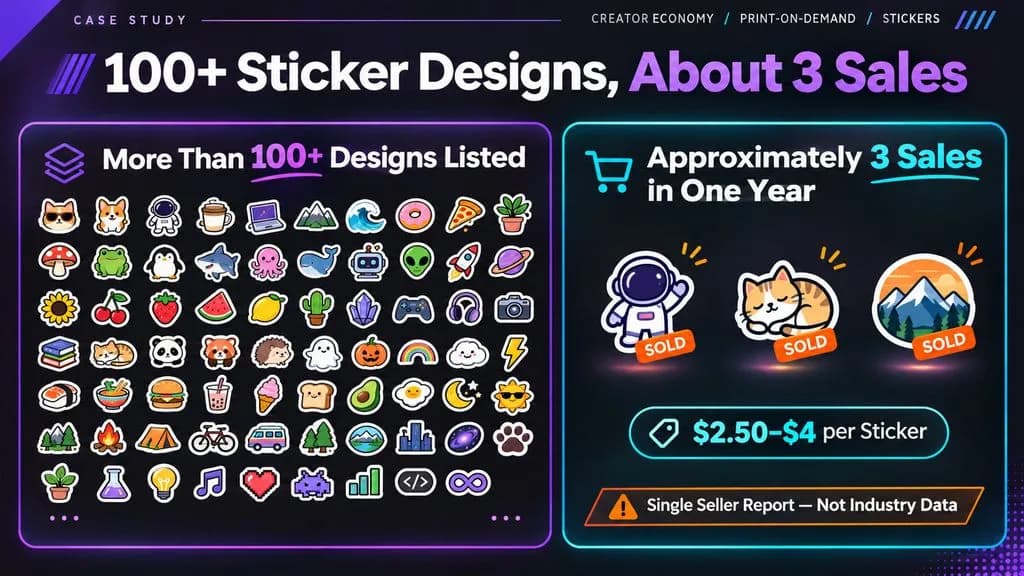
That distinction matters commercially. One independent Etsy seller reported offering more than 100 designs priced between $2.50 and $4, yet recording approximately three sticker sales in a year. This individual case doesn't establish why sales were low, but it illustrates why creating more designs alone doesn't guarantee demand.
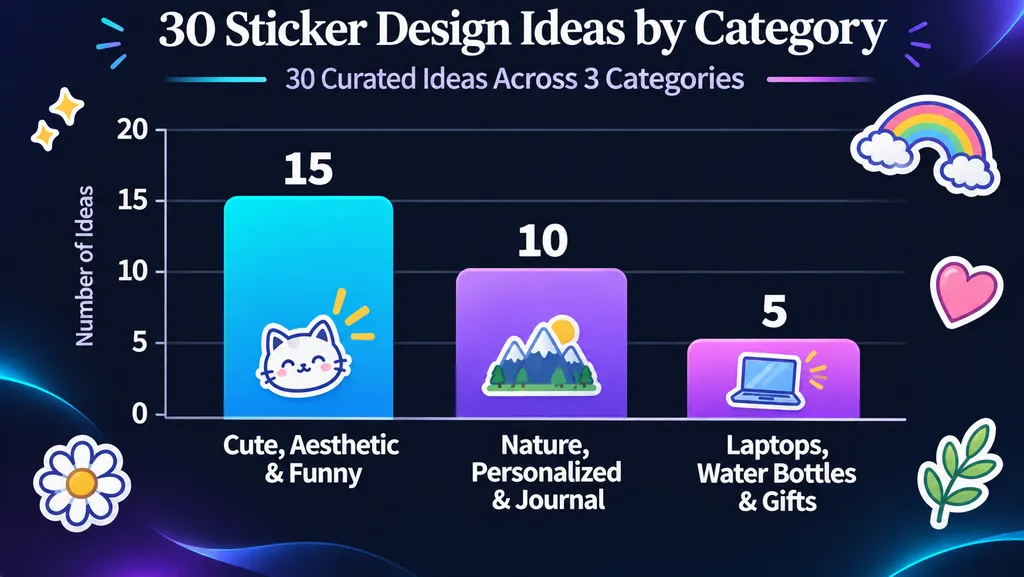
15 Cute, Aesthetic, and Funny Sticker Design Ideas
Cute, aesthetic, and funny designs offer accessible starting points. Their appeal comes from recognizable subjects, distinctive colors, and personal expression rather than illustration complexity.
Cute and Kawaii Sticker Ideas
- Cute Animal Characters. Illustrate a sleeping cat, flower-holding frog, or coffee-drinking bear. Rounded silhouettes and expressive faces help characters remain recognizable at small sizes. Create several poses for a coordinated collection.
- Kawaii Food Stickers. Give strawberries, croissants, and bubble tea playful expressions. Simple outlines, tiny facial features, and contrasting colors work especially well for miniature sticker sheets.
- Pastel Mood Stickers. Combine clouds, hearts, moons, and stars using lavender, mint, cream, and pale pink. Maintain enough contrast to preserve delicate details after printing.
- Cozy Everyday Objects. Draw books, candles, blankets, coffee cups, and houseplants. A warm color palette connects different objects into one recognizable lifestyle theme.
- Cute Mini Character Sets. Show the same original mascot expressing excitement, frustration, happiness, and sleepiness. Consistent proportions and colors make individual stickers feel like one collection.
Retro and Aesthetic Sticker Ideas
- Retro Sunset Stickers. Combine layered sunsets, mountain silhouettes, and orange gradients. Vintage typography reinforces the nostalgic aesthetic without overwhelming the central illustration.
- Vintage Botanical Stickers. Illustrate wildflowers, herbs, mushrooms, and butterflies. Detailed botanical artwork suits journals, although intricate edges may require simplified cutting borders.
- Minimalist Line Art. Create portraits, flowers, or animals using clean continuous lines. Test stroke thickness at final print size because extremely thin details may disappear. Explore more line art drawing styles and techniques for additional inspiration.
- Y2K and Nostalgic Graphics. Explore metallic lettering, playful stars, bold shapes, and early-2000s-inspired colors. For a softer retro alternative, combine mustard yellow, burnt orange, and geometric flowers.
- Soft Aesthetic Collages. Layer paper textures, handwritten details, and miniature illustrations. Keep one dominant focal point so the composition remains recognizable when reduced. A moodboard can help organize colors, textures, and visual references before designing a complete collection.
Funny and Expressive Sticker Ideas
- Funny One-Liner Stickers. Turn original phrases such as "Currently Recharging" into typographic illustrations. Short messages remain easier to read on small surfaces.
- Sarcastic Mood Stickers. Draw an exhausted coffee cup, unimpressed cat, or overwhelmed cloud. Expressive artwork can communicate humor without lengthy captions.
- Bold Typography Stickers. Experiment with bubble lettering, oversized serif fonts, and Pop Art-inspired colors. Prioritize readable lettering before adding decorative effects.
- Punk and Alternative Art. Combine distressed textures, unconventional typography, and dramatic contrasts. Simplify complicated outer silhouettes to improve cutting practicality.
- Expressive Doodle Characters. Create unusual creatures with exaggerated eyes, imperfect outlines, and playful poses. A shared drawing style can turn simple doodles into a distinctive collection.
10 Nature, Personalized, and Journal Sticker Ideas
Nature-inspired and personalized stickers connect artwork with memories, hobbies, and identity. Functional sticker designs add another benefit: they combine decoration with everyday usefulness.
Nature and Personalized Sticker Ideas
- Nature and Forest Stickers. Combine pine trees, woodland animals, mushrooms, and mountain landscapes. Choose either realistic illustrations or simplified graphics for consistency.
- Outdoor Adventure Stickers. Feature tents, hiking boots, campfires, and scenic trails. Bold silhouettes work particularly well on water bottles and travel equipment.
- Custom Pet Portrait Stickers. Transform pet photographs into original illustrations. Preserve distinctive markings, ear shapes, and facial expressions rather than reproducing every detail.
- Hobby-Themed Sticker Sets. Build collections around photography, gardening, reading, or gaming. A specific interest provides clearer creative direction and a more defined audience.
- Personalized Name Stickers. Combine names or initials with flowers, geometric patterns, or retro lettering. Leave enough spacing for longer names to remain readable.
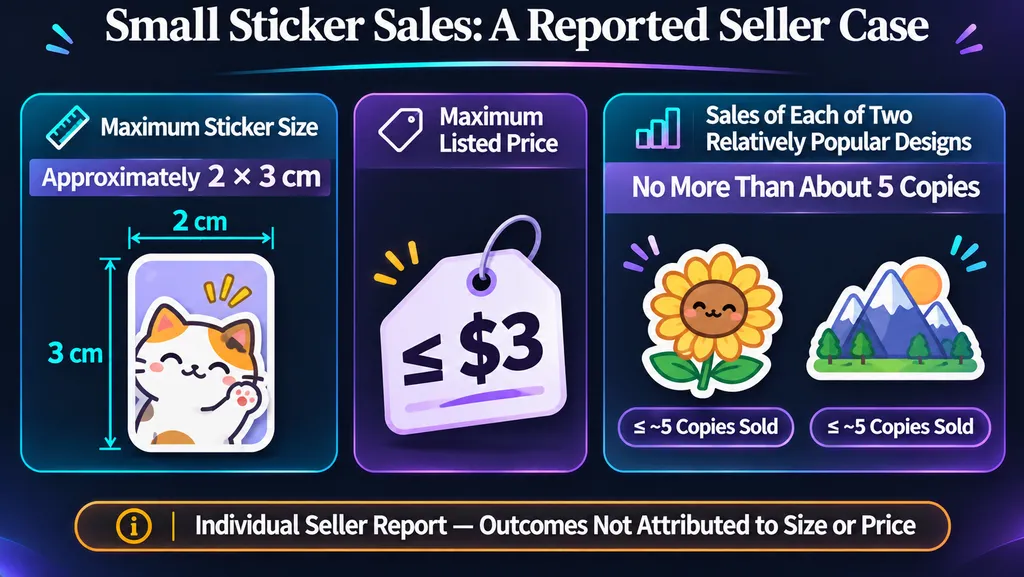
Audience-fit insight: Our research included an independent seller offering stickers approximately 2 × 3 cm, priced at no more than $3. Even the seller's two relatively popular designs had each sold no more than about five copies.
The case doesn't isolate the cause of limited sales. However, it highlights why creators should evaluate audience preferences, size, presentation, pricing, and distribution before expanding a collection.
Journal and Planner Sticker Ideas
- Weekly Planner Stickers. Create appointment markers, reminders, and schedule labels. Readable text and recognizable icons provide more practical value than excessive decoration.
- Habit Tracker Stickers. Design symbols for hydration, reading, exercise, and daily routines. Consistent dimensions make stickers easier to organize.
- Decorative Journal Labels. Use handwritten headers, date markers, and illustrated frames. Leave blank spaces for users to add their own notes.
- Scrapbook Memory Stickers. Illustrate tickets, postcards, photographs, and meaningful objects. Organize each collection around a location, event, or personal memory.
- Washi-Style Sticker Sheets. Create decorative strips featuring flowers, stars, and repeating patterns. Coordinated colors allow several stickers to work together.
Our review of journaling questions identified a recurring challenge: decorative elements can overwhelm a page.
A useful layout technique is to combine one focal illustration with smaller labels and subtle accents. This creates visual hierarchy while preserving space for writing.
5 Sticker Design Ideas for Laptops, Water Bottles, and Gifts
The intended surface should influence the artwork. Laptop stickers emphasize personality, water bottle stickers require suitable materials, and packaging stickers prioritize recognizable branding.
- Laptop Sticker Collages. Combine typography, characters, and illustrations around a shared color palette. Mix larger focal designs with smaller supporting graphics.
- Water Bottle Stickers. Choose recognizable shapes and strong contrast. Use materials and finishes suitable for moisture and repeated handling. Water resistance doesn't automatically mean UV resistance.
- Travel Suitcase Stickers. Create destination illustrations, landmarks, mountains, and travel symbols. Bold colors improve visibility from a distance.
- Thank-You Packaging Stickers. Combine original branding, short messages, and illustrations. Keep logos readable at small sizes. If including a QR code, verify that it scans reliably after printing.
- Gift and Celebration Stickers. Personalize birthdays, graduations, weddings, and holidays with names, dates, and themed illustrations.
Our research also identified alternative placements, including mirrors, phone cases, refrigerators, storage containers, and reusable sticker books.
Consider whether the sticker should remain permanently attached or be repositioned. This decision affects the material, adhesive, dimensions, and overall design.
How Do You Turn Sticker Design Ideas Into Printable Stickers?
Turning digital artwork into physical stickers involves three essential stages: preparing the artwork, defining cutting boundaries, and testing the finished result.
Our review of production experiences identified recurring problems with transparent backgrounds, white borders, material selection, and cutting accuracy.
Create Artwork and Prepare the Background
Start with a recognizable subject and establish a consistent illustration style.
With Virse, creators can explore visual directions, compare AI-generated variations, and organize references within an infinite creative canvas before finalizing their artwork. This process can also benefit from a structured AI design workflow.
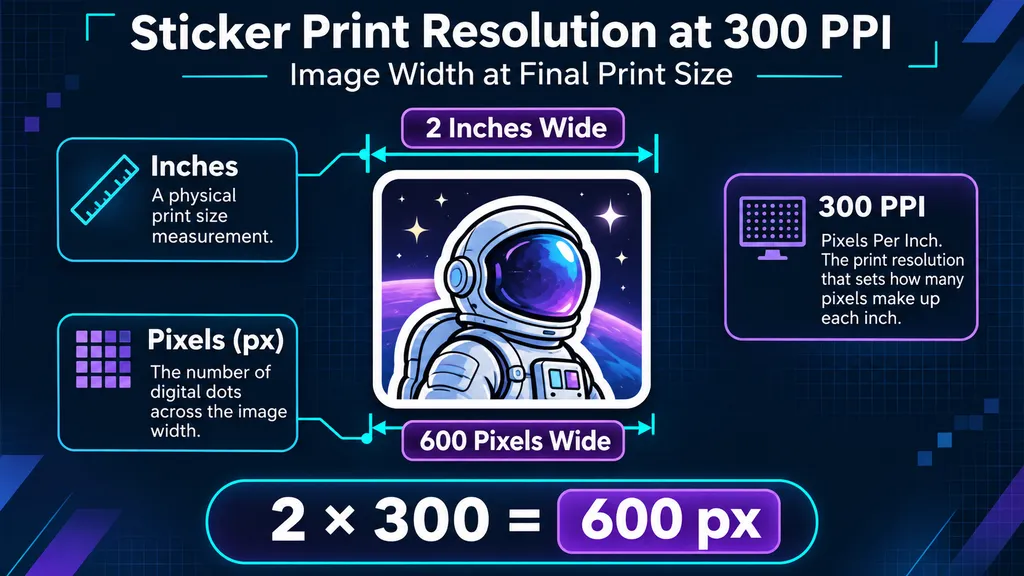
For printing, prepare images at an appropriate resolution. At 300 PPI, a 2-inch-wide sticker requires 600 pixels across at final print size.
Check transparency, background colors, and text readability before exporting. Enlarging a low-resolution image doesn't automatically restore missing detail.
Add Borders and Choose the Right Cut Shape
Two common sticker formats are die-cut and kiss-cut.
Format | Cutting Method | Best Use |
Die-Cut | Cuts through sticker and backing | Individual stickers |
Kiss-Cut | Cuts sticker layer while preserving backing | Sticker sheets |
White borders help separate artwork from its surroundings and provide space around complex shapes.
However, cutting accuracy depends on the equipment and materials.
One documented Cricut troubleshooting case involved a creator whose machine cut through the backing even at a reported minimum pressure setting of 60.
Practical lesson: Test the blade, pressure, and material combination before cutting an entire batch. One reported setting should never be treated as a universal recommendation.
Arrange, Print, and Cut Your Designs
One documented home-production workflow combined Procreate for illustration, Mac Preview for image preparation, an A4 layout template, and Cricut Design Space for printing and cutting.
Before producing multiple copies, check:
- Image sharpness and readable text.
- Spacing between individual stickers.
- Border alignment and cutting accuracy.
- Whether stickers separate cleanly from their backing.
Material choice also matters:
Sticker Material or Finish | Main Consideration |
Paper | Suitable for many indoor decorative applications |
Vinyl | May offer better moisture resistance, depending on construction |
Transparent | Background and underlying surface affect visibility |
Holographic | Reflective effects can compete with fine details |
Laminated | Protection depends on laminate quality and application |
No material should be assumed waterproof or UV-resistant without checking its actual specifications.
For sellers, production capacity creates another challenge.
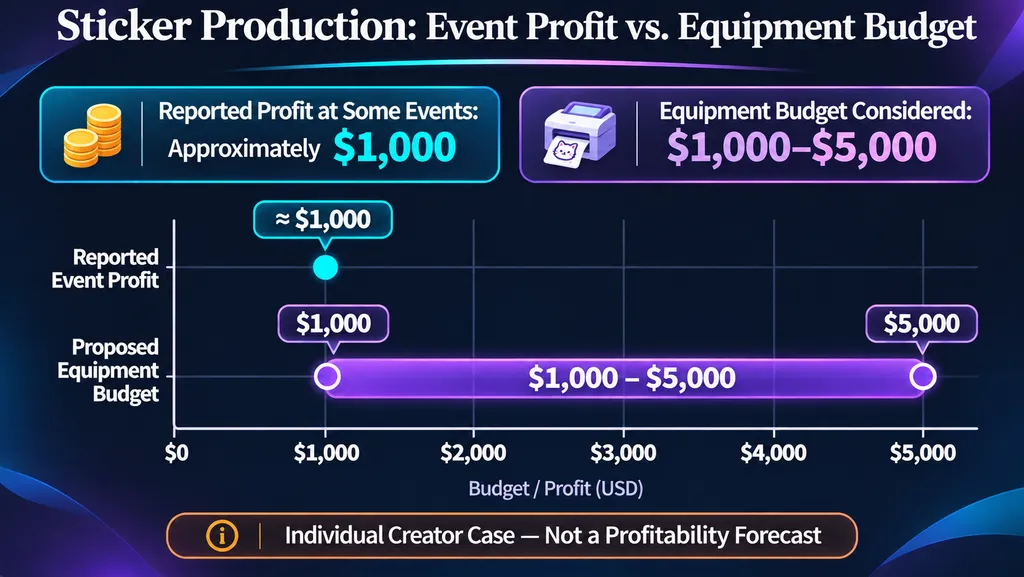
In one Artist Alley case, a creator reported sometimes earning approximately $1,000 in profit at an event while considering $1,000–$5,000 in equipment investment. Manual production and restocking remained significant difficulties.
These figures describe one creator's experience, not typical profits or equipment requirements.
What Makes a Good Sticker Design?
Our research suggests evaluating every sticker through three questions: Who is it for? Where will it be used? Can it be produced consistently?
Match the Design to Its Audience
Cute characters may appeal to collectors, while functional labels serve planner users. A niche-specific illustration can provide more meaningful personalization than a generic graphic.
For sellers, establish a recognizable audience before creating dozens of variations.
The previously examined Etsy case—over 100 designs but approximately three annual sales—illustrates the importance of testing demand rather than relying on catalog size alone.
Keep Colors, Typography, and Characters Consistent
Use compatible colors, typography, character proportions, and illustration styles. A clear design system can help maintain consistency across a larger sticker collection.
For text-based stickers, confirm legibility at actual size. For illustrated collections, simplify details that may disappear during printing.
Develop original characters and distinctive visual combinations rather than copying protected artwork.
A consistent visual identity helps individual stickers function as one recognizable collection.
Consider Production Before Finalizing
Review cutting outlines, narrow elements, borders, materials, and final dimensions.
Home printing may be sufficient for occasional personal projects. For recurring orders, evaluate the time needed for printing, laminating, cutting, and restocking.
Professional production can reduce manual work, but the most practical choice depends on actual costs, quantities, and demand.
FAQ
Why Aren't My Sticker Designs Selling?
A large catalog doesn't guarantee demand. Our research identified individual sellers with extensive collections but limited sales. Evaluate your audience, design presentation, pricing, distribution channels, and product quality. Test a focused collection before increasing production.
What's the Difference Between Die-Cut and Kiss-Cut Stickers?
Die-cut stickers are cut through both the sticker material and backing, creating individual shaped pieces. Kiss-cut stickers preserve an intact backing sheet, making them suitable for sticker sheets and easier peeling. Choose according to the intended product format.
Why Is My Cricut Cutting Through Sticker Backing?
Possible causes include cutting pressure, blade condition, material thickness, or incorrect machine settings. Test a small sample and adjust the configuration for your specific materials. Settings that work for one sticker paper may not work for another.
Can I Make Stickers Without a Cutting Machine?
Yes. Print artwork on suitable adhesive paper and cut it manually with scissors or a craft knife. Professional printing services are another option. A cutting machine improves repeatability but isn't essential for small personal projects.
Conclusion
The best sticker design ideas balance creativity, audience relevance, and production practicality. Cute characters, retro illustrations, personalized artwork, and functional labels can all become distinctive collections when supported by a consistent visual identity. Start with one theme, develop coordinated variations, and test your designs before printing. With Virse, you can explore multiple AI-powered creative directions, organize visual references, and refine your ideas into a cohesive sticker collection.