40 T-Shirt Design Ideas: Creative Styles & Examples for 2026
 Yifan Zhao18 分钟阅读 ·
The best t-shirt design ideas combine a distinctive visual style, a clear message, and a layout that looks great on an actual garment. From vintage graphics and minimalist line art to bold streetwear typography and hand-drawn illustrations, there are countless ways to turn a creative concept into wearable art. Understanding the elements of design can help you make better decisions about contrast, color, and composition.
But finding an original idea is harder than scrolling through inspiration. Generic templates, overcrowded typography, awkward graphic placement, and designs that look better on a screen than on fabric can make a shirt feel cheap. Whether you're creating merchandise, launching a clothing brand, or designing a personalized gift, you need more than attractive images—you need concepts that work in practice. A thoughtful graphic design workflow can help you move from inspiration to a more distinctive result.
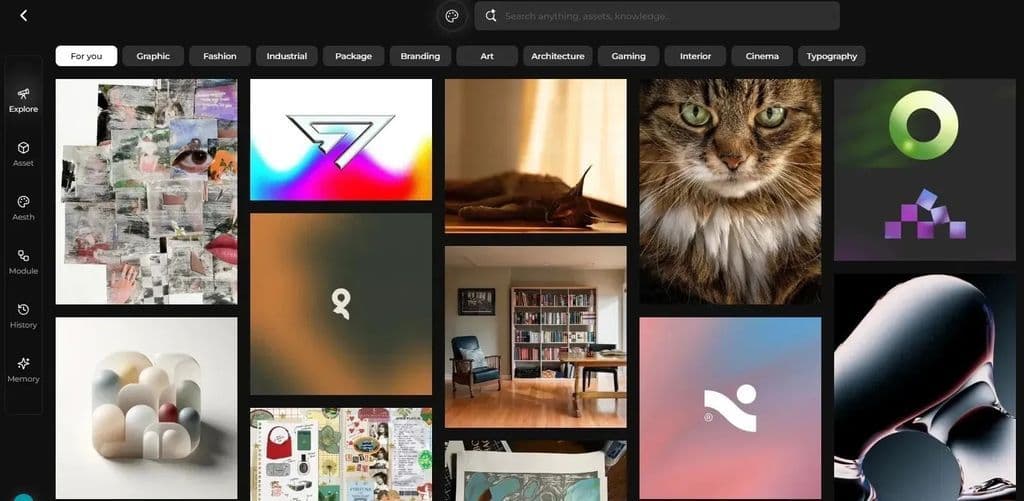
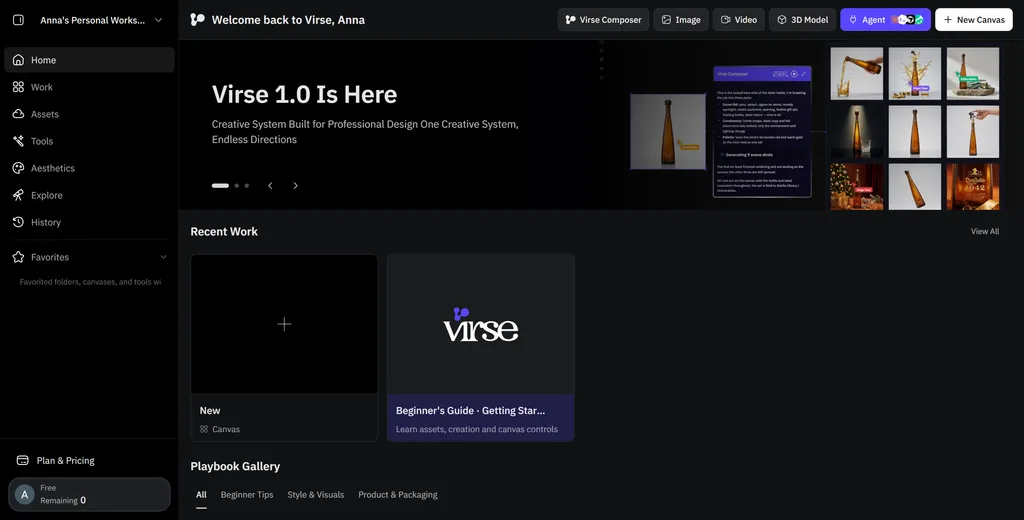
With Virse, you can explore t-shirt design concepts using multiple AI image models on an Infinite Canvas. Generate illustrations, compare artistic styles, experiment with colors, and refine individual elements using reference images. You can also develop a consistent visual direction using an AI fashion design workflow before preparing your artwork for production. This guide covers 40 creative t-shirt design ideas, along with practical tips for turning your favorite concepts into original artwork suitable for printing.
40 Creative T-Shirt Design Ideas by Style
A memorable graphic tee doesn't have to be complicated. Some designs succeed through bold visual impact, while others work because of subtle typography, personal meaning, or clever illustrations.
The following 40 ideas are organized by artistic style so you can find a direction that matches your intended audience.
Vintage and Retro T-Shirt Design Ideas
1. Vintage Sunset Graphic
Create a layered sunset using burnt orange, mustard yellow, and faded red. Place a mountain or palm-tree silhouette in front of the sun to establish depth. Add small retro lettering above or below the illustration.
Best for: Travel merchandise, casual streetwear, and outdoor brands.
Design tip: Use a limited palette and subtle distressing to create an aged appearance without sacrificing readability.
2. Retro Racing T-Shirt
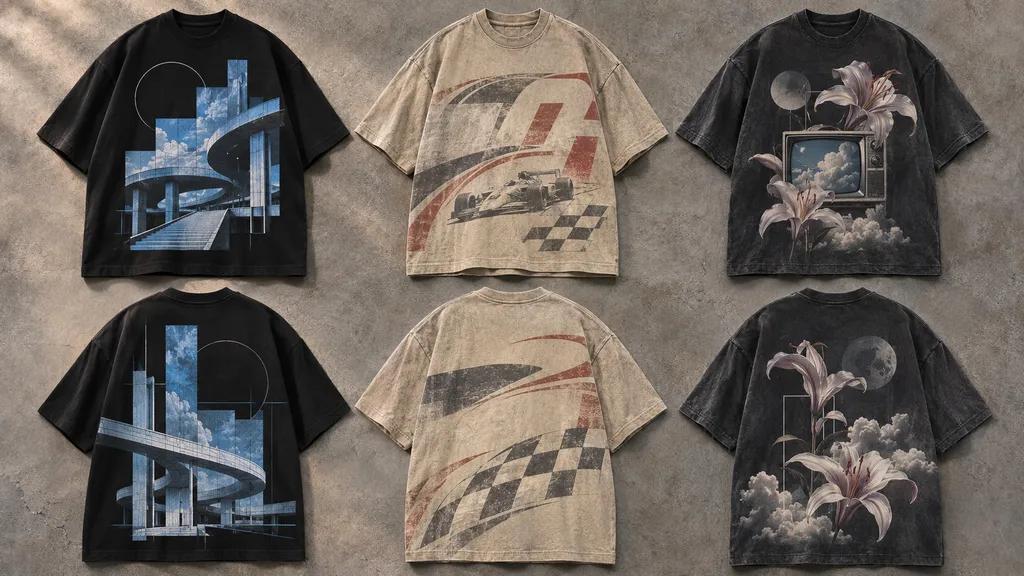
Combine a large racing number with checkered flags, angled stripes, and bold condensed typography. A red, cream, and navy palette can create a vintage motorsport aesthetic.
Best for: Automotive enthusiasts and retro-inspired streetwear.
Design tip: Make the racing number the dominant element. Keep smaller lettering subordinate to the main graphic.
3. Vintage Botanical Illustration
Illustrate mushrooms, wildflowers, or herbs with fine pen-and-ink details. Pair the drawing with understated serif typography and earthy colors.
Best for: Nature lovers, independent artists, and minimalist lifestyle brands.
Design tip: Simplify very fine botanical details when preparing artwork for printing.
4. 1990s Geometric Graphic
Experiment with irregular geometric shapes, overlapping circles, zigzag patterns, and playful typography. Use contrasting colors while maintaining a clear focal point.
Best for: Nostalgic fashion collections and expressive casualwear.
Design tip: Avoid combining every retro effect in one composition. Choose one dominant visual treatment.
5. Retro Travel Poster
Design an original illustrated destination poster featuring mountains, beaches, desert landscapes, or city architecture. Use classic poster composition with a prominent location name.
Best for: Travel souvenirs and location-inspired apparel.
Design tip: Create original illustrations rather than reproducing copyrighted travel posters.
AI Prompt Example:
"Vintage national park t-shirt graphic featuring a mountain lake at sunset, retro screen-print illustration, muted burnt orange and forest green palette, distressed texture, balanced composition, limited colors, isolated artwork on a plain background, no mockup, no existing logos."
Streetwear T-Shirt Design Ideas
Streetwear graphics often emphasize recognizable visual identity, dramatic placement, and expressive illustrations.
6. Oversized Back Graphic
Build a large back illustration around one recognizable subject, such as a mechanical flower, imaginary creature, or surreal cityscape. Pair it with a small coordinating front-chest symbol.
Best for: Contemporary streetwear collections.
Design tip: Coordinate the front and back graphics through shared colors or symbols.
7. Japanese-Inspired Graphic Layout
Explore asymmetrical arrangements, bold vertical typography, and restrained color combinations inspired by contemporary Japanese graphic design.
Best for: Experimental fashion and illustration-focused collections.
Design tip: Verify Japanese text with a fluent speaker and understand the cultural meaning of any symbols you use.
8. Abstract Graffiti Illustration
Combine expressive brushstrokes, paint splashes, irregular shapes, and original handwritten lettering.
Best for: Urban fashion and artist merchandise.
Design tip: Use negative space deliberately so the artwork doesn't become visually overwhelming.
9. Cyberpunk City Graphic
Illustrate a futuristic urban environment featuring layered architecture, dramatic lighting, and atmospheric perspective.
Best for: Science-fiction enthusiasts and futuristic fashion.
Design tip: Limit neon colors to focal elements so the composition remains readable.
10. Gothic Typography
Use ornate lettering, symmetrical decorative elements, and a dark monochromatic palette to create a dramatic graphic.
Best for: Alternative streetwear and music-inspired clothing.
Design tip: Check readability at the size people will actually see on the shirt.
AI Prompt Example:
"Oversized streetwear t-shirt back graphic featuring an original futuristic city illustration, dramatic urban architecture, black and electric blue color palette, layered graphic composition, contemporary underground fashion aesthetic, isolated print artwork, no brand names, no mockup."
Minimalist T-Shirt Design Ideas
Minimalist designs rely on intentional spacing, clean shapes, and strong visual hierarchy. Exploring different layout design principles can help you achieve balance without adding unnecessary elements.
11. Continuous-Line Portrait
Create a face, animal, or abstract figure using one uninterrupted line. Let the line itself define the composition.
12. Small Chest Symbol
Choose a recognizable symbol, such as a flower, star, sun, or original geometric mark. Position it on the chest with generous surrounding space.
13. Mountain Outline
Represent a landscape with a few deliberate lines and minimal shading. Use one or two contrasting colors.
14. One-Word Typography
Select a meaningful word and explore letter spacing, weight, proportions, and alignment. Make typography the entire design.
15. Geometric Abstract Composition
Combine circles, arches, rectangles, and overlapping shapes into a balanced abstract arrangement.
Best for these styles: Everyday casualwear, minimalist brands, and understated personalized gifts.
Design tip: Minimalist artwork requires precise alignment and spacing because there are fewer elements to hide mistakes.
AI Prompt Example:
"Minimalist continuous-line illustration of a cat stretching, elegant black vector-style linework, balanced negative space, sophisticated contemporary apparel graphic, clean edges, isolated on a white background, no text, no mockup."
Hand-Drawn T-Shirt Design Ideas
Hand-drawn graphics can create a more personal impression than polished stock-style designs. Imperfect lines and organic textures help illustrations feel expressive and original.
16. Illustrated Pet Portrait
Draw a recognizable pet using expressive ink lines, simplified colors, and distinctive facial features.
17. Playful Childlike Illustration
Create intentionally imperfect characters with uneven outlines and surprising proportions.
18. Watercolor Floral Design
Arrange soft flowers with translucent colors and organic edges.
19. Detailed Pen-and-Ink Artwork
Explore crosshatching, stippling, and traditional illustration textures.
20. Hand-Drawn Doodle Collage
Build a composition around related objects, such as coffee cups, books, flowers, and small decorative symbols.
Best for these styles: Personalized merchandise, creative gifts, independent artist brands, and playful clothing collections.
Design tip: Preserve the personality of hand-drawn artwork while removing details that could disappear during printing.
AI Prompt Example:
"Whimsical hand-drawn t-shirt illustration of a small dog carrying a bouquet of flowers, playful imperfect ink outlines, soft muted colors, charming independent artist aesthetic, simple composition, isolated artwork, no background scene, no text."
Typography T-Shirt Design Ideas
Typography can carry the entire design without requiring a complex illustration.
21. Oversized Statement Typography
Place a short original phrase across the chest using bold display lettering.
22. Curved Retro Lettering
Arrange a phrase around an illustration using an arched or circular composition.
23. Handwritten Message
Use natural-looking lettering to communicate a personal message or short original statement.
24. Experimental Type Layout
Explore staggered baselines, repeated words, dramatic scale differences, or intentional asymmetry.
25. Typography with a Small Icon
Pair a concise phrase with one complementary illustration.
Best for these styles: Casual streetwear, event merchandise, and personalized gifts.
Design tip: If the illustration already communicates the message, additional text may weaken the composition.
AI Prompt Example:
"Original graphic t-shirt typography concept featuring the words 'CREATE YOUR OWN PATH', bold condensed retro lettering, subtle curved composition, small mountain icon, cream and dark green colors, clean visual concept, no mockup."
AI-generated lettering may contain spelling errors or inconsistent characters. Use the generated result as a visual reference and finalize the typography in a dedicated design application.
Nature and Outdoor T-Shirt Design Ideas
Nature-inspired graphics can appeal to hikers, campers, travelers, and people who enjoy outdoor aesthetics.
26. Mountain Adventure Illustration
Use overlapping mountain silhouettes and pine trees to create a graphic with depth.
27. Ocean Wave Graphic
Explore flowing wave lines, abstract water patterns, or a simplified coastal landscape.
28. Forest Wildlife Illustration
Feature an original fox, deer, owl, or bear illustration surrounded by subtle botanical details.
29. Celestial Night Sky
Combine a moon, stars, orbital shapes, and abstract astronomical patterns.
30. Desert Landscape Graphic
Create a warm composition featuring cacti, rock formations, and distant hills.
Best for these styles: Outdoor enthusiasts, travelers, and nature-inspired fashion.
Design tip: Choose colors that contrast with the garment rather than relying on a digital background that may not print well.
AI Prompt Example:
"Contemporary outdoor t-shirt graphic featuring a desert canyon landscape, large golden sun, layered terracotta rock formations, minimalist illustrated composition, warm neutral palette, flat colors, isolated artwork, no text, no mockup."
Personalized and Niche T-Shirt Design Ideas
Niche designs communicate specific interests, identities, and personal experiences.
31. Personalized Pet Portrait
Turn a real pet photo into an illustration while preserving recognizable features.
32. Hobby-Themed Graphic
Build a design around gardening, climbing, photography, cooking, or another specific hobby.
33. Profession-Inspired Artwork
Create original illustrations that represent a profession through its tools, activities, or visual culture.
34. Family Event T-Shirt
Develop a coordinated graphic for a reunion, celebration, or group trip.
35. Custom City Illustration
Illustrate a meaningful skyline, landmark, or neighborhood scene.
Best for these styles: Gifts, small communities, niche brands, and limited-edition merchandise.
Design tip: Personalization is most effective when the artwork reflects something specific about its intended wearer.
AI Prompt Example:
"Custom illustrated pet portrait for a premium t-shirt design, friendly golden retriever wearing a vintage bandana, expressive hand-drawn ink style, restrained earthy color palette, centered composition, isolated print artwork, no text."
Creative and Experimental T-Shirt Design Ideas
Experimental graphics can help your clothing stand apart from conventional merchandise.
36. Surreal Object Combination
Combine unrelated objects, such as a television growing flowers or a floating coffee cup surrounded by clouds.
37. Optical Illusion Artwork
Create abstract forms that suggest movement, depth, or impossible geometry.
38. Mixed-Media Collage
Blend original photographs, paper textures, illustrations, and graphic shapes into one composition.
39. Split-Style Illustration
Represent one subject in two contrasting visual styles, such as realistic photography and hand-drawn line art.
40. Original Mascot Character
Create a distinctive fictional character with recognizable proportions, colors, and visual personality.
Best for these styles: Creative merchandise, experimental streetwear, artist collections, and brands developing a recognizable identity.
Design tip: Keep the central concept understandable even when experimenting with unconventional effects.
AI Prompt Example:
"Surreal graphic t-shirt illustration featuring a vintage television with wildflowers growing from the screen, contemporary editorial illustration style, muted pastel palette, strong silhouette, clean balanced composition, original visual concept, isolated artwork, no text, no mockup."
T-Shirt Design Ideas for Different Audiences
A design should communicate something meaningful to the person wearing it.
The same artistic style can produce very different results depending on the intended audience.
Audience | Recommended Design Direction | Creative Approach |
|---|---|---|
Streetwear enthusiasts | Bold back prints, gothic lettering, abstract graphics | Strong visual identity and distinctive composition |
Outdoor enthusiasts | Mountains, forests, wildlife | Nature-inspired colors and recognizable landscapes |
Pet owners | Personalized animal portraits | Expressive illustrations based on real pets |
Minimalist fashion lovers | Small symbols, line art, typography | Restrained colors and negative space |
Artists and designers | Abstract art, collage, experimental type | Original visual experimentation |
Music enthusiasts | Original music-inspired illustrations | Mood, genre, and personal identity |
Small clothing brands | Character designs and cohesive collections | Repeatable visual themes and consistent styling |
How to Choose a T-Shirt Design Niche
Start with the people you want to reach.
Consider:
- What interests or identities does your audience want to express?
- Would they prefer subtle graphics or attention-grabbing artwork?
- What colors and clothing styles do they already wear?
- Does the design communicate an idea without requiring a lengthy explanation?
- Could the visual theme support several related products?
Avoid assuming that a trending design will automatically generate sales.
A seller experience discussed in a print-on-demand community described 574 visitors over three days without an add-to-cart action or sale. The underlying cause was not established, but the example illustrates an important distinction: traffic is not the same as product-market fit.
A better approach is to create several concepts for a clearly defined audience, test their visual appeal, and gather feedback before investing in larger production runs.
How to Create Your Own T-Shirt Design with AI
You don't need to be an experienced illustrator to develop an original t-shirt graphic.
The key is to start with a clear concept, explore variations, and refine the design before preparing production files.
To illustrate the process, consider a hypothetical project for an independent outdoor clothing brand.
The goal is to create a vintage mountain graphic that looks distinctive on a dark green cotton t-shirt.
This is an illustrative workflow, not a claim that we manufactured or tested the finished garment.
Step 1: Define Your Design Concept
Start by identifying the intended audience and visual direction.
Element | Design Decision |
|---|---|
Audience | Outdoor enthusiasts |
Theme | Mountain adventure |
Style | Vintage screen-print illustration |
Primary colors | Burnt orange, cream, forest green |
Graphic placement | Large back print |
Typography | Small retro-style lettering |
Shirt color | Dark green |
Overall mood | Nostalgic, adventurous, understated |
This brief establishes boundaries that help prevent unrelated visual elements from appearing in the design.
Step 2: Generate the First Visual Concept
Open Virse and describe your intended design using a detailed prompt.
For example:
"Original vintage mountain adventure t-shirt graphic, layered mountain peaks, pine forest silhouettes, warm sunset, classic outdoor illustration, burnt orange and cream color palette, subtle distressed print texture, centered composition, isolated artwork on plain background, no text, no existing logos, no mockup."
The initial goal is to explore composition and artistic style.
A promising result should have a recognizable focal point, balanced colors, and shapes that remain understandable at smaller sizes.
Step 3: Create Three Different Variations
Instead of generating nearly identical images, explore three distinct visual directions.
Variation A: Minimalist Mountain Graphic
"Simplify the mountain illustration into a minimalist two-color graphic with simplified silhouettes, bold clean shapes, strong negative space, and a vintage outdoor aesthetic."
This direction emphasizes clarity and restrained detail.
Variation B: Detailed Vintage Illustration
"Refine the mountain graphic into a detailed vintage outdoor illustration with layered pine trees, subtle linework, warm sunset colors, and lightly weathered print texture."
This direction emphasizes texture and traditional illustration.
Variation C: Bold Streetwear Composition
"Reinterpret the mountain landscape as an oversized contemporary streetwear back graphic with dramatic composition, high contrast, strong silhouettes, and a limited retro color palette."
This direction emphasizes scale and visual impact.
Compare these variations by asking:
- Which graphic has the clearest focal point?
- Which remains recognizable at a distance?
- Which palette suits the shirt?
- Which composition matches the brand's identity?
- Which design would be easiest to adapt for the intended printing method?
Step 4: Refine Your Favorite Artwork
Choose the variation that best matches your original brief.
For this example, imagine selecting Variation A because its simplified shapes fit the brand's understated aesthetic.
Using Virse's reference-image editing workflow, explore adjustments such as:
- Moving the sun behind the mountain
- Simplifying the tree silhouettes
- Increasing contrast between the foreground and background
- Removing unnecessary decorative elements
- Testing a cream-and-orange palette
Keep earlier versions on the Infinite Canvas so you can compare changes without losing the original direction. When making multiple edits, the techniques described in our guide to preserving design accuracy in AI mockups can help you plan which elements should remain unchanged.
Step 5: Add Typography Carefully
Create a short original phrase that supports the visual theme.
For example:
WANDER BEYOND
Place the phrase above or below the illustration using a readable retro display font.
Because AI-generated lettering may contain errors, rebuild the final typography in a dedicated graphic design application.
Check spelling, letter spacing, alignment, and commercial font licensing.
Don't add text simply because the composition feels empty. A strong illustration may work better without a slogan.
Step 6: Preview the Design on a T-Shirt
A graphic that looks attractive on a digital canvas may not look equally appealing on clothing.
Place the artwork onto a dark green shirt mockup.
Evaluate:
- Whether the graphic contrasts with the garment
- Whether the composition feels balanced
- Whether the artwork is too close to the collar
- Whether the lettering remains readable
- Whether the graphic looks appropriate at its intended physical size
Compare different shirt colors and placements before committing to a final layout.
A mockup helps evaluate appearance, but it cannot guarantee the final printed result.
Step 7: Prepare the Artwork for Printing
The final artwork must be adapted to the selected printing method.
For a traditional screen-printing workflow, the printer may request separated colors or vector artwork.
For DTG or DTF, the printer may accept a high-resolution PNG with transparency.
For embroidery, the design must be converted into a suitable stitch file.
An AI-generated image is a design starting point, not automatically a print-ready production file.
Always confirm your printer's requirements and request a physical sample before commercial production.
How to Make Your T-Shirt Design Look Professional
Professional-looking t-shirt designs share several characteristics regardless of their artistic style.
Create a Clear Visual Hierarchy
The viewer should quickly understand which element is most important.
If everything is equally bold, the composition becomes difficult to read.
Choose one primary visual element and use secondary details to support it.
Limit Unnecessary Colors
A restrained color palette can make a design more cohesive.
However, the appropriate number of colors depends on the artistic effect and printing method.
For example, traditional screen printing may become more complex when additional ink colors require additional screens.
Full-color digital printing handles colors differently.
Match the Artwork to the Shirt Color
Dark graphics may disappear against black fabric.
Very light artwork may lose definition on white shirts.
Test several garment colors and adjust contrast when necessary.
Consider Print Size and Placement
A graphic's ideal size depends on the garment, intended audience, and design style.
A minimalist chest icon requires a different layout from an oversized streetwear back print.
Evaluate placement on actual garment measurements rather than relying on a universal template.
Preserve Consistency Across a Collection
If you're creating several shirts for the same brand, establish a recognizable visual language.
Consistent typography, colors, illustration techniques, and layout principles help individual designs feel like part of a collection.
Common T-Shirt Design Mistakes to Avoid
Using Generic Graphics Without Customization
Stock-style artwork can make a design feel interchangeable.
Personalize the concept through original illustrations, unexpected visual combinations, distinctive colors, and thoughtful composition.
Adding Too Much Text
Large slogans combined with detailed illustrations can compete for attention.
If the illustration communicates the concept, additional wording may be unnecessary.
Ignoring the Actual Garment
Designs should be evaluated on clothing, not only on a blank canvas.
Always consider fabric color, fit, graphic placement, and physical print dimensions.
Using Low-Resolution Artwork
Small images can appear blurry or pixelated when enlarged.
Prepare artwork at the dimensions required by your printer rather than relying on its screen preview.
Ignoring Copyright and Trademarks
Avoid copying existing logos, copyrighted characters, brand identities, or protected artwork without permission.
An AI-generated design can still create intellectual property concerns if it closely reproduces recognizable protected material.
Choosing the Wrong Printing Method
Detailed illustrations, large solid-color graphics, and full-color photographs may require different printing approaches.
Before finalizing the artwork, understand which production method best suits your design.
How to Prepare Your Artwork for Different T-Shirt Printing Methods
Your design choices can affect printing cost, appearance, texture, and durability.
Printing Method | Suitable Design Types | Important Considerations |
|---|---|---|
Screen Printing | Bold graphics, limited-color artwork, larger production runs | Setup requirements and additional colors |
Direct-to-Garment (DTG) | Detailed illustrations and full-color artwork | Fabric compatibility and pretreatment |
Direct-to-Film (DTF) | Complex graphics, small batches, mixed fabric types | Transfer quality and print feel |
Sublimation | Full-color artwork on suitable polyester fabrics | Fabric composition and garment color |
Heat Transfer Vinyl (HTV) | Simple logos, lettering, and shapes | Layering complexity and material feel |
Embroidery | Small logos, symbols, and lettering | Stitch density and design simplification |
For a detailed comparison of techniques, read our guide to t-shirt printing methods.
Choosing the printing method before making final production adjustments can help avoid unnecessary revisions.
Frequently Asked Questions
What Are the Most Popular T-Shirt Design Styles?
Common directions include vintage graphics, minimalist typography, streetwear illustrations, nature-inspired artwork, and personalized designs. The right style depends on your audience and the identity you want the shirt to communicate.
How Can I Make a Unique T-Shirt Design?
Start with a specific theme, experiment with original compositions, and personalize the artwork through typography, colors, and illustrations. AI tools can help explore concepts, but the final result benefits from deliberate editing.
Can I Design a T-Shirt with AI?
Yes. AI image generators can help create illustrations, visual concepts, and design variations. You should still review the artwork, correct text errors, check commercial-use rights, and prepare the final files according to your printer's requirements.
What File Format Is Best for T-Shirt Printing?
It depends on the printing process. High-resolution PNG files with transparent backgrounds are commonly accepted for some digital-printing workflows, while vector formats are useful for many logos and simplified graphics. Always follow your print provider's specifications.
Conclusion
The best t-shirt design ideas balance originality, audience relevance, and practical production requirements. Whether you prefer vintage graphics, minimalist line art, bold streetwear illustrations, or personalized artwork, start with a clear creative direction and refine it until the design feels intentional. With Virse, you can explore multiple visual concepts, experiment with artistic styles, and develop original t-shirt graphics in one creative workspace before preparing your favorite designs for printing.