Berapa Harga Kling 3.0? Harga 2026, Kredit, dan Biaya Nyata per Video
 Yifan Zhao8 menit baca ·
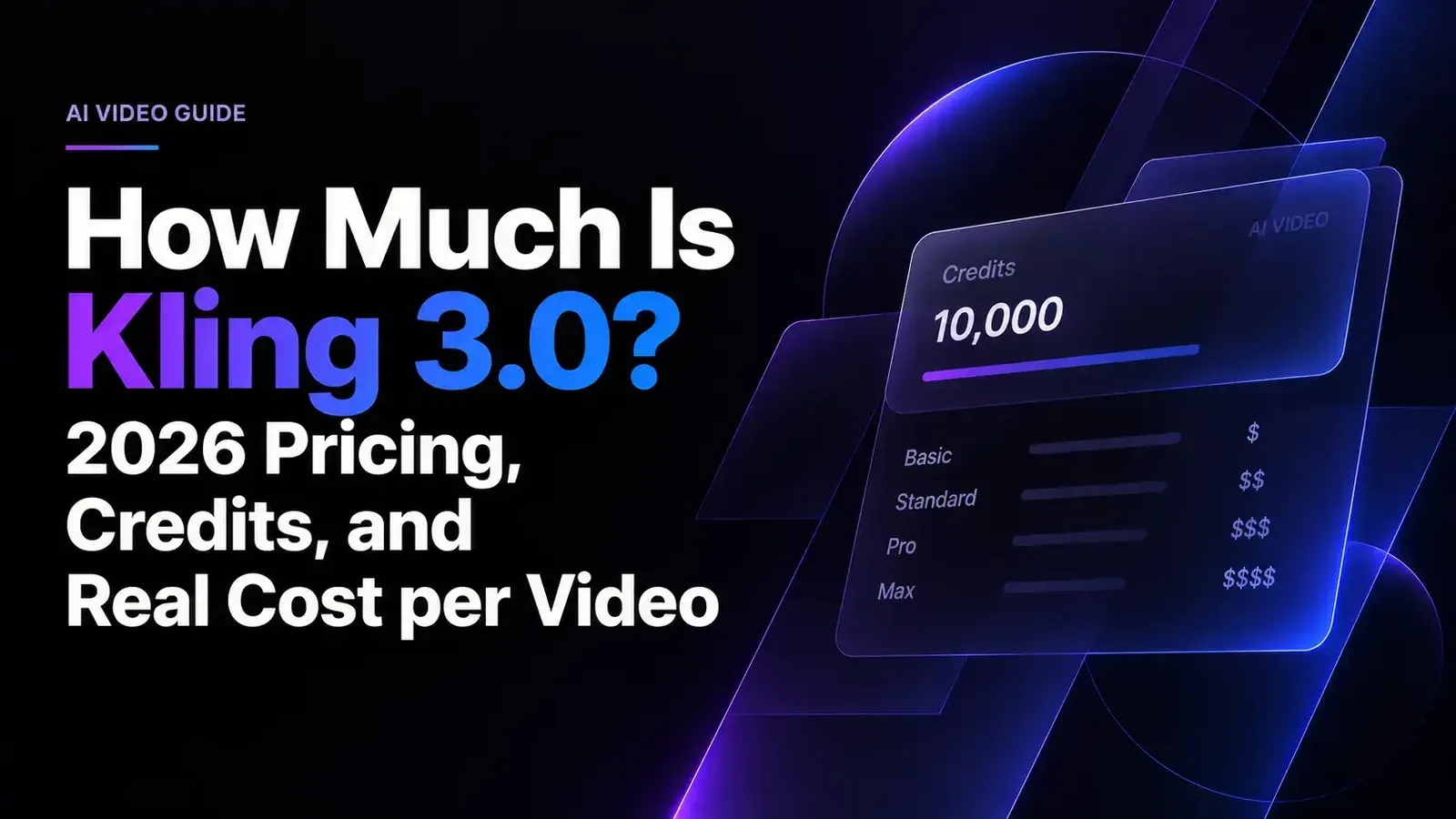
Kling 3.0 mulai $6.99 untuk langganan Standard pertama, sedangkan Pro mulai $25.99 dengan 3,000 kredit bulanan. Sebuah video 10 detik menggunakan 60–120 kredit pada 720p atau 1080p tergantung audio, sedangkan 4K native membutuhkan 300 kredit.
Biaya yang lebih besar muncul selama iterasi. Setelah percobaan ulang, resolusi lebih tinggi, audio native, perbaikan konsistensi, dan hasil generasi yang ditolak diperhitungkan, besarnya biaya per shot yang disetujui dapat menjadi beberapa kali lipat harga satu generasi.
Untuk tim yang menginginkan pilihan model lebih fleksibel, Virse menyatukan 40+ model AI dalam satu alur desain berbasis kanvas. Paket berbayar mencakup penggunaan tanpa batas model seperti Nano Banana 2 dan GPT Image 2 dengan kursi pengguna tak terbatas, sedangkan pengguna baru mendapat kredit gratis untuk hingga 10 gambar Nano Banana 2 atau satu video Seedance 2.0. Seedance 2.5, Seedance 2.0, dan MiniMax H3 juga tersedia di halaman model Virse.
Harga Kling 3.0: Berapa Biaya Setiap Paket?
Kling 3.0 diakses melalui sistem keanggotaan dan kredit Kling AI, bukan dibeli sebagai model konsumen mandiri.
Paket | Langganan Pertama | Perpanjangan Bulanan | Kredit Bulanan |
|---|---|---|---|
Basic | $0 | $0 | Tanpa kredit bulanan |
Standard | $6.99 | $8.80 | 660 |
Pro | $25.99 | $32.56 | 3,000 |
Premier | $64.99 | $80.96 | 8,000 |
Ultra | $127.99 | $159.99 | 26,000 |
Harga diskon merupakan penawaran langganan pertama, bukan tarif perpanjangan standar. Perbedaan ini penting saat memperkirakan biaya generasi jangka panjang.
Biaya Kling 3.0 per 100 Kredit
Berdasarkan harga perpanjangan yang dipublikasikan, biaya efektif per 100 kredit bulanan sekitar:
Paket | Biaya per 100 Kredit |
|---|---|
Standard | $1.33 |
Pro | $1.09 |
Premier | $1.01 |
Ultra | $0.62 |
Ultra memiliki biaya kredit terendah, tetapi kredit termurah tidak otomatis berarti paket paling hemat. Jatah yang lebih besar hanya menghemat biaya jika alur kerja Anda memakainya sebelum kredit kedaluwarsa.
Apakah Kredit Kling Kedaluwarsa?
Ya. Kebijakan pembayaran Kling saat ini menyatakan bahwa kredit langganan keanggotaan berlaku satu bulan sejak dibagikan, sementara kredit yang dibeli terpisah berlaku dua tahun.
Karena itu, volume produksi menjadi faktor penting dalam memilih paket. Membeli paket bulanan lebih besar hanya demi biaya per kredit yang lebih rendah bisa tidak efisien jika sebagian jatah kedaluwarsa tanpa digunakan.
Biaya Kredit Kling 3.0: Berapa Kredit yang Digunakan Video?
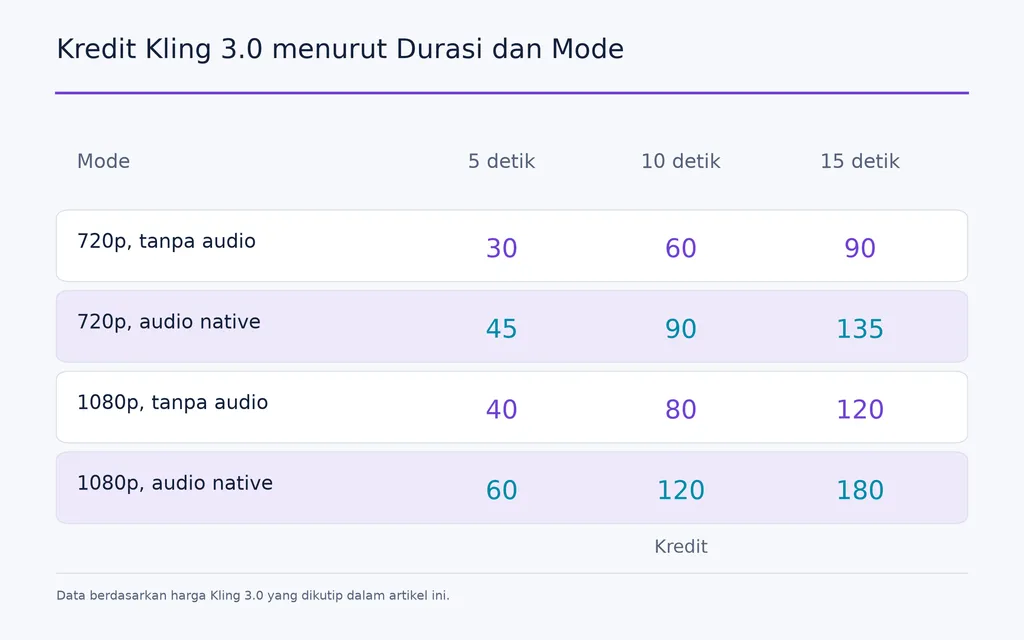
Kling VIDEO 3.0 mengenakan biaya per detik yang dihasilkan, dengan tarif dasar ditentukan oleh resolusi dan audio native.
Pengaturan Kling 3.0 | Kredit/detik | 5 Detik | 10 Detik | 15 Detik |
|---|---|---|---|---|
720p, tanpa audio native | 6 | 30 | 60 | 90 |
720p, audio native | 9 | 45 | 90 | 135 |
1080p, tanpa audio native | 8 | 40 | 80 | 120 |
1080p, audio native | 12 | 60 | 120 | 180 |
4K native | 30 | 150 | 300 | 450 |
Kling 3.0 mendukung durasi generasi fleksibel dari 3 hingga 15 detik, sehingga durasi menjadi salah satu variabel termudah untuk dikendalikan saat mengelola kredit.
Harga Audio Native dan Kontrol Suara Kling 3.0
Audio native menaikkan tarif dasar sebesar 50% pada kedua resolusi umum:
- 720p naik dari 6 menjadi 9 kredit/detik.
- 1080p naik dari 8 menjadi 12 kredit/detik.
Kontrol Suara menambah 2 kredit/detik lagi. Jadi, video 10 detik pada 1080p dengan audio native dan Kontrol Suara membutuhkan 140 kredit.
Untuk eksplorasi visual, jarang perlu langsung mengaktifkan semua opsi premium. Jika musik, sulih suara, atau desain suara akan ditambahkan nanti, draf tanpa suara dapat menyisakan lebih banyak kredit untuk menguji gerakan dan komposisi.
Biaya per Video Kling 3.0: Berapa Biaya Klip 10 Detik?
Dengan harga perpanjangan Pro sebesar $32.56 untuk 3,000 kredit, satu kredit yang termasuk dalam paket bernilai efektif sekitar $0.0109.
Hasil 10 Detik | Kredit | Perkiraan Nilai Kredit Pro |
|---|---|---|
720p, tanpa audio | 60 | $0.65 |
720p, audio native | 90 | $0.98 |
1080p, tanpa audio | 80 | $0.87 |
1080p, audio native | 120 | $1.30 |
1080p, audio + Kontrol Suara | 140 | $1.52 |
4K native | 300 | $3.26 |
Angka ini menunjukkan nilai efektif kredit langganan, bukan tagihan terpisah untuk setiap render.
Yang lebih penting, $1.30 adalah biaya satu generasi 1080p, belum tentu biaya satu video 10 detik yang sudah selesai.
Biaya Produksi Nyata Kling 3.0: Berapa Biaya Shot yang Disetujui?
Tinjauan kami atas pertanyaan publik pengguna yang berulang menemukan bahwa salah satu kesalahan harga paling umum adalah menganggap satu generasi sebagai satu hasil yang bisa dipakai.
Dalam alur video AI profesional, kesalahan gerakan, komposisi lemah, perubahan detail produk, konsistensi karakter, waktu dialog, dan alternatif kreatif dapat memerlukan percobaan tambahan.
Model perencanaan yang lebih berguna adalah:
Kredit per percobaan × percobaan per shot yang disetujui × jumlah shot akhir
Skenario Produksi: Satu Iklan Produk 10 Detik
Pertimbangkan shot produk 10 detik pada 1080p dengan audio native.
Satu percobaan membutuhkan 120 kredit. Jika perlu empat percobaan sebelum gerakan produk, pembingkaian, dan hasil keseluruhan diterima:
120 × 4 = 480 kredit
Dengan perhitungan biaya perpanjangan Pro, percobaan tersebut mewakili sekitar $5.21 nilai kredit yang termasuk dalam paket.
Intinya bukan bahwa setiap shot perlu empat percobaan. Namun, tingkat iterasi lebih memengaruhi biaya produksi nyata daripada harga yang ditampilkan untuk satu render.
Skenario Produksi: Kampanye 12 Shot
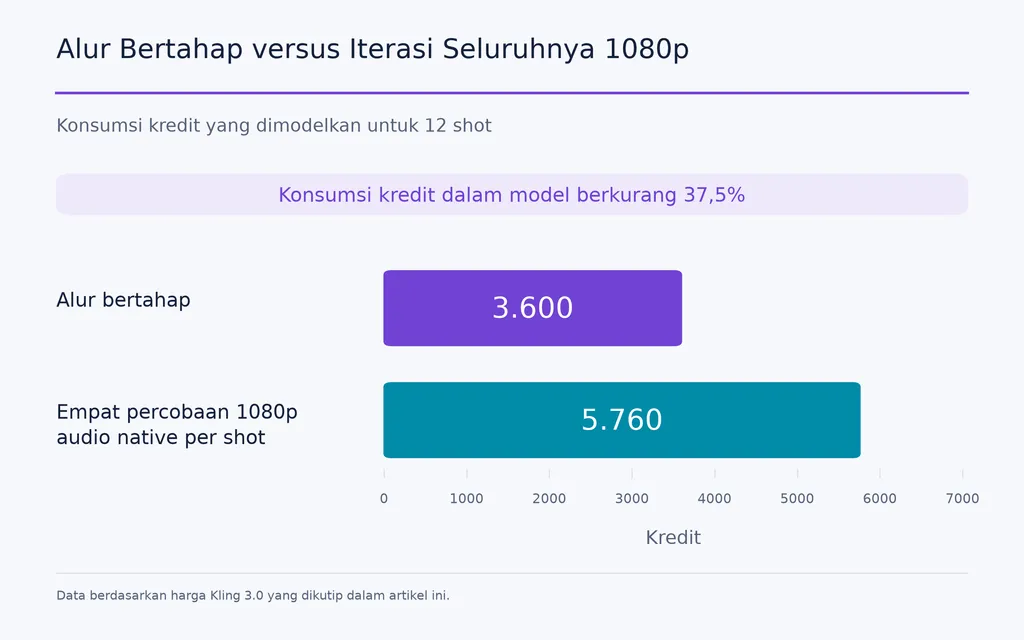
Kini modelkan kampanye yang memerlukan 12 klip 10 detik yang disetujui pada 1080p dengan audio native, dengan rata-rata empat percobaan per shot yang disetujui.
- 120 kredit per percobaan
- 4 percobaan per shot
- 12 shot akhir
- Total 5,760 kredit
Jumlah itu melebihi jatah bulanan Pro sebesar 3,000 kredit. Jatah 8,000 kredit Premier memberikan ruang cadangan jauh lebih besar untuk pola produksi ini.
Karena itu, tim sebaiknya memilih paket berdasarkan volume shot yang disetujui dan perkiraan tingkat iterasi, bukan hanya jumlah video teoretis.
Strategi Harga Kling 3.0: Bagaimana Mengurangi Biaya Generasi?
Cara paling praktis untuk mengendalikan pengeluaran Kling 3.0 adalah memisahkan eksplorasi kreatif dari generasi berkualitas akhir.
Skenario Produksi: Eksplorasi 720p Sebelum Hasil Akhir 1080p
Untuk satu shot 10 detik:
- Hasilkan tiga konsep 720p tanpa suara: 180 kredit.
- Bandingkan pembingkaian, aksi, dan arah visual.
- Hasilkan arah terpilih pada 1080p dengan audio native: 120 kredit.
- Total: 300 kredit.
Sebaliknya, melakukan empat percobaan 1080p dengan audio native akan memakai 480 kredit.
Untuk 12 shot, alur bertahap memakai 3,600 kredit alih-alih 5,760 kredit, yang berarti pengurangan 37.5% pada konsumsi kredit dalam model perhitungan.
Ini tidak berarti hasil beresolusi lebih rendah akan direproduksi identik pada 1080p. Tujuannya adalah menyingkirkan arah yang lemah sebelum berulang kali membayar hasil yang lebih mahal.
Durasi juga berguna untuk mengendalikan biaya. Generasi enam detik pada 1080p dengan audio native memakai 72 kredit, dibandingkan 120 kredit untuk 10 detik. Jika suntingan akhir hanya memerlukan enam detik, menghasilkan durasi berlebih tidak memberi nilai produksi.
Harga 4K Kling 3.0: Apakah 300 Kredit untuk 10 Detik Layak?
4K native Kling 3.0 membutuhkan 30 kredit per detik, sehingga generasi 10 detik memakai 300 kredit dan generasi 15 detik memakai 450.
Dibandingkan generasi 10 detik pada 1080p dengan audio native, 4K native menggunakan 2.5 kali jumlah kredit. Dibandingkan 720p tanpa suara, jumlahnya lima kali lipat.
Untuk storyboard, konsep media sosial, tinjauan internal, dan eksplorasi visual awal, 4K biasanya sulit dibenarkan sebagai pengaturan bawaan. Untuk close-up produk, iklan sinematik, layar besar, dan visual yang mementingkan tekstur atau detail merek halus, resolusi tambahan memiliki peran lebih jelas.
Pendekatan praktisnya sederhana: tetapkan arah kreatif terlebih dahulu, lalu gunakan kredit 4K pada shot yang benar-benar membutuhkan detail hasil akhir.
Harga API Kling 3.0: Berapa Biaya Generasi Terprogram?
Akses API Kling memakai sistem penagihan pengembang terpisah, bukan kredit keanggotaan konsumen.
Pengecekan harga pengembang terbaru pada Agustus–September 2026 melaporkan ekuivalen tarif resmi berikut. Karena harga dan paket API dapat berubah secara terpisah dari paket konsumen, tim produksi perlu memastikan tarif pengembang terkini sebelum berkomitmen pada generasi bervolume besar.
Pengaturan API | Tarif yang Dilaporkan | Biaya 10 Detik |
|---|---|---|
720p, tanpa audio | $0.084/detik | $0.84 |
720p, audio native | $0.126/detik | $1.26 |
1080p, tanpa audio | $0.112/detik | $1.12 |
1080p, audio native | $0.168/detik | $1.68 |
4K | $0.420/detik | $4.20 |
Untuk kreasi manual, kredit keanggotaan biasanya lebih mudah dianggarkan. Akses API lebih relevan ketika Kling diintegrasikan ke agen kreatif, sistem produksi batch, alur produk, atau alur konten otomatis.
Paket Kling 3.0 Mana yang Paling Sepadan dengan Biayanya?
Paket | Paling Cocok Untuk | Batasan Utama |
|---|---|---|
Basic | Pengujian awal | Tanpa jatah kredit bulanan tetap |
Standard | Kreasi sesekali | 660 kredit cepat habis |
Pro | Kreator individu rutin | Cadangan terbatas untuk iterasi berat |
Premier | Produksi kampanye | Komitmen bulanan lebih tinggi |
Ultra | Produksi bervolume tinggi | Nilai bergantung pada penggunaan jatah secara konsisten |
Bagi kebanyakan kreator individu rutin, Pro adalah titik awal paling kuat karena 3,000 kredit memberi ruang cukup untuk eksperimen bermakna tanpa langsung mengambil langganan bervolume tinggi.
Premier menjadi lebih praktis ketika produksi bulanan berulang kali melampaui jatah Pro. Ultra sebaiknya dipandang sebagai keputusan kapasitas untuk alur kerja yang dapat secara konsisten memakai kumpulan kredit yang jauh lebih besar.
FAQ Harga Kling 3.0
Apakah Kling 3.0 gratis?
Kling memiliki paket Basic seharga $0, tetapi struktur harga saat ini tidak memberikan alokasi kredit bulanan tetap untuk Basic. Informasi paket saat ini juga membedakan keanggotaan berbayar yang memiliki fitur produksi dan manfaat penggunaan komersial, sehingga Standard atau Pro lebih relevan untuk pekerjaan profesional berkelanjutan.
Berapa video yang bisa dibuat dengan 3,000 kredit Kling?
Untuk generasi VIDEO 3.0 berdurasi 10 detik, 3,000 kredit secara teoretis mencukupi 50 klip 720p tanpa suara, 33 klip 720p dengan audio native, 37 klip 1080p tanpa suara, 25 klip 1080p dengan audio native, atau 10 klip 4K native. Jumlah hasil nyata yang disetujui biasanya lebih rendah bila alur kerja membutuhkan percobaan ulang.
Apakah kredit Kling kedaluwarsa?
Ya. Kredit keanggotaan bulanan saat ini berlaku satu bulan sejak dibagikan, sedangkan kredit yang dibeli terpisah berlaku dua tahun. Ini penting saat membandingkan paket lebih tinggi karena kredit bulanan yang tidak digunakan dapat mengurangi penghematan yang tampak dari biaya per kredit lebih rendah.
Berapa biaya video Kling 3.0 berdurasi 10 detik?
Video Kling 3.0 berdurasi 10 detik memakai 60 kredit pada 720p tanpa audio, 90 dengan audio native, 80 pada 1080p tanpa audio, 120 pada 1080p dengan audio native, dan 300 kredit pada 4K native. Dengan biaya perpanjangan Pro, nilainya sekitar $0.65 hingga $3.26 dalam kredit paket sebelum percobaan ulang.
Kesimpulan
Kling 3.0 mulai $6.99 untuk langganan Standard pertama, sedangkan Pro mulai $25.99 dengan 3,000 kredit bulanan; harga perpanjangan bulanan saat ini masing-masing $8.80 dan $32.56. Generasi 10 detik yang umum memakai 60–120 kredit pada 720p atau 1080p, sedangkan 4K native memakai 300 kredit. Namun, untuk produksi nyata, ukuran yang lebih baik adalah biaya per shot yang disetujui: percobaan ulang dapat mengubah generasi 1080p senilai sekitar $1.30 menjadi konsumsi kredit beberapa dolar sebelum hasil yang bisa dipakai disetujui. Strategi paling efisien adalah memvalidasi konsep melalui alur iterasi berbiaya lebih rendah, menghasilkan hanya durasi yang diperlukan, mengaktifkan audio native ketika menambah nilai produksi nyata, dan membatasi 4K untuk shot yang hasil akhirnya benar-benar memperoleh manfaat dari detail tambahan.