30 Creative Box Design Ideas for Gifts & Packaging
Vincent12 min read ·

The best box design ideas combine eye-catching visuals, practical structures, and memorable unboxing experiences. From minimalist packaging and luxury gift boxes to playful illustrations and personalized product boxes, great designs should reflect your brand, protect your product, and fit your budget.
But creating a box that looks professional and works in real production isn't always easy. High printing costs, confusing dieline templates, and limited design options can turn an exciting concept into an expensive mistake. Even an impressive 3D mockup may not translate into a functional package.
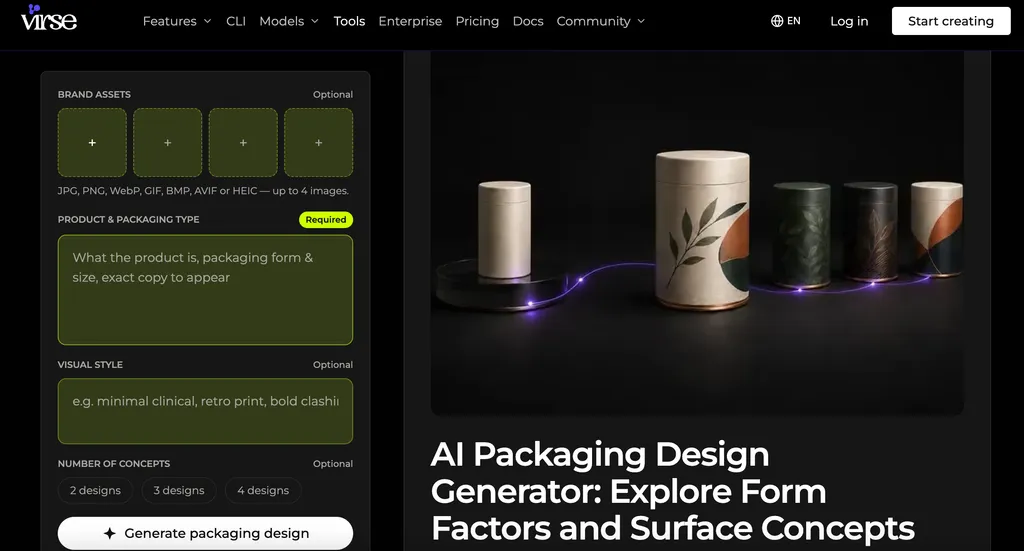
With Virse, you can turn packaging inspiration into distinctive visual concepts using an Infinite Canvas and multiple AI image models. Explore different box styles, compare designs side by side, and refine colors, compositions, and reference images without restarting your creative process. Develop a clearer packaging direction before investing in production.
What Makes a Good Box Design?
A good box design balances visual identity, product protection, usability, and manufacturing cost. The strongest packaging communicates a clear brand message while remaining practical to produce, ship, and open.
Match Your Box Design to the Product
Start with the product's dimensions, weight, and positioning.
Jewelry often benefits from rigid structures and fitted inserts. Cosmetics need recognizable typography across product variants. Ecommerce packaging prioritizes protection and efficient assembly.
A documented luxury chocolate packaging project illustrates the importance of connecting visual presentation with physical production. The designer used Blender for visualization, Illustrator for artwork, and a factory-produced sample to evaluate the concept beyond its digital appearance.
Choose the Right Structure, Materials, and Budget
Box Type | Best For | Main Consideration |
Folding carton | Cosmetics, retail products | Lightweight construction |
Rigid box | Jewelry, luxury gifts | Presentation and cost |
Corrugated mailer | Ecommerce, subscriptions | Shipping protection |
Drawer box | Chocolate, accessories | Interactive opening |
Window box | Toys, gift products | Product visibility |
Sleeve packaging | Retail products, bundles | Flexible branding |
Choose the box structure before finalizing artwork. Changing dimensions, folds, or materials later can require extensive design revisions.
30 Creative Box Design Ideas by Style
These 30 creative box design ideas cover six visual directions. Each includes suitable applications and practical considerations to help turn inspiration into workable packaging.
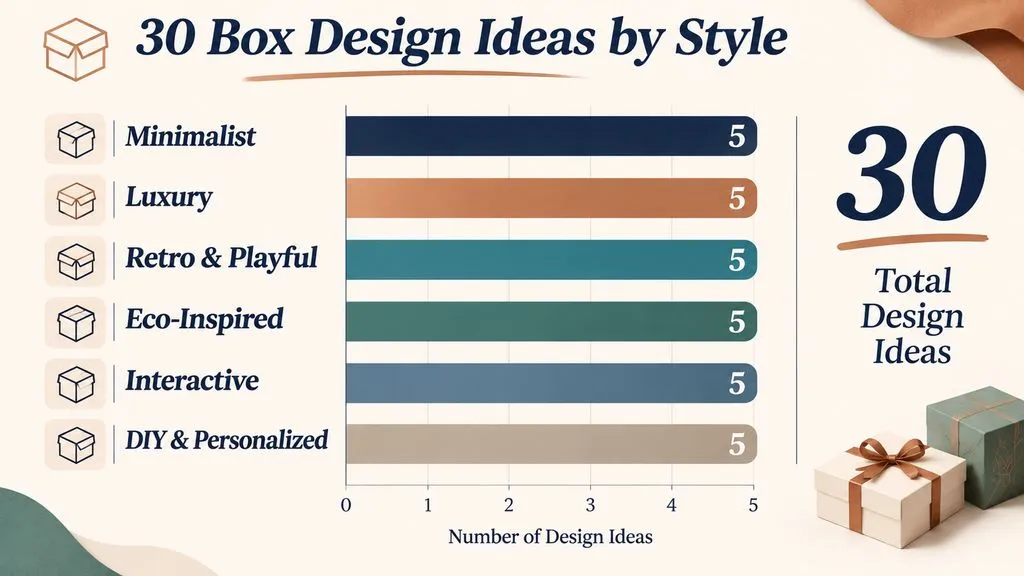
Minimalist Box Design Ideas
- Monochrome Matte Box: Use a single dominant color with restrained typography and a contrasting logo. Ideal for skincare, electronics accessories, and premium stationery.
- Typography-First Packaging: Make the product name the primary visual element through oversized lettering and intentional whitespace. Suitable for coffee, candles, and fragrances.
- Natural Kraft Box: Combine kraft-colored packaging with simple illustrations or one-color printing. Works well for handmade soaps and artisanal products. Verify material claims before describing packaging as sustainable.
- White Box With Color Accents: Use a white exterior with one distinctive accent color on the lid or interior. This creates consistency across multiple product variants.
- Geometric Pattern Box: Apply repeating shapes across different panels. Suitable for cosmetics, stationery, and creative product collections. Ensure patterns align across folds.
Luxury Box Design Ideas
- Black and Gold Rigid Box: Pair a dark exterior with selective metallic detailing. Ideal for jewelry, watches, and premium gifts. Check actual finishing samples before production.
- Magnetic Closure Gift Box: Use a hinged rigid structure with a magnetic closure. Suitable for presentation kits and luxury gift sets.
- Sliding Drawer Box: Create a gradual product reveal with an inner sliding tray. Particularly effective for chocolate, jewelry, and accessories.
- Embossed Logo Packaging: Introduce tactile branding using raised or recessed lettering. Keep decorative details clear of critical structural areas.
- Fabric-Lined Jewelry Box: Combine a simple exterior with a soft interior insert. Prioritize product stability, protection, and coordinated colors.
Retro and Playful Box Design Ideas
- Vintage Botanical Box: Combine botanical illustrations, decorative typography, and muted colors. Suitable for tea, chocolate, and handmade goods.
- Bold Pop-Art Packaging: Use vibrant colors, oversized graphics, and contrasting shapes for candy, toys, and collectibles.
- Retro Typography Box: Build a nostalgic identity through vintage-inspired lettering and carefully selected colors. Ideal for coffee and lifestyle merchandise.
- Character-Based Packaging: Create an original illustrated mascot across the exterior, interior, and supporting brand materials. Suitable for children's products.
- Abstract Pattern Box: Develop a recognizable system of geometric or organic patterns, changing colors across different products while preserving brand consistency.
A documented seasonal packaging project extended a consistent graphic identity across several product formats, illustrating how one visual system can support an entire packaging collection.
Eco-Inspired Box Design Ideas
- Uncoated Paperboard Box: Emphasize natural paper texture and minimal graphics. Suitable for stationery, soaps, and personal care products.
- Minimal-Ink Packaging: Use selective typography and limited printed areas. Environmental benefits depend on actual materials and production conditions, not appearance alone.
- Reusable Storage Box: Design packaging that customers can repurpose for accessories or stationery. The structure must remain durable and convenient after the original product is removed.
- Paperboard Insert Box: Explore folded paperboard inserts to organize products. Confirm protection requirements before replacing other cushioning materials.
- Modular Packaging System: Use coordinated box dimensions and interchangeable graphics across product variants to maintain a recognizable visual identity.
Interactive Box Design Ideas
- Pop-Up Surprise Box: Add a folded paper element that rises when opened. Suitable for birthdays and promotional gifts.
- Window Display Box: Reveal part of the product through a transparent window. Useful for toys, chocolates, and collectibles.
- Puzzle-Inspired Box: Incorporate interlocking panels or a playful opening mechanism. Keep the opening experience intuitive, not unnecessarily difficult.
- Storytelling Box: Spread illustrations across multiple panels so customers discover a narrative while rotating or opening the packaging.
- Hidden-Message Box: Print a personalized message or illustration inside the lid. This adds personality to otherwise standard ecommerce packaging.
DIY and Personalized Gift Box Ideas
- Ribbon-Wrapped Gift Box: Combine a standard box with decorative ribbon and a customized tag. Suitable for weddings and birthdays.
- Photo Memory Box: Add photographs, dates, and personal messages. Ideal for anniversaries and keepsakes.
- Seasonal Illustrated Box: Adapt an existing packaging design for holidays while preserving core brand elements.
- Monogram Gift Box: Create personalized initials using elegant typography, embossing, or printed labels. Suitable for weddings and jewelry.
- Layered Surprise Box: Use nested compartments to reveal several gifts in sequence. Ensure every item remains secure and accessible.
Box Design Ideas for Different Products
The best packaging design depends on the product category, customer expectations, and distribution method. Food products, ecommerce shipments, and luxury gifts require different structural and visual decisions.
Food and Chocolate Packaging
A documented luxury chocolate packaging project demonstrates the relationship between digital design and physical manufacturing.
The workflow combined Blender visualization, Illustrator artwork, and a factory-produced sample.
This separation matters because a visually convincing rendering cannot confirm structural accuracy, material suitability, or product fit.
Chocolate gift boxes may use illustrated sleeves, rigid drawer structures, or compartmentalized interiors. Food-contact materials and mandatory product information must satisfy applicable regulations.
Small-Business Ecommerce Packaging
Small businesses frequently face two practical challenges: controlling minimum order quantities and maintaining recognizable branding.
Fully printed shipping boxes offer integrated visual identity but may require greater inventory commitments.
An alternative is to combine standard shipping cartons with branded stickers, tape, tissue paper, or interior cards.
Plain exterior packaging can also provide greater discretion during delivery, making branding placement a strategic decision rather than a universal rule.
Jewelry and Premium Gift Packaging
Jewelry packaging often benefits from rigid structures, fitted inserts, and coordinated interior finishes.
Drawer boxes create a gradual reveal, while magnetic closure boxes offer a more deliberate opening experience.
Regardless of style, the box must protect the product and remain easy to use. Decorative finishes should support the experience rather than compromise functionality.
How to Design a Box From Scratch
To design a box from scratch, measure the product, choose a structure, prepare the dieline, develop artwork, create a mockup, and test a physical sample. Each stage answers a different design or manufacturing question.
Step 1: Measure the Product and Prepare a Dieline
Record the product's dimensions, weight, and any required protective space.
A box dieline is a flattened structural layout showing panels, cuts, folds, and assembly features.
Some beginners explore box construction by unfolding existing packaging. This can help explain structural relationships, but it does not automatically create a manufacturer-ready dieline.
Request the correct dieline from your packaging supplier whenever possible.
Step 2: Create Artwork and a 3D Box Mockup
Develop multiple visual directions before selecting the final design.
Illustrator supports vector artwork and packaging layouts. Blender can visualize assembled packaging, while specialized mockup software supports presentation workflows.
AI design tools can accelerate early creative exploration.
For example, a chocolate packaging concept might be explored in minimalist, botanical, and vintage-inspired styles before choosing one direction.
With Virse's Infinite Canvas, designers can compare visual concepts, refine compositions, and develop packaging artwork ideas in one workspace.
The selected concept must still be transferred into suitable production files.
Step 3: Prepare Print Files and Test a Prototype
Before approving production, confirm:
- Correct dieline and dimensions.
- Cut, fold, and glue areas.
- Bleed and safe areas.
- Artwork orientation and typography.
- Printing colors and finishing specifications.
- Physical sample approval.
A mockup communicates appearance, a dieline defines the structural layout, and a physical sample helps evaluate the assembled package.
Treat these as complementary checkpoints rather than interchangeable deliverables.
Affordable Box Design Ideas for Small Businesses
Small businesses can create attractive packaging without immediately investing in fully customized boxes. The most practical approach balances branding, order volume, and total production costs.
Branded Stickers vs. Custom Printed Boxes
Packaging Option | Main Advantage | Main Limitation |
Plain box + sticker | Flexible customization | Manual application |
Branded tape | Visible shipping identity | Limited graphic area |
Printed sleeve | Customizable presentation | Extra packaging component |
Fully printed box | Integrated brand artwork | Inventory commitments |
Rigid gift box | Premium presentation | Potentially higher costs |
For early-stage brands, standard packaging with selective customization can be more flexible than committing to large quantities of printed inventory.
What Do Real Packaging Cost Cases Reveal?
The packaging cases reviewed for this article illustrate how order size, supplier quotations, and design labor affect project economics. These are individual reported experiences, not independently verified market benchmarks.
Case Study 1: 50 Custom Boxes at Approximately $3 Each
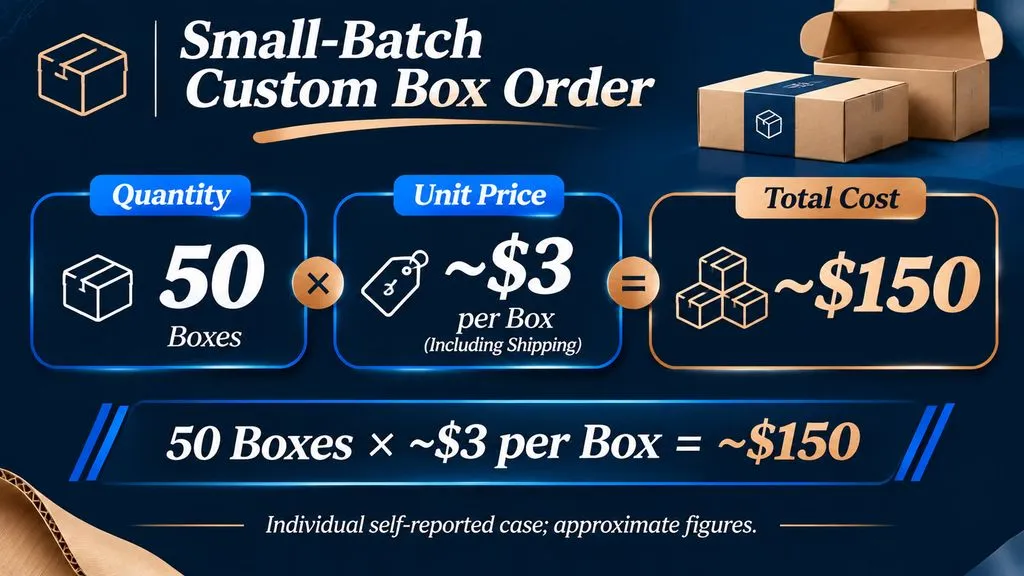
One small-business account described purchasing 50 custom boxes for approximately $3 each, including shipping.
The operator also reported recovering the packaging expense within approximately two months.
The business objective was to strengthen presentation and encourage customers to share their unboxing experiences.
However, the available account does not include verified sales attribution or a comparison group. This is an illustrative outcome, not a predictable ROI.
Case Study 2: Comparing $2.50 and $0.50 Supplier Quotes
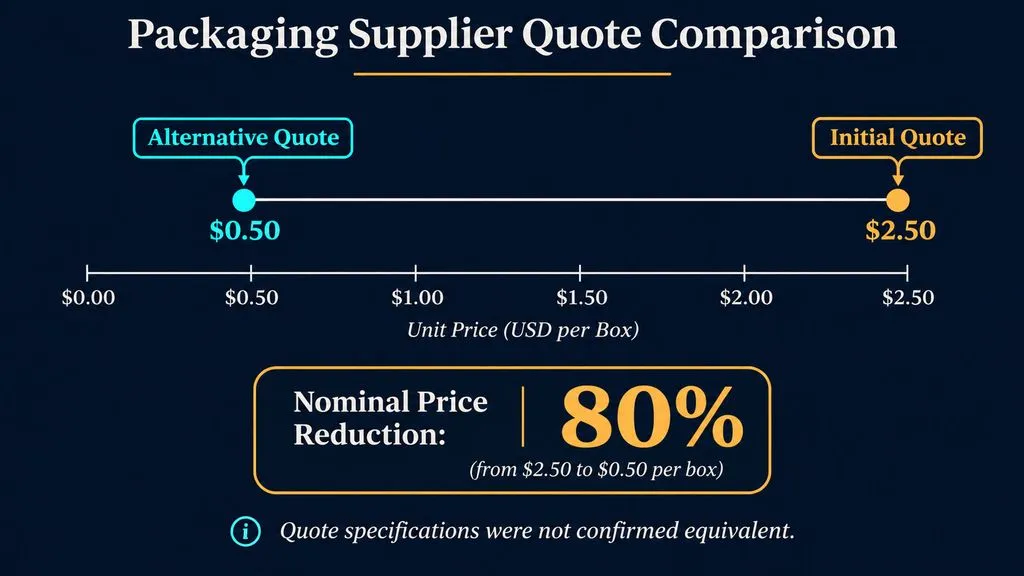
Another purchasing case described an initial quotation of approximately $2.50 per box and an alternative quotation near $0.50.
Cost Comparison | Initial Quote | Alternative Quote |
Unit price | $2.50 | $0.50 |
Nominal reduction | — | 80% |
The difference is mathematically equivalent to an 80% lower nominal unit price.
However, identical materials, quantities, delivery conditions, and production specifications were not established.
The practical lesson is to compare like-for-like supplier quotations rather than assuming the lowest advertised price represents the best value.
Case Study 3: $150 for Approximately 8 Hours of Packaging Design
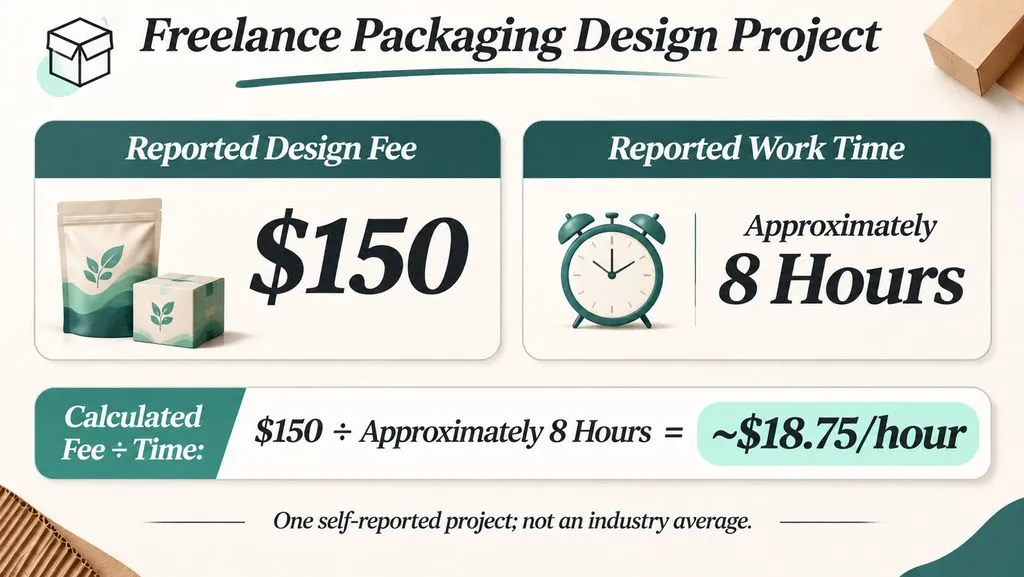
A freelance packaging project involving pet-food packaging reportedly cost $150 for approximately 8 hours of design and revisions.
The work included Illustrator-based artwork, illustrations, product information, and layouts across the packaging panels.
This illustrates an important distinction: design labor and physical packaging production are separate expenses.
The quoted amount should not be interpreted as an industry-average design rate.
When evaluating a project, compare the total cost of artwork, samples, production, delivery, and assembly instead of focusing only on the box unit price.
Common Box Design Mistakes to Avoid
Many packaging problems emerge when attractive visual concepts are developed without considering structural specifications, production constraints, and commercial costs.
Confusing a 3D Mockup With a Production Dieline
A 3D mockup is intended to visualize the finished package. A dieline defines the flattened structural layout used in artwork preparation and manufacturing.
A realistic rendering does not guarantee that the box can be manufactured correctly.
Ignoring Supplier Requirements
Incorrect dimensions, fold positions, glue areas, or artwork orientation can create production issues.
Always confirm the manufacturer's specifications and evaluate appropriate samples before approving a production run.
Assuming Expensive Packaging Guarantees Better Results
Luxury finishes and complicated structures can increase expenses without necessarily improving sales.
For smaller brands, standard boxes with customized stickers or sleeves may provide greater flexibility.
The packaging cost cases above reinforce the importance of comparing suppliers and testing realistic budgets rather than assuming premium packaging will pay for itself.
Choosing the Wrong Packaging Design Software
Different tools serve different purposes.
Illustrator supports vector artwork, Blender supports 3D visualization, and ArtiosCAD addresses specialized structural packaging workflows.
AI platforms such as Virse support creative exploration and visual refinement, but do not replace manufacturer-approved structural specifications.
Choose tools according to the required deliverable rather than expecting one platform to handle every stage.
FAQ
How do I design a box from scratch?
Measure the product, select an appropriate box structure, and obtain a compatible dieline. Create the visual artwork, prepare a 3D mockup, and confirm the manufacturer's production requirements. Test a physical sample before approving production, especially when the box includes unusual closures, inserts, or materials.
Where can I find free box dieline templates?
Packaging manufacturers and design platforms provide templates for common box structures. Check whether the template matches your intended dimensions and production requirements. A supplier-approved dieline is preferable for commercial production, because generic templates may not account for specific materials, folds, or assembly conditions.
Are custom printed boxes worth it for small businesses?
It depends on order volume, packaging costs, product positioning, and branding objectives. Fully printed boxes offer consistent branding, while plain boxes with stickers or tape provide flexibility. Compare total costs and test customer response before committing to larger quantities. Custom printing does not guarantee higher sales.
Can AI design a box that is ready for printing?
AI tools can generate packaging concepts, explore visual styles, and refine artwork directions. However, an AI-generated mockup is not automatically a production-ready dieline. Manufacturing still requires suitable artwork, accurate structural specifications, and supplier approval. AI is most useful during concept exploration and design iteration.
Conclusion
The best box design ideas balance creativity, product protection, brand identity, and production costs. Whether you're designing minimalist retail cartons, luxury gift boxes, or affordable ecommerce packaging, start with the product and its intended customer experience. Explore different visual directions, select a suitable structure, prepare accurate dielines, and test physical samples before printing. With AI creative tools like Virse, you can explore and refine packaging concepts before committing to production, helping turn creative inspiration into distinctive, practical designs.