Wine Label Design: Legal Requirements + 30 Creative Examples
 Yifan Zhao16 min read ·
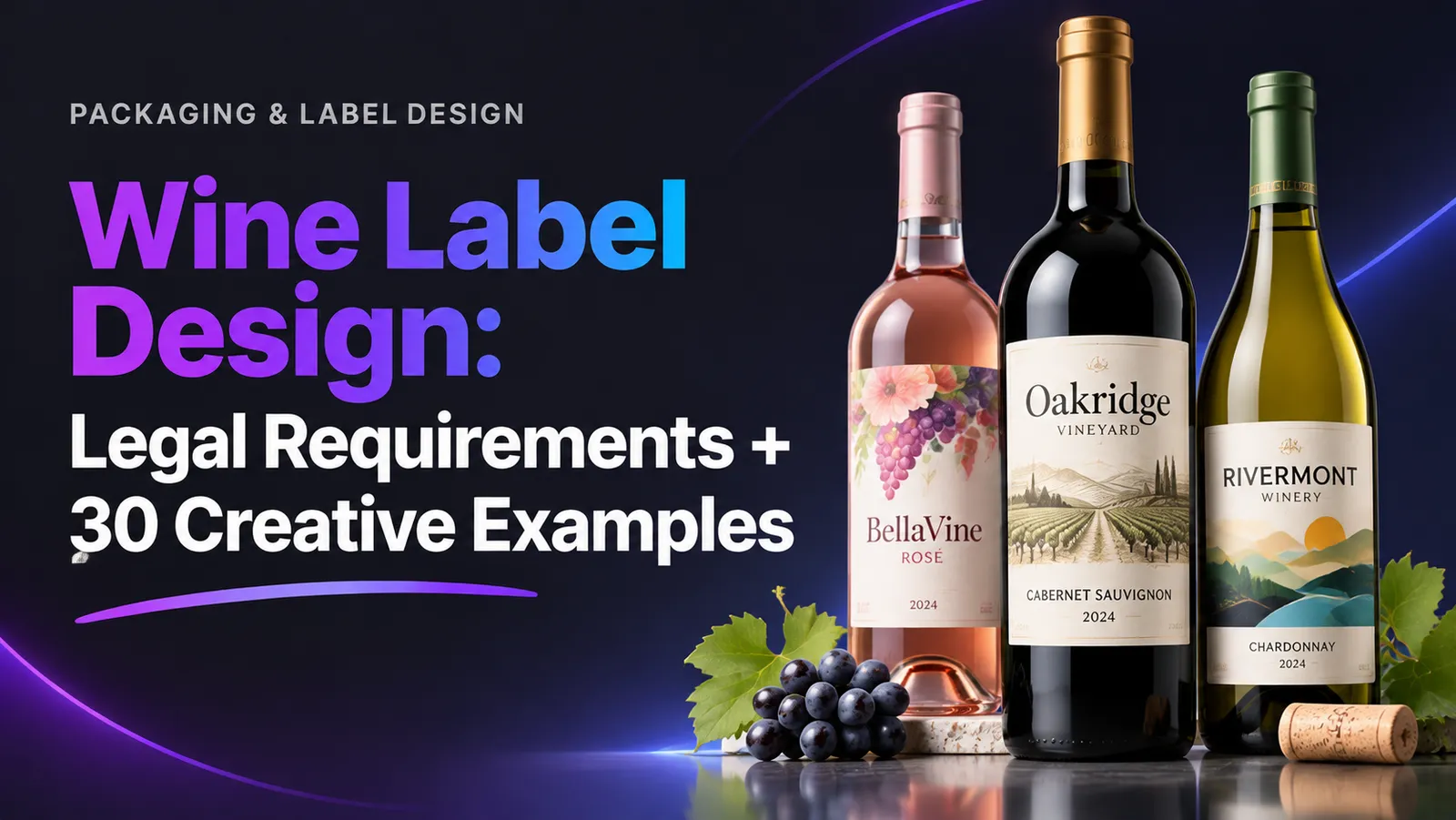
Wine label design combines visual branding, regulatory information, typography, and print production to create an attractive and functional wine bottle label. Whether you're launching a small winery, developing a private wine brand, or creating personalized bottles for an event, a successful design must communicate the product's identity while meeting the labeling requirements of its target market. A strong understanding of packaging design helps ensure that the label works as part of the complete product presentation.
A wine label is more than decoration. It tells customers where the wine comes from, what type of wine they are buying, and what makes the brand distinctive. It must also work on a curved glass surface, remain readable under retail lighting, and reproduce accurately during printing. Reviewing product mockup fundamentals can help designers evaluate how the finished label appears on an actual bottle.
This guide covers 30 creative wine label design ideas, essential labeling regulations in the United States, European Union, and United Kingdom, practical dimensions and printing considerations, and AI-assisted design workflows.
What Makes a Good Wine Label Design?
A good wine label communicates three things quickly: the brand, the wine, and its personality.
Unlike ordinary digital graphics, wine labels must work in a physical environment. They compete for attention on retail shelves, wrap around curved glass, and need enough space for mandatory product information.
Five elements determine whether a wine label works:
Element | Design Consideration | Why It Matters |
|---|---|---|
Brand identity | Logo, brand name, visual personality | Makes the wine recognizable |
Typography | Font selection, hierarchy, readability | Helps customers identify the wine |
Color palette | Background, text, accent colors | Communicates positioning |
Illustration | Landscapes, vines, abstract artwork | Creates emotional associations |
Material and finish | Paper, foil, embossing, transparent film | Determines the physical appearance |
Visual hierarchy is the most important principle. Customers should be able to identify the brand and wine type without studying every decorative element.
30 Wine Label Design Ideas and Examples
Different wine brands need different visual identities. A family-owned vineyard may prefer traditional typography, while a natural wine producer might choose experimental illustrations and unconventional colors.
The following 30 concepts cover five major design directions, from traditional vineyard aesthetics to contemporary and AI-assisted artwork.
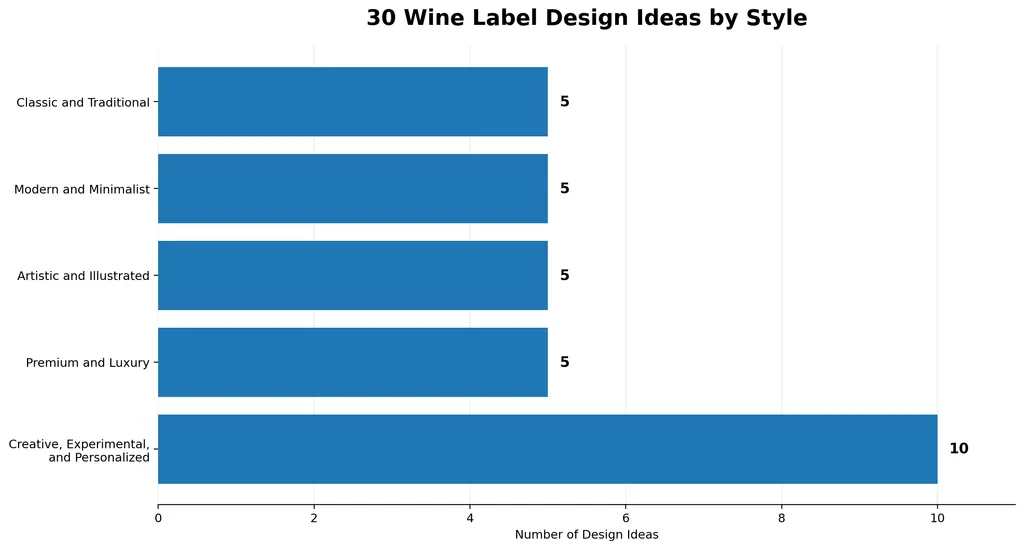
Classic and Traditional Wine Label Designs
# | Design Idea | Visual Characteristics | Best For |
|---|---|---|---|
1 | French Heritage | Cream paper, elegant serif fonts, restrained borders | Traditional wineries |
2 | Minimalist Classic | Simple typography and generous whitespace | Premium wines |
3 | Vintage Vineyard | Engraved vineyard illustrations | Estate wines |
4 | Old-World Typography | Ornate lettering and decorative frames | European wine brands |
5 | Black and Gold Luxury | Dark backgrounds and metallic accents | Luxury collections |
These designs emphasize heritage, craftsmanship, and established wine-making traditions.
Modern and Minimalist Wine Label Designs
# | Design Idea | Visual Characteristics | Best For |
|---|---|---|---|
6 | Scandinavian Minimalism | Neutral colors and clean layouts | Contemporary brands |
7 | Geometric Shapes | Abstract forms and structured compositions | Modern wine collections |
8 | Typography-First | Oversized brand lettering | Design-conscious consumers |
9 | Monochrome | Black, white, or single-color artwork | Boutique wineries |
10 | Color Blocking | Bold contrasting geometric sections | Younger wine brands |
Minimalist designs work particularly well when the brand name is distinctive enough to carry the visual identity without extensive decoration.
Artistic and Illustrated Wine Label Designs
# | Design Idea | Visual Characteristics | Best For |
|---|---|---|---|
11 | Botanical Illustration | Hand-drawn grapes, leaves, and flowers | Organic wine brands |
12 | Watercolor Landscape | Soft vineyard and countryside paintings | Estate wines |
13 | Abstract Expressionism | Artistic brushstrokes and irregular shapes | Creative wine brands |
14 | Linocut Illustration | Textured, handcrafted print aesthetics | Small-batch producers |
15 | Character Illustration | Animals, people, or fictional characters | Playful brands |
Illustration-led labels create opportunities for storytelling. A vineyard can use local landscapes, while a small producer might develop a recognizable illustrated character.
Premium and Luxury Wine Label Designs
# | Design Idea | Visual Characteristics | Best For |
|---|---|---|---|
16 | Gold Foil | Metallic lettering and decorative details | High-end collections |
17 | Embossed Typography | Raised lettering and textured paper | Premium gift wines |
18 | Transparent Label | Minimal graphics directly on glass | Contemporary brands |
19 | Textured Paper | Natural fibers and tactile surfaces | Boutique wineries |
20 | Metallic Accents | Silver, copper, or bronze details | Limited editions |
Luxury design does not necessarily require elaborate graphics. Restrained typography, carefully selected paper, and a distinctive finishing technique can communicate quality more effectively.
Creative, Experimental, and Personalized Wine Labels
# | Design Idea | Visual Characteristics | Best For |
|---|---|---|---|
21 | Retro Vintage | Nostalgic colors and typography | Lifestyle wine brands |
22 | Psychedelic Art | Distorted lettering and vibrant patterns | Experimental wines |
23 | Personalized Labels | Names, dates, and custom messages | Weddings and gifts |
24 | Collage Art | Layered photographs and illustrations | Independent wineries |
25 | Eco-Friendly Design | Kraft paper and restrained graphics | Sustainability-focused brands |
26 | Photography-Based | Vineyard or grape photography | Estate storytelling |
27 | Map-Inspired | Geographic illustrations and coordinates | Regional wines |
28 | Cultural Heritage | Local patterns and traditional artwork | Regional producers |
29 | Seasonal Collections | Artwork inspired by seasons | Limited releases |
30 | AI-Generated Artwork | Custom visual concepts and experimental compositions | New wine brands |
These are creative design directions rather than 30 verified commercial product examples. Use them as starting points, then adapt the artwork to the winery's identity, bottle shape, and production requirements.
Wine Label Legal Requirements: US, UK, and EU
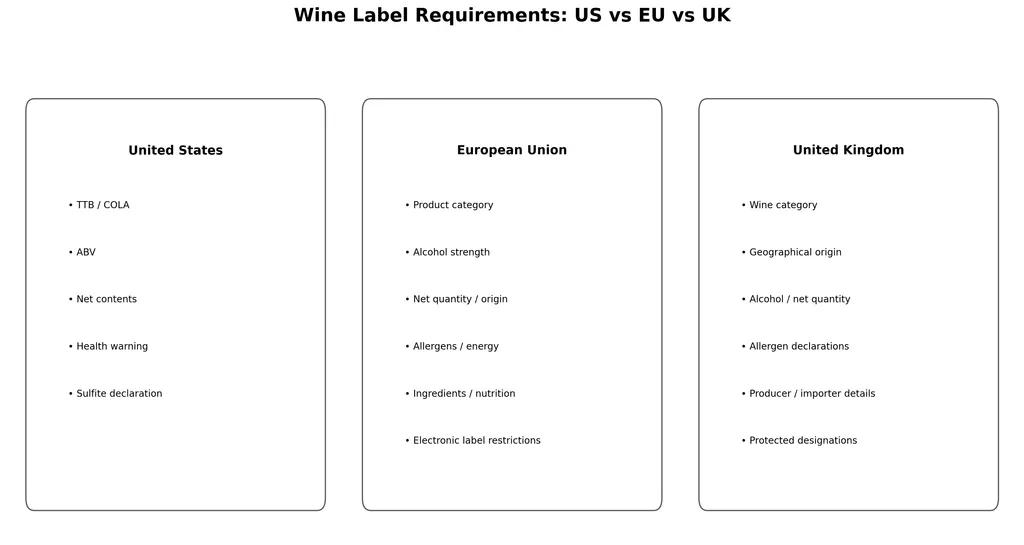
Wine labeling regulations vary by market. A label that meets the requirements in one country may not be acceptable in another.
Before designing the final artwork, identify where the wine will be produced, imported, and sold.
US Wine Label Requirements
In the United States, the Alcohol and Tobacco Tax and Trade Bureau (TTB) regulates wine labeling, alongside other applicable federal and state requirements.
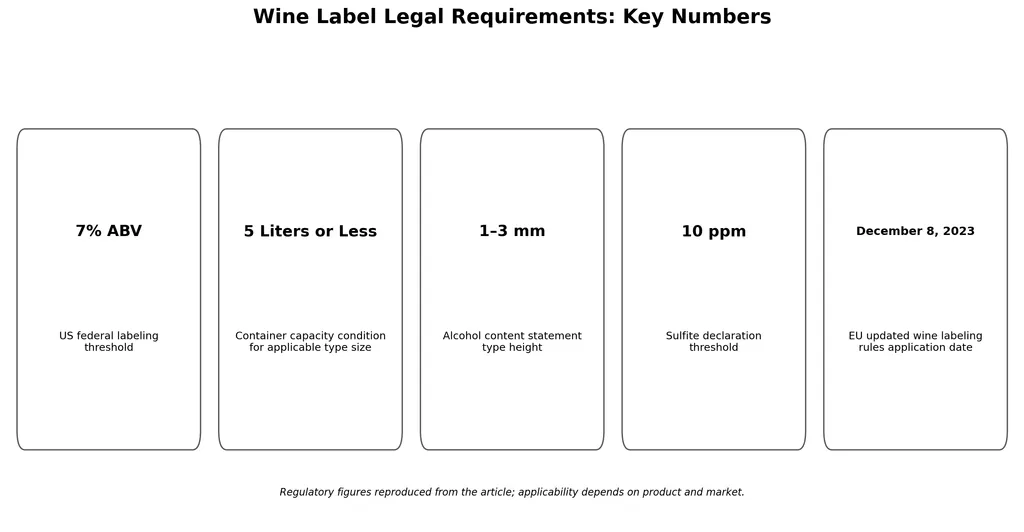
An important distinction is the 7% alcohol-by-volume threshold.
For wine containing 7% ABV or more, the Federal Alcohol Administration Act (FAA Act) labeling requirements generally apply to covered products. Wine below 7% ABV is subject to a different regulatory framework, including applicable FDA food-labeling requirements.
For most wines subject to TTB labeling requirements, important information includes:
Information | What It Means |
|---|---|
Brand Name | The name under which the wine is marketed |
Class or Type | The applicable wine designation |
Alcohol Content | The alcohol content statement, when required |
Net Contents | The volume of wine in the bottle |
Name and Address | Applicable bottler, packer, or importer information |
Health Warning | Required alcoholic beverage health warning |
Sulfite Declaration | Required when total sulfur dioxide is 10 ppm or more |
Appellation of Origin | Required in certain circumstances |
Country of Origin | Required for imported wine |
Not every statement is required in the same way for every wine. For example, numerical alcohol content is mandatory for wine over 14% ABV. For wine containing 7% to 14% ABV, the designation "Table Wine" or "Light Wine" may be used instead of a numerical alcohol statement when the applicable conditions are met.
What is COLA?
COLA stands for Certificate of Label Approval. It is the TTB approval process applicable to covered wine labels before they enter the US marketplace.
For domestic wines covered by the FAA Act, the bottler generally needs an approved COLA or applicable certificate of exemption before bottling. For imported wine containing 7% ABV or more, the importer generally needs an applicable COLA before removing the wine from customs custody for commercial purposes.
Wines below 7% ABV do not require a federal TTB COLA, although other federal and state labeling requirements may still apply.
Wine label font size and readability
Legal text should never be treated as decorative copy.
For example, TTB regulations specify minimum and maximum type sizes for certain statements. Alcohol content statements on containers of 5 liters or less generally require type between 1 mm and 3 mm in height. Other mandatory statements have their own applicable requirements.
Designers should check each statement individually rather than applying one universal minimum font size to the entire label.
Official references:
- TTB: https://www.ttb.gov/regulated-commodities/beverage-alcohol/wine/labeling/
- TTB Mandatory Label Information: https://www.ttb.gov/regulated-commodities/beverage-alcohol/wine/labeling-wine/wine-labeling-checklist-of-mandatory-label-information
- TTB Alcohol Content: https://www.ttb.gov/regulated-commodities/beverage-alcohol/wine/labeling-wine/wine-labeling-alcohol-content
EU Wine Label Requirements
The European Union introduced updated wine labeling requirements that have applied since December 8, 2023, for wines covered by the relevant provisions.
The main information categories include:
- Wine category and applicable designation.
- Alcoholic strength.
- Net quantity.
- Origin and relevant geographical indications.
- Allergen information.
- Energy value.
- Ingredients and nutritional information.
One important feature of the EU system is that the full ingredient list and nutrition declaration can be provided electronically, subject to specific conditions.
For example, a wine producer can use a QR code to direct consumers to an electronic label containing the full ingredients and nutrition information.
However, several restrictions apply:
1. Energy information must remain physically visible.
When the full nutrition declaration is provided electronically, the energy value must still appear on the physical package or label.
2. Allergen information must remain on the physical label.
Substances causing allergies or intolerances must be indicated on the bottle or attached label, even when the full ingredient list is available electronically.
3. Electronic labels cannot be marketing pages.
The electronic destination must not display sales or marketing information alongside the mandatory ingredient and nutrition information.
4. User tracking is not permitted.
The electronic labeling system must not collect or track user data.
This means a QR code designed for EU wine compliance should lead to a dedicated electronic information page rather than an ordinary promotional landing page.
Official reference: https://eur-lex.europa.eu/eli/C/2023/1190/oj/eng
UK Wine Label Requirements
UK wine labeling rules have their own requirements covering product descriptions, provenance, allergens, and relevant wine categories.
Designers should pay particular attention to:
- Correct wine category and product designation.
- Accurate country and geographical origin information.
- Alcohol content and net quantity.
- Applicable allergen declarations.
- Producer, bottler, or importer details.
- Protected geographical indications and designations of origin, where relevant.
For example, wine containing sulphur dioxide above the applicable threshold must carry an appropriate allergen declaration.
UK requirements should not automatically be treated as identical to EU requirements. The applicable rules can depend on the wine's origin, production date, and market destination.
Official reference: https://www.gov.uk/government/publications/wine-labelling/wine-labelling
Important: These summaries are not complete legal checklists. Always confirm current requirements with the relevant regulator or a qualified compliance professional before printing commercial wine labels.
Wine Label Typography, Dimensions, and Layout
A beautiful wine label can still fail if its text is unreadable or its dimensions do not match the bottle.
How to Choose Wine Label Fonts
Typography should reflect the brand's personality without compromising readability.
Font Style | Visual Personality | Recommended Use |
|---|---|---|
Serif | Traditional, elegant, authoritative | Premium and heritage wines |
Sans Serif | Modern, clean, straightforward | Contemporary wine brands |
Script | Personal, expressive, decorative | Special editions and gifts |
Display | Bold and distinctive | Experimental collections |
Monospaced | Technical and understated | Modern boutique wines |
A practical approach is to use one expressive typeface for the brand name and a simpler font for supporting information.
Avoid using several decorative fonts in the same composition. Small legal statements should prioritize legibility over stylistic expression.
How to Choose Wine Label Dimensions
There is no universal wine label size. The correct dimensions depend on bottle shape, available labeling area, and production method.
Before designing, measure:
- The circumference of the bottle where the label will sit.
- The available vertical labeling area.
- The curvature of the glass.
- The clearance around seams, shoulders, and bottle edges.
For wraparound labels, account for the overlap or gap required by the printer and labeling machine.
Also confirm the printer's specifications for bleed, safe areas, resolution, and cutting tolerances. Do not assume that a standard 750 mL bottle always uses the same label dimensions.
Front Label vs. Back Label
A professional wine package typically separates brand communication from detailed product information.
Front Label | Back Label |
|---|---|
Brand name | Product description |
Wine variety or type | Producer and bottler information |
Vintage, if applicable | Alcohol content |
Main illustration | Net contents |
Brand identity | Applicable warnings and declarations |
Key origin information | Barcode and supporting details |
The front label should attract attention. The back label should help consumers understand the product and provide required information.
Wine Label Materials and Printing Techniques
Material selection affects both appearance and durability.
A design that looks beautiful on a computer screen may become difficult to read when printed on transparent film or applied to dark glass.
Material or Technique | Appearance | Important Consideration |
|---|---|---|
Matte Paper | Soft, understated | Check moisture resistance |
Gloss Paper | Bright and reflective | Reflections can affect readability |
Textured Paper | Premium tactile finish | Fine details may reproduce differently |
Transparent Film | Minimal, glass-like appearance | White ink may be necessary |
Gold Foil | Metallic highlights | Requires specialized finishing |
Embossing | Raised design elements | Check production tolerances |
Spot UV | Selective glossy areas | Use sparingly |
Why White Ink Matters for Transparent Wine Labels
One common production issue involves transparent labels on dark or colored bottles.
For example, a pale yellow logo printed directly onto a green bottle may become almost invisible.
A solution is white ink underprinting: printing a white layer underneath selected design elements to improve opacity and contrast.
However, the white ink layer must be planned in the production artwork. It cannot simply be assumed that a digital mockup will reproduce the same appearance.
Before printing, confirm:
- Whether the printer supports white ink.
- Whether white ink should cover the entire label or selected areas.
- How the white layer affects transparency and color.
- Whether the printer requires a separate spot-color layer.
Always request a physical print proof before approving a large production run.
How to Position QR Codes and Barcodes
QR codes and UPC barcodes serve different purposes and should be planned separately.
A QR code can direct consumers to product information, winery stories, or an EU-compliant electronic label. A UPC barcode supports retail scanning.
Keep both elements away from folds, curved edges, and highly reflective finishes. Leave sufficient clear space around the barcode and test scanning on the actual bottle.
For EU-compliant electronic labels, remember that the destination page must follow the restrictions on marketing content and user tracking.
How to Design a Wine Label Step by Step
A reliable workflow combines brand strategy, visual exploration, technical preparation, and physical testing.
Define Your Wine Brand
Start by identifying the target audience and positioning.
Ask:
- Is the wine premium, affordable, organic, or experimental?
- Is it designed for everyday consumption or special occasions?
- Does the brand emphasize vineyard heritage or contemporary lifestyle?
- Which competitors occupy the same market?
These answers determine the visual direction.
Research Wine Label Design Inspiration
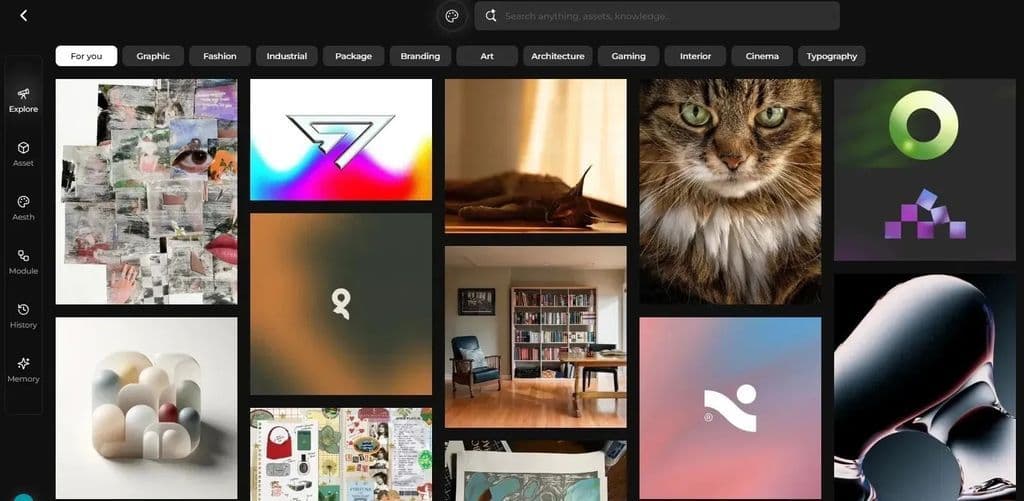
Collect references from wineries, packaging portfolios, and design platforms.
Create a moodboard containing:
- Typography examples.
- Color combinations.
- Illustration styles.
- Material references.
- Bottle mockups.
Instead of copying existing designs, identify the visual elements that communicate the desired brand personality.
Generate Initial Design Concepts with AI
Traditional design tools such as Adobe Illustrator, Photoshop, and Canva can help create label layouts.
AI-powered platforms provide another way to explore concepts.
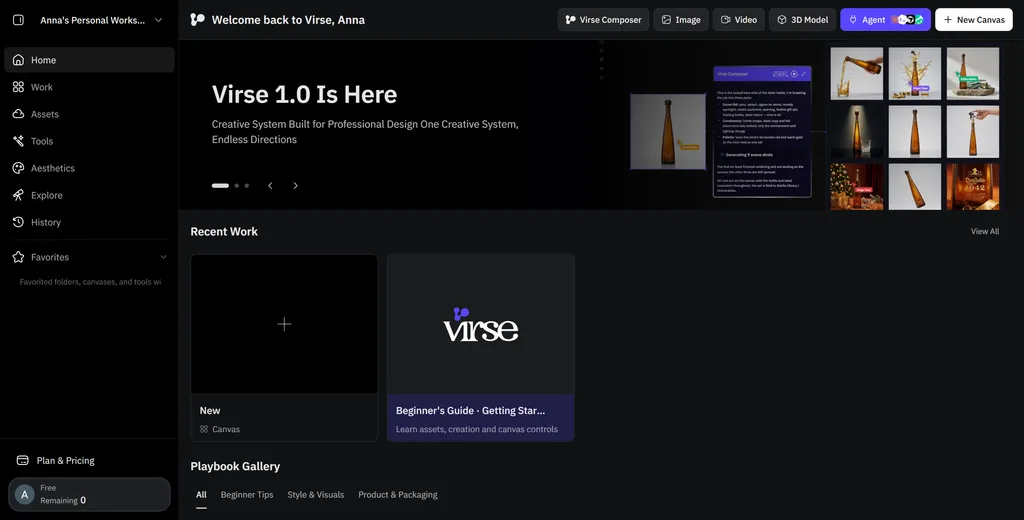
For example, Virse can support visual concept exploration through AI image generation and editing. Designers can experiment with botanical illustrations, vintage aesthetics, abstract artwork, and luxury packaging directions before refining a selected concept.
Useful prompt directions include:
- A vintage French vineyard label with engraved grape illustrations and elegant serif typography.
- A minimalist natural wine label with muted earth tones and geometric artwork.
- A luxury wine bottle label with dark textured paper and restrained gold foil accents.
- An illustrated wine label inspired by Mediterranean landscapes and traditional printmaking.
AI-generated artwork should be treated as a starting point rather than automatically print-ready artwork. Brand names, legal statements, and precise typography should be added and checked in professional design software.
Organize the Label Layout
Establish a clear information hierarchy:
- Brand name.
- Wine type or variety.
- Supporting illustration.
- Vintage or origin information, where applicable.
- Mandatory product information.
Keep decorative elements away from critical text.
Create a Realistic Bottle Mockup
A bottle mockup helps evaluate:
- Label proportions.
- Curved-surface distortion.
- Color contrast.
- Brand visibility.
- Front and back label alignment.
For premium packaging, also preview how metallic finishes, textured paper, and embossing will appear under different lighting conditions.
Prepare Print-Ready Files
Before sending artwork to a printer, confirm:
- Correct physical dimensions.
- Printer-approved bleed and safe areas.
- Appropriate image resolution.
- Correct color mode and color profile.
- Embedded or outlined fonts, as required.
- Separate finishing layers for foil, white ink, and embossing.
- Final legal text and regulatory approval.
Print and Test a Physical Sample
Do not approve a large production run based only on a screen preview.
Test the label on the actual bottle and check its appearance under retail lighting, moisture exposure, refrigeration, and normal handling conditions.
Traditional Wine Label Design vs. AI-Assisted Design
Both approaches have a place in professional packaging workflows.
Comparison | Traditional Design | AI-Assisted Design |
|---|---|---|
Initial concepts | Created manually | Generated from prompts and references |
Visual exploration | Requires manual experimentation | Enables rapid style exploration |
Brand consistency | Controlled through design systems | Requires review and refinement |
Typography | Precise manual control | Often requires external correction |
Mockups | Created using templates or 3D tools | Can accelerate visual concept previews |
Print preparation | Professional design software | Still requires production software |
Best application | Final production artwork | Ideation and creative exploration |
The strongest workflow combines both.
Use AI to explore visual directions and generate illustrations. Then use professional design software to refine typography, align legal information, prepare production layers, and export the final print-ready files.
This approach helps reduce repetitive concept exploration without compromising technical control.
Common Wine Label Design Mistakes
Even visually attractive designs can create problems during printing or commercial use.
Mistake | Why It Happens | How to Avoid It |
|---|---|---|
Overcrowded layout | Too many decorative elements | Establish a clear hierarchy |
Unreadable legal text | Fonts are too small or decorative | Check applicable minimum requirements |
Incorrect dimensions | Bottle measurements are inaccurate | Measure the actual bottle |
Poor contrast | Colors blend into the glass | Test physical samples |
Missing white underprint | Transparent labels lack opacity | Specify white ink layers |
Misleading graphics | Artwork implies inaccurate origin or characteristics | Review regulatory requirements |
QR code interference | Poor barcode and QR placement | Test both scanning areas |
No physical proof | Approval relies on digital mockups | Print and inspect a sample |
One particularly important detail is barcode placement. QR codes and UPC barcodes should be planned separately, with sufficient clear space and successful scanning tests.
Frequently Asked Questions
What information must appear on a wine label?
Required information depends on the destination market and wine category. In the US, common requirements include brand name, wine designation, alcohol content where required, net contents, bottler information, and health warnings, with additional declarations where applicable. EU and UK requirements differ, particularly for nutrition, ingredients, allergens, and geographical origin.
What size should a wine bottle label be?
There is no single standard size for all wine bottles. Dimensions depend on bottle geometry, labeling area, and printer specifications. Measure the actual bottle before creating the artwork and request a physical proof to confirm fit.
What is the best software for wine label design?
Adobe Illustrator is a strong option for precise vector artwork and print production. Photoshop is useful for image editing and visual effects, while Canva works well for simpler personalized labels. AI image generators can help explore illustrations and creative directions.
Can I use AI to design a wine label?
Yes. AI can generate visual concepts, illustrations, patterns, and packaging mockups. However, AI-generated text may contain errors, so brand names, wine information, and legal declarations should be added and verified separately.
How do I make a wine label look luxurious?
Use a restrained color palette, carefully selected typography, balanced whitespace, and quality materials. Techniques such as gold foil, embossing, and textured paper can add tactile detail. Avoid excessive decoration that competes with the brand name.
How do I print transparent wine labels?
Use a suitable transparent label material and confirm that the printer supports white ink. White underprinting can improve the visibility of light-colored artwork on dark glass. Always test the printed label on the actual bottle.
Do wine labels need to be approved by the TTB?
For wine subject to US federal COLA requirements, the label generally needs an applicable Certificate of Label Approval before entering the relevant marketplace. Wine below 7% ABV is generally outside the FAA Act COLA requirement, although other federal and state labeling requirements may still apply.
Can I create personalized wine labels for weddings?
Yes. Personalized wine labels can include names, dates, illustrations, and custom messages. Before printing, check the dimensions of the bottles, the adhesive material, and any applicable labeling requirements for the intended use.
Conclusion
Great wine label design requires more than attractive graphics. It combines brand identity, visual hierarchy, regulatory compliance, material selection, and print production.
The 30 design directions in this guide offer starting points for different wine brands, from traditional vineyard labels to experimental AI-generated artwork. The most effective approach is to explore multiple concepts, test them on realistic bottle mockups, and refine the selected design using professional production tools.
For designers and emerging wine brands, AI-assisted visual exploration offers a practical way to develop distinctive packaging concepts. The final objective remains the same: create a label that looks compelling on the screen, works on the bottle, and meets the requirements of its intended market.
More from the Virse Blog
Inspiration
30 Best Poster Design Ideas for Every Style and Occasion
November 18, 2026 by Yifan Zhao
Inspiration
Product Photo Backgrounds: 15 Ideas & Materials Compared
November 18, 2026 by Yifan Zhao
Inspiration
Lifestyle Product Photography: 20 Creative Ideas, Examples, and Tips
November 18, 2026 by Yifan Zhao