Food Packaging Design: Rules, Trends, Examples
Vincent14 min read ·
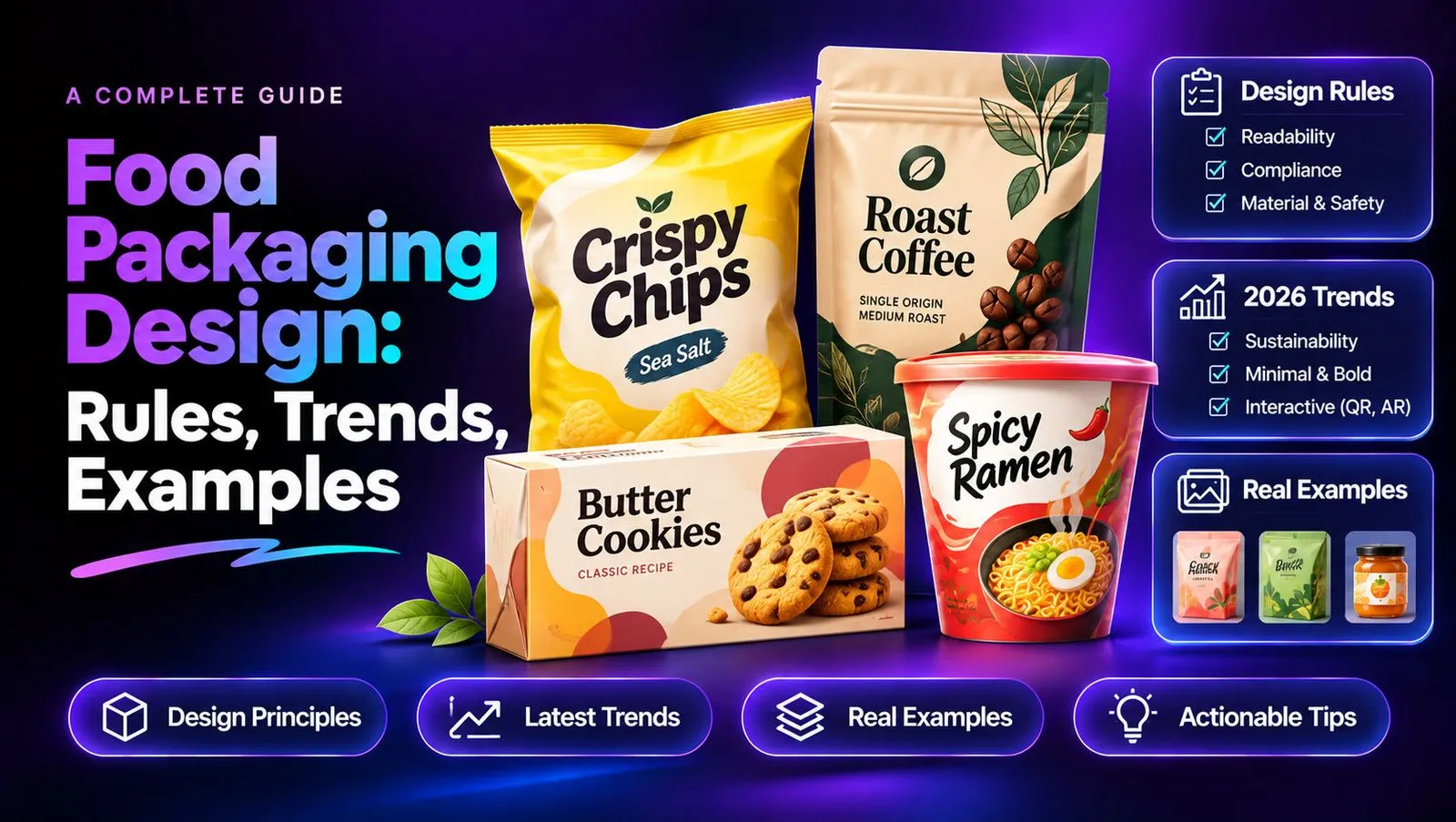
Food packaging design combines visual branding, product information, packaging materials, and structural design to create packaging that attracts customers, protects food, and works in production. Effective packaging makes products recognizable, distinguishes flavors, communicates essential information, and accommodates applicable labeling and manufacturing requirements. Explore our guide to how to design packaging for a broader look at the creative and technical process.
However, attractive packaging does not always translate into effective packaging. Small labels become unreadable, illustrations disappear into sealing areas, and managing dozens of product variations introduces costly opportunities for error. Our review of packaging design cases and user questions highlights a recurring challenge: turning creative concepts into practical, consistent packaging without endless revisions. A structured AI design workflow can help teams organize creative exploration and production decisions.
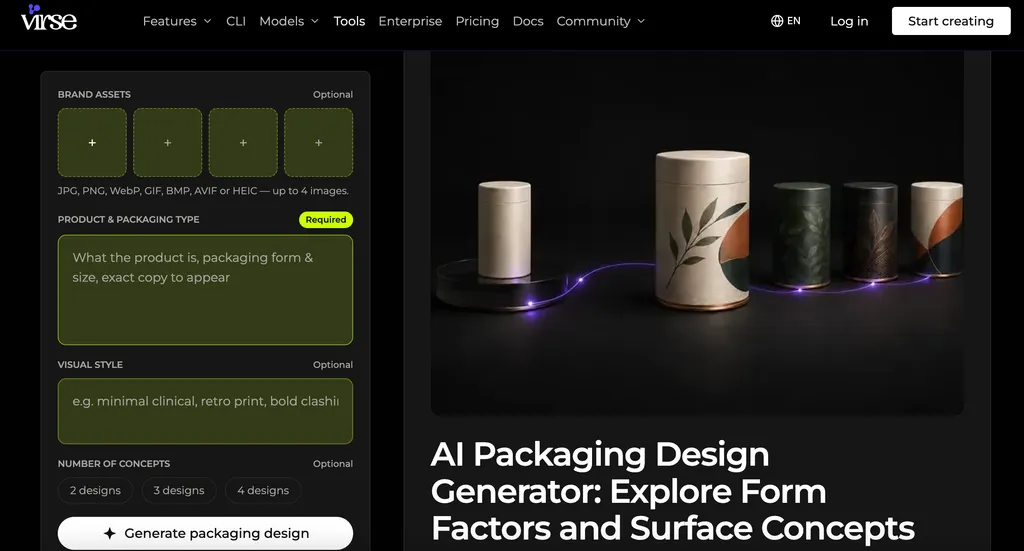
Virse helps you explore food packaging ideas with multiple AI image models and an Infinite Canvas in one creative workspace. Upload references, compare visual directions, and refine colors, illustrations, compositions, and packaging mockup concepts without constantly switching tools. With unlimited model usage and unlimited seats on eligible paid plans, Virse makes it easier to explore and collaborate on packaging concepts before preparing final production artwork. Try the AI Packaging Design Generator to explore packaging concepts and visual directions.
What Makes Good Food Packaging Design?
Good food packaging design balances brand recognition, information clarity, product protection, and production feasibility. It should help customers identify the product while working within real packaging and manufacturing constraints.
How to Make Food Packaging Stand Out on Shelves
Strong food packaging uses a clear visual hierarchy:
- Brand: A recognizable logo, color system, or design signature.
- Product: A prominent, readable product name.
- Flavor: Distinctive names, colors, or illustrations.
- Supporting information: Relevant product attributes and accurate claims.
Consider a pretzel packaging redesign examined during our research. The available design feedback identified weak brand personality and unclear flavor differentiation. Although the packaging had an established visual direction, its different varieties were not immediately distinguishable.
A practical redesign would strengthen the product name, assign recognizable visual cues to each flavor, and maintain consistent brand typography.
For example, a pretzel brand could retain the same logo and layout while giving sea salt, honey mustard, and spicy varieties distinct accent colors and ingredient illustrations. Flavor names should remain readable without relying entirely on color.
The key lesson: attractive packaging and effective product communication are not the same thing.
How to Test Packaging Readability and Shelf Appeal
Evaluate food packaging at its actual dimensions rather than relying only on enlarged digital artwork.
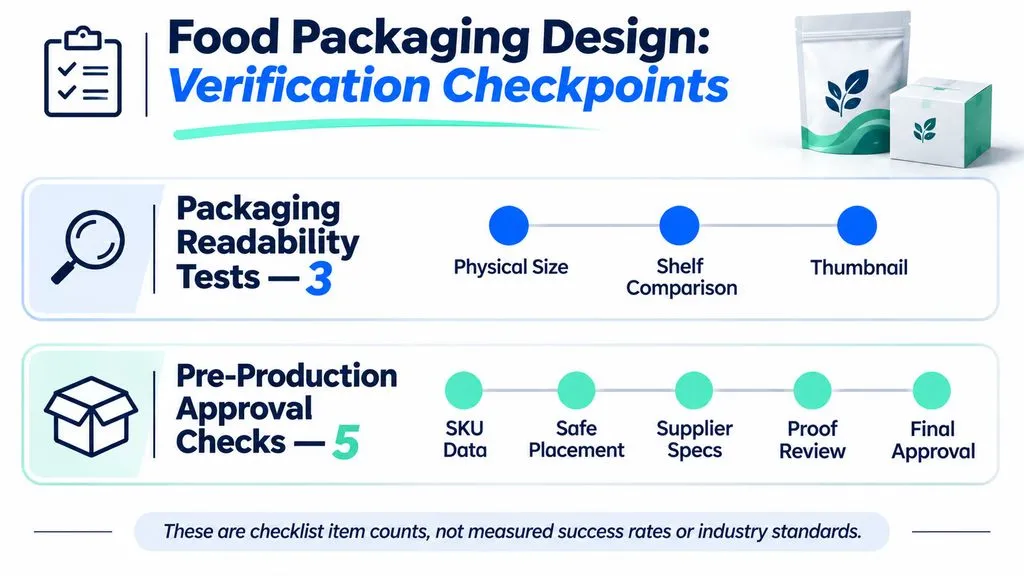
Use three practical checks:
- Physical-size test: Print a mockup to evaluate typography, spacing, and proportions.
- Shelf comparison: Place the package beside competing products to assess recognition and differentiation.
- Thumbnail test: Reduce the design to an online shopping image to check whether the brand and product remain identifiable.
For flexible pouches, also review how the design changes when filled. Graphics may curve around the packaging, while folds or seals can obscure important information.
A useful additional check is to ask reviewers unfamiliar with the product to identify its name and flavor without explanation. Record what they misunderstand and revise the hierarchy accordingly.
Approve the design based on real packaging conditions, not just how impressive it looks on a screen. These checks can identify communication problems, although they do not independently prove increased sales.
What Food Packaging Design Rules Should You Follow?
Food packaging design rules include labeling requirements, accurate product information, structural specifications, and print preparation. Requirements vary by country and food category, so a universal label template cannot guarantee compliance.
What Information Must Be Included on Food Packaging Labels?
Common labeling categories include:
- Product identity: The food name should clearly describe the product.
- Ingredients and allergens: Use verified declarations that meet applicable requirements.
- Nutrition information: Reserve space for approved nutritional data.
- Net quantity: Present accurate quantities and required units.
- Business information: Include responsible-party details when required.
- Dates and storage instructions: Accommodate applicable declarations and variable printing.
- Barcode: Confirm placement and scannability with the relevant production requirements.
The FDA Food Labeling Guide explains major U.S. labeling principles, although older guidance should be checked against current regulations and updates. European Regulation (EU) No 1169/2011 establishes a separate framework for food information, with applicable exceptions and product-specific requirements.
A label intended for one market should not automatically be reused in another without review.
Designers should never invent nutritional values, allergen declarations, or regulated product claims. The responsible food business and qualified reviewers must approve the underlying information before printing.
Case Study: Managing Food Packaging Information Across 44 SKUs
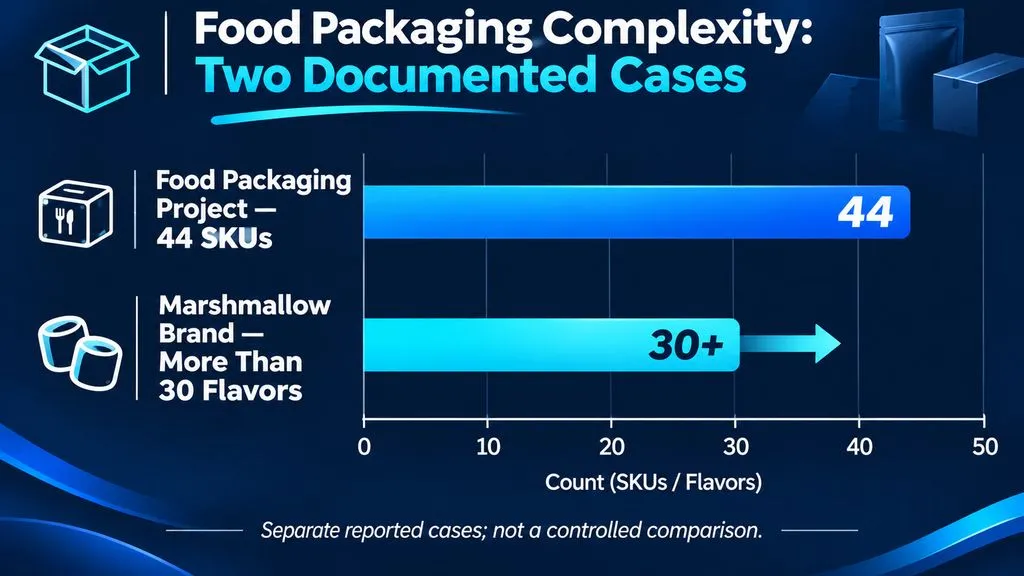
One packaging workflow documented in our research involved 44 SKUs, with nutrition information and barcodes organized through Excel.
The central challenge extended beyond visual design. Each product variation required accurate information, consistent formatting, and reliable version control.
A stronger approach separates the packaging system into three components:
- Fixed brand elements: Logo, typography, core colors, and reusable layout.
- Variable product fields: Flavor, ingredients, nutrition information, net quantity, and barcode.
- Approval records: SKU identifier, artwork version, responsible reviewer, and approval status.
For example, updating a shared logo should not require rebuilding every product label. Similarly, changing one flavor's ingredients should not accidentally modify another SKU.
A master data sheet can organize these changes, but each finished package still requires independent verification.
The documented case demonstrates why structured information management matters. However, it does not establish measured time savings, fewer errors, or revenue improvements.
How Dielines Prevent Packaging Printing Mistakes
A packaging dieline defines structural boundaries, including cutting, folding, and other manufacturing areas. Artwork must follow the packaging manufacturer's specifications.
Important considerations include:
- Bleed: Artwork extending beyond trim boundaries.
- Safe areas: Space protecting essential information from trimming or other production effects.
- Sealing zones: Areas affected by heat sealing, adhesives, or closures.
- Folds and structural features: Elements that change the appearance of flat artwork.
- Printing specifications: Color, artwork, finishing, and file requirements supplied by the manufacturer.
A Mylar pouch design experience examined in our research highlighted a common problem: visually important information can become obscured when packaging is sealed or filled.
For instance, a flavor name placed too close to a heat-sealed edge may become partially hidden. Similarly, a central illustration can shift visually when the pouch expands.
A realistic mockup helps reveal these issues, but it does not establish that the artwork meets all production requirements.
Always obtain the manufacturer's actual dieline before finalizing packaging artwork. Do not assume that generic bleed measurements or templates apply to every package.
How to Design Food Packaging Step by Step
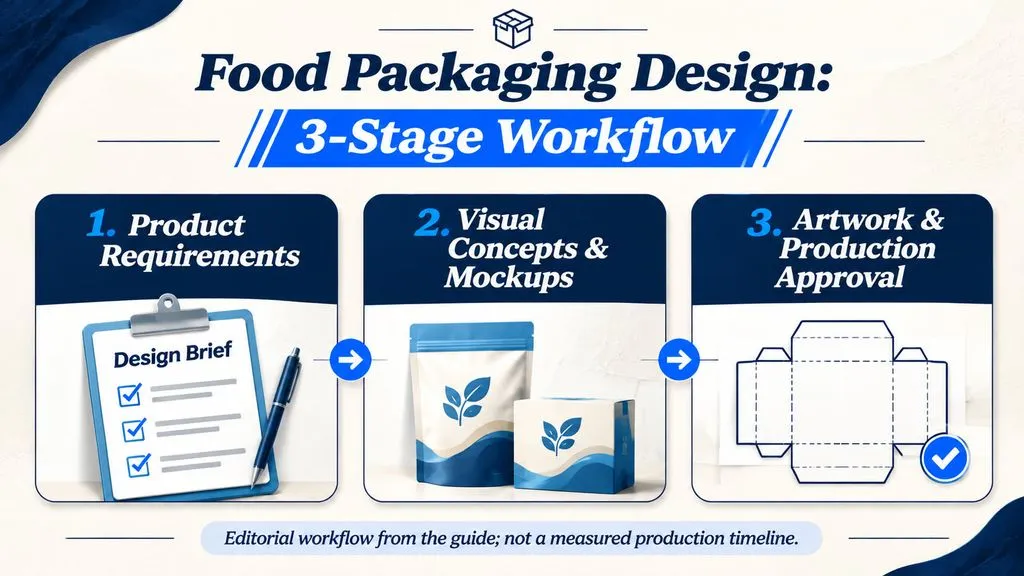
A reliable food packaging design process moves from product requirements to creative exploration, technical preparation, and production verification. Following this sequence reduces the risk of developing attractive artwork that cannot be used on the intended package.
Step 1: Define the Product and Packaging Requirements
Create a packaging brief covering the product category, audience, sales channel, brand positioning, budget, packaging format, and number of variations. A well-organized design brief helps establish these requirements before creative work begins.
Then document the food's physical requirements:
- Moisture and grease exposure
- Packaging and storage temperature
- Transportation conditions
- Required shelf life
- Food-contact suitability
- Packaging dimensions and closure requirements
For example, a dry snack pouch and a bakery wrap may need different protective properties even when both use the same visual branding.
Choose packaging materials and structures based on the food's actual needs before finalizing the artwork.
Step 2: Create Visual Concepts and AI Packaging Mockups
Explore alternative typography, color palettes, illustrations, and compositions before selecting a final direction.
AI-assisted design can help teams develop packaging concepts, compare visual styles, and evaluate different brand directions. Learn more about using AI for graphic design to understand how AI can support different stages of the creative process.
For example, a specialty coffee brand could explore three approaches: minimalist typography, botanical illustration, and vintage-inspired packaging. Each concept can be judged against the same brand positioning and product requirements.
Virse's Infinite Canvas provides a workspace for organizing visual references and exploring multiple creative directions. Designers can compare concept variations and refine compositions without constantly moving between separate creative tools.
When developing packaging concepts with AI, use clear references and evaluate whether generated details match the intended product.
AI-generated packaging mockups are not automatically print-ready. Product text, logos, dimensions, structural details, and regulated information require independent verification.
Step 3: Prepare Artwork and Approve Production
Transfer the selected design into the manufacturer's approved dieline.
Insert verified product information and check the artwork against printing specifications, finishing requirements, folds, and sealing boundaries.
Before production, confirm that:
- Product information matches the approved SKU record.
- Important text and graphics remain clear of manufacturing boundaries.
- Artwork files follow supplier specifications.
- Physical proofs have been reviewed where appropriate.
- Responsible reviewers have approved the final version.
For multi-product brands, retain approved artwork versions and avoid overwriting older files without a traceable revision record.
The final deliverable is not simply an attractive image. It is accurate, reviewed artwork prepared for the specified manufacturing process.
Which Food Packaging Materials Work Best?
The best food packaging material depends on moisture, oil content, temperature, storage requirements, transportation, and shelf life.
Common packaging formats include:
- Paperboard cartons: Often used for cereals, chocolate, and dry-food presentation.
- Flexible pouches: Used for many snacks, coffee products, and dry ingredients.
- Glass containers: Common for sauces, preserves, and condiments.
- Rigid plastic containers: Used for selected prepared foods and products requiring particular closure systems.
- Paper wraps: Common in certain bakery and takeaway applications.
These categories describe possible uses, not universal material recommendations. Food-contact suitability and protective performance must be verified for the specific product.
Case Study: Sustainable Packaging for Coconut Milk Bread
A home bakery case examined during our research involved Pandan Coconut Milk Bread.
The business wanted alternatives to relatively expensive parchment paper while managing moisture, butter, and environmental concerns.
Wax paper emerged as a possible alternative, but the available evidence did not establish whether it offered sufficient protection, met the intended food-contact requirements, or delivered better environmental performance.
The case highlights an important packaging design principle: material selection should begin with food conditions, not visual appearance or marketing terminology.
For warm baked goods, evaluate condensation, grease, packaging temperature, storage conditions, and contact suitability before changing materials.
A promising alternative should undergo appropriate small-scale testing and supplier verification before wider use.
How to Balance Sustainable Packaging and Food Protection
Packaging that looks environmentally friendly is not necessarily recyclable, compostable, or suitable for every food product.
The Sustainable Packaging Coalition's 2026 trends research highlights the importance of regional recyclability definitions and consistent packaging assessments.
A practical evaluation should consider:
- Product protection: Does the material maintain the required food quality?
- Material composition: Are coatings, adhesives, or laminates involved?
- Local disposal systems: Can the package actually enter the intended recycling or recovery process?
- Transportation and storage: Does it perform under expected conditions?
- Environmental claims: Are sustainability statements specific and verifiable?
For example, an uncoated paper package may have an appealing natural appearance but may not provide adequate protection for a moisture-sensitive product.
Sustainable packaging design requires evidence about both the material and how it will be used, collected, and processed.
What Are the Food Packaging Design Trends and Examples in 2026?
Notable food packaging design directions in 2026 include minimalist branding, expressive typography, handcrafted illustration, stronger flavor differentiation, and more transparent sustainability communication.
These are observed design directions rather than a verified ranking of styles with the highest sales performance.
Minimalist, Bold, and Handcrafted Food Packaging Examples
Minimalist food packaging uses restrained colors, clear typography, and controlled visual space. It can work well for specialty coffee, chocolate, and premium foods where a focused brand identity is valuable.
Bold packaging design emphasizes vivid colors, oversized product names, and expressive illustrations. This approach can help distinguish flavors within a shared snack or confectionery range.
Handcrafted packaging incorporates illustration, distinctive lettering, and organic visual details to communicate an artisanal identity.
The 2026 Nourish Food Marketing Trend Report discusses intentional handcrafted details and highlights Fortnum & Mason coffee packaging as an example of illustration-led visual identity.
These styles solve different communication problems.
A premium chocolate brand may benefit from restrained typography, while a multi-flavor popcorn brand may need stronger colors and product differentiation.
Choose a packaging style according to the brand's positioning, the food category, and the customer's information needs.
Which Food Packaging Trends Are Worth Following?
A packaging trend is valuable only when it supports the product's actual requirements.
Minimalist packaging may communicate premium positioning but become confusing when multiple flavors look almost identical.
Bold graphics can create stronger visual distinction but may reduce readability if decorative elements compete with essential information.
Natural textures can support a sustainability-oriented brand identity but do not prove environmental performance.
AI-assisted design adds another option by allowing creative teams to explore visual directions before committing to production.
However, faster concept generation should not replace material evaluation, labeling verification, or physical testing.
The most useful trend is the one that improves communication while preserving product protection and brand consistency.
How Can Small Brands Design Food Packaging on a Budget?
For small businesses, food packaging costs extend beyond initial artwork. Multiple flavors, product-information changes, revisions, physical proofs, and printing coordination can all increase complexity.
A reusable packaging design system can help maintain consistency without rebuilding every product variation from scratch. A consistent brand kit can also help organize reusable visual elements across different packaging variations.
Case Study: Packaging More Than 30 Marshmallow Flavors
A confectionery business examined in our research managed more than 30 marshmallow flavors using shared packaging and thermal labels for variable information.
The arrangement avoided the need to create an entirely separate packaging structure for every flavor, although the available account did not provide measured cost savings.
The business also explored transparent windows, holographic effects, and decorative finishes to create a more distinctive presentation.
This case illustrates two competing approaches:
- Shared packaging: A consistent structure with fewer unique package designs.
- Flavor-specific packaging: More visual customization but greater artwork and inventory complexity.
A balanced system maintains one recognizable brand template while varying flavor names, colors, illustrations, and approved product information.
For brands with frequent flavor launches, this also makes it easier to introduce new varieties without redesigning the entire packaging system.
The broader lesson is to standardize what should remain consistent and customize what customers need to distinguish.
Case Study: A $150 Food Packaging Design Project
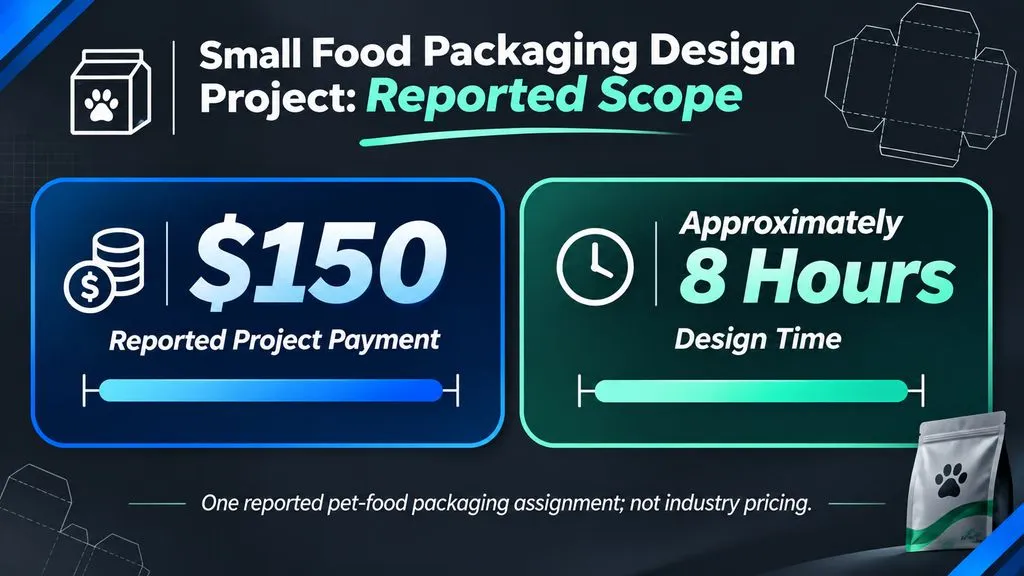
A small pet-food packaging assignment documented in our research reportedly involved approximately 8 hours of work for $150.
The designer used Adobe Illustrator to develop packaging visuals, illustrations, and product-information layouts.
Based on those reported figures, the calculated gross project-payment equivalent was $18.75 per hour, before any unreported expenses or additional work.
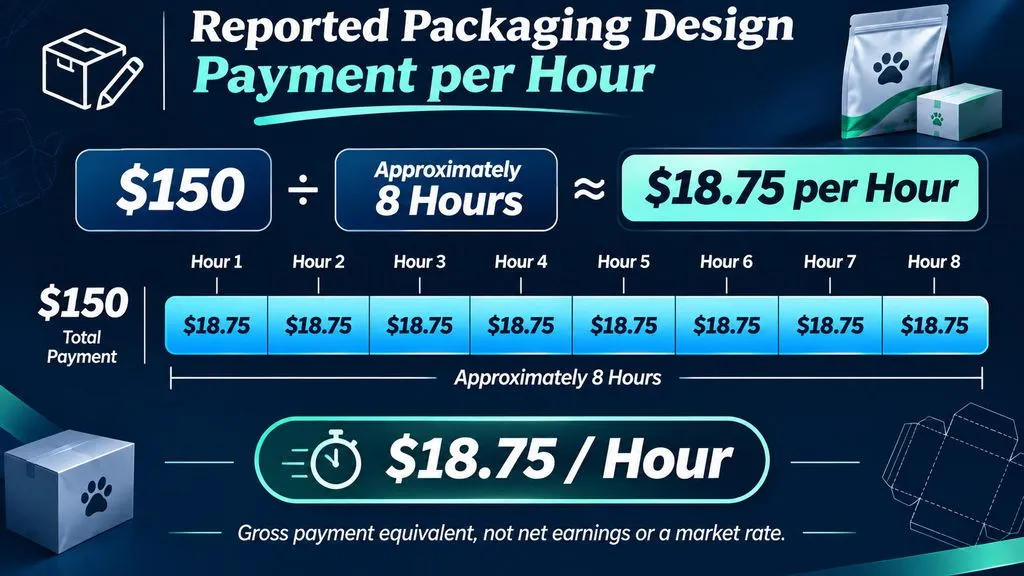
This is one individual project, not an industry pricing benchmark. The available account does not establish whether extensive revisions, regulatory review, or production management were included.
Professional packaging budgets depend on:
- Number of products and variations
- Illustration and branding complexity
- Labeling and content requirements
- Revision rounds
- Technical artwork preparation
- Printing and supplier coordination
For small brands, AI-assisted concept exploration and reusable templates can support more efficient creative work.
However, the lowest initial design fee is not necessarily the lowest total production cost. Artwork errors, incorrect labeling, and unsuitable materials can introduce additional expenses that a simple design quote does not capture.
FAQ
What makes good food packaging design?
Good food packaging combines distinctive branding, readable product information, suitable materials, and production-ready artwork. It should clearly identify the product and distinguish its varieties while accommodating applicable labeling requirements. Physical mockups and supplier reviews help verify whether the design works beyond a digital screen.
Can I use AI or Canva for food packaging design?
Yes. AI tools can help explore packaging concepts, illustrations, and mockups, while Canva can support straightforward layouts. However, generated visuals and design templates are not automatically compliant or print-ready. Product information, package dimensions, artwork specifications, and manufacturing requirements must be verified before production.
How do I design food packaging for multiple flavors?
Create one reusable packaging system and maintain approved product information for every SKU. Keep brand elements consistent while changing flavor names, colors, ingredients, nutrition details, and barcodes as needed. Research cases involving 44 SKUs and more than 30 flavors illustrate why structured information and version control matter.
How much does professional food packaging design cost?
Costs depend on artwork complexity, product variations, revisions, labeling requirements, and production preparation. One reported small-business assignment involved $150 for approximately 8 hours of work, but it does not represent typical market pricing. Request quotes that clearly identify deliverables, editable files, proofs, technical preparation, and revision limits.
Conclusion
Effective food packaging design connects visual identity, accurate product information, suitable materials, and manufacturing requirements into one coordinated workflow. The cases examined here demonstrate why packaging teams must consider labeling accuracy, structural constraints, material performance, multi-SKU management, and production costs alongside visual creativity. By combining practical design systems, realistic prototypes, verified product data, and AI-assisted concept exploration with tools such as Virse's AI Packaging Design Generator, brands can develop distinctive packaging that is easier to manage, more consistent across product variations, and better prepared for manufacturing review.