
50 Christmas Illustration Ideas for 2026 (Cute, Cozy & Creative Designs)
 Yifan Zhao16 min read ·
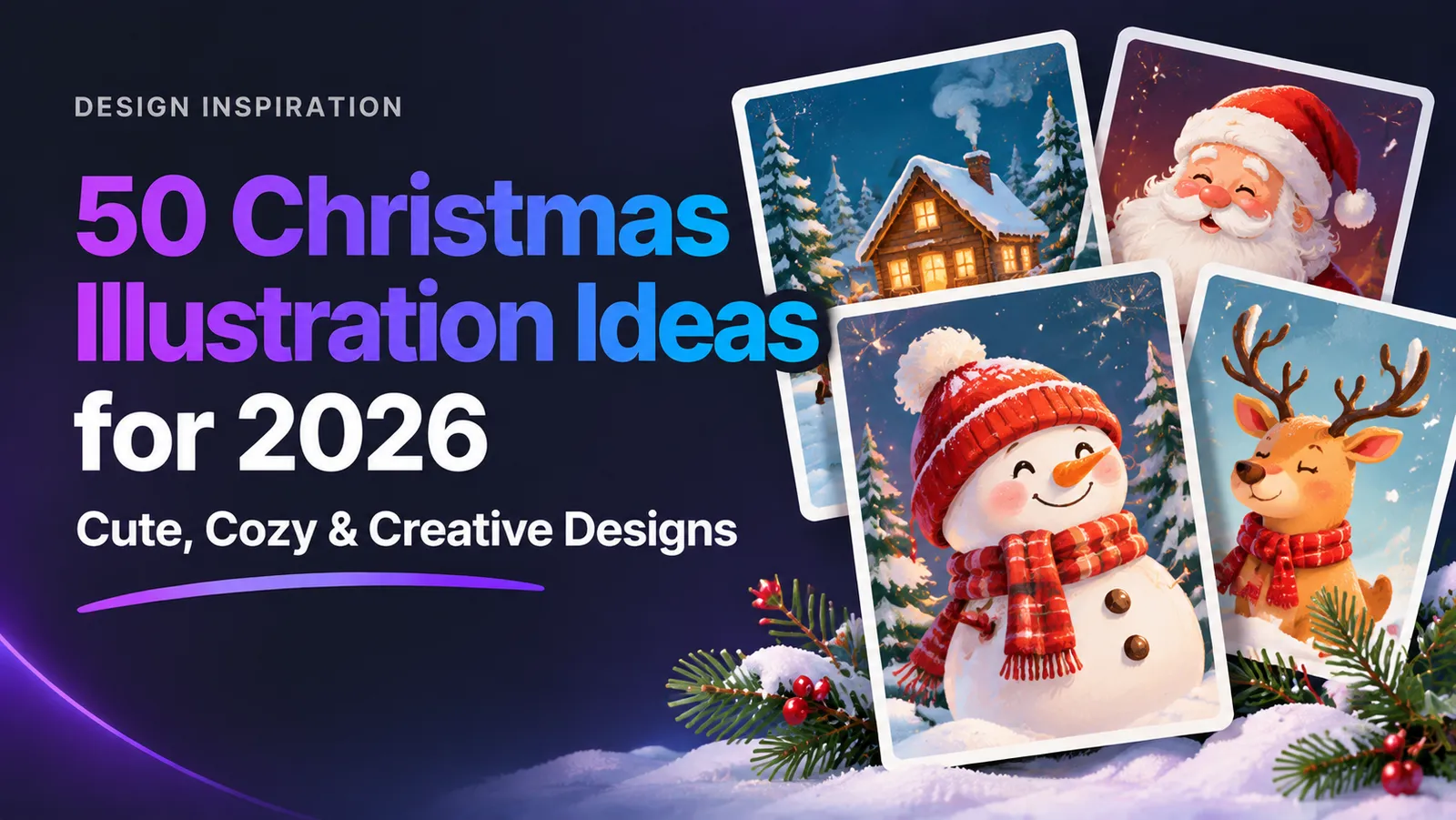
Christmas illustrations bring holiday stories to life through festive characters, winter landscapes, seasonal decorations, and distinctive artistic styles. From cute Christmas animals and cozy watercolor cottages to minimalist Christmas trees and vintage holiday artwork, there are countless ways to create original festive illustrations for greeting cards, packaging, posters, and digital campaigns.
But creating memorable Christmas artwork is not simply about drawing Santa Claus or adding snowflakes. Beginners often struggle with composition and painting techniques, while experienced creators may find their designs lack warmth, atmosphere, or originality. Producing multiple illustrations before the holidays can also become time-consuming. Understanding fundamental design principles can help creators develop more balanced and visually appealing artwork.
This guide explores 50 Christmas illustration ideas across nine artistic styles, with practical composition tips, color palettes, real-world creator examples, and customizable AI design prompts. Whether you are a beginner, digital illustrator, or professional designer, you will find ideas you can adapt to your next Christmas project.
What Makes a Great Christmas Illustration?
A great Christmas illustration combines recognizable festive elements, emotional atmosphere, and thoughtful composition. The strongest designs communicate a feeling rather than simply displaying seasonal objects.
Three elements make the biggest difference:
- Atmosphere: Warm window lights, gentle snowfall, and nostalgic details create an emotional connection.
- Composition: A clear focal point, balanced foreground and background, and intentional negative space make illustrations easier to understand.
- Originality: Personal details, unexpected combinations, and distinctive artistic techniques prevent artwork from looking generic.
For example, a simple snowy cottage can feel more festive when its windows glow with golden light and pine branches frame the foreground. A few carefully chosen details can create more atmosphere than an overcrowded composition.
50 Christmas Illustration Ideas for Every Style
Explore these 50 ideas organized into nine categories. Each concept includes a subject and a practical creative direction that you can adapt to traditional drawing, digital illustration, or AI-assisted design.
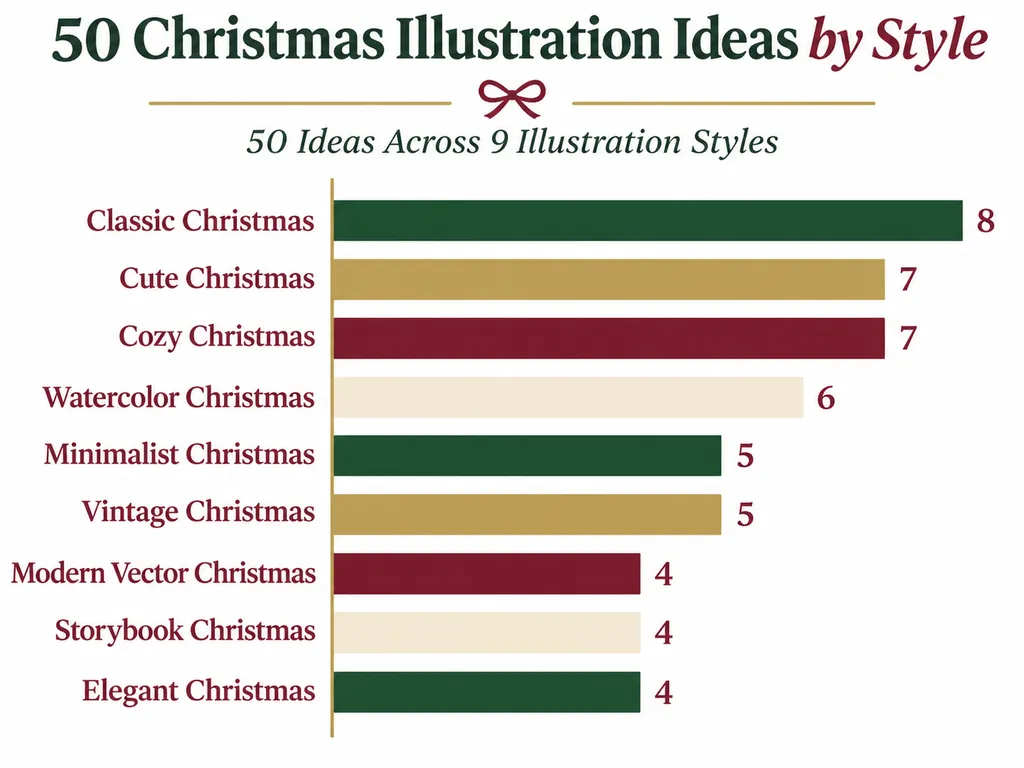
1. Classic Christmas Illustrations (8 Ideas)
Traditional Christmas subjects work particularly well for greeting cards, seasonal decorations, and festive artwork.
- Santa Claus with a Gift Sack: Illustrate Santa carrying presents through a snowy village with warm lighting and expressive character details.
- Christmas Reindeer: Draw a charming reindeer wearing a festive scarf, surrounded by evergreen branches and snowflakes.
- Friendly Snowman: Create a cheerful snowman with a knitted hat, carrot nose, and colorful winter accessories.
- Decorated Christmas Tree: Combine ornaments, ribbons, fairy lights, and layered evergreen branches.
- Christmas Gift Boxes: Illustrate stacked presents with different wrapping patterns, decorative bows, and ribbons.
- Christmas Stockings: Design hanging stockings decorated with stars, holly, and embroidered patterns.
- Candy Cane Decorations: Create a playful composition featuring red-and-white candy canes and festive ribbons.
- Christmas Ornaments: Illustrate glass baubles, bells, stars, and miniature winter scenes inside decorative ornaments.
2. Cute Christmas Illustrations (7 Ideas)
Cute Christmas illustrations are ideal for stickers, children's products, personalized cards, and social media graphics.
- Christmas Cats: Draw playful cats wearing Santa hats or sitting inside oversized gift boxes.
- Festive Dogs: Illustrate a dog wrapped in Christmas lights or wearing a cozy winter sweater.
- Cute Penguins: Create small penguins carrying presents across an icy Christmas landscape.
- Gingerbread Characters: Design smiling gingerbread people with colorful icing and miniature accessories.
- Baby Reindeer: Draw an adorable young reindeer surrounded by falling snow and tiny stars.
- Christmas Bears: Illustrate teddy bears decorating a Christmas tree or sharing hot chocolate.
- Kawaii Santa: Use rounded shapes, oversized facial features, and soft pastel colors to create a friendly Santa character.
3. Cozy Christmas Illustrations (7 Ideas)
Cozy Christmas artwork focuses on warmth, peaceful surroundings, and the emotional atmosphere of the holiday season.
- Snowy Cottage: Draw a small cottage with glowing windows, a snow-covered roof, and smoke rising from its chimney.
- Fireplace and Christmas Stockings: Illustrate a warm fireplace surrounded by stockings, candles, and festive decorations.
- Hot Chocolate by the Window: Create a close-up of a steaming mug with marshmallows and a snowy landscape outside.
- Christmas Market: Draw illuminated outdoor stalls, wooden decorations, and visitors wearing winter clothing.
- Snowy Christmas Village: Illustrate small houses beneath a softly illuminated winter sky.
- Reading by the Christmas Tree: Show someone relaxing with a book beside a decorated tree and warm blanket.
- Christmas Candlelight: Create a peaceful composition featuring glowing candles, pine branches, and golden highlights.
Composition tip: To make a winter illustration feel more Christmassy, introduce recognizable holiday details such as decorated trees, stockings, wreaths, or festive lights. Warm golden light against cool blue snow can create a particularly inviting atmosphere.
4. Watercolor Christmas Illustrations (6 Ideas)
Watercolor works especially well for organic shapes, soft winter landscapes, and delicate botanical artwork.
- Holly and Red Berries: Paint detailed holly leaves with loose watercolor washes and bright red berries.
- Pinecone Illustration: Combine pinecones, evergreen branches, and subtle shadows in a botanical composition.
- Poinsettia Flowers: Illustrate traditional Christmas flowers with layered petals and contrasting centers.
- Watercolor Christmas Wreath: Create a circular arrangement of pine branches, berries, ribbons, and ornaments.
- Watercolor Snowflakes: Experiment with delicate patterns, translucent washes, and white paint splatters.
- Winter Forest: Paint layered evergreen trees using different shades of green, with distant trees fading into a snowy background.
A practical watercolor technique: Use wet-on-wet painting for loose evergreen foliage instead of carefully drawing every branch.
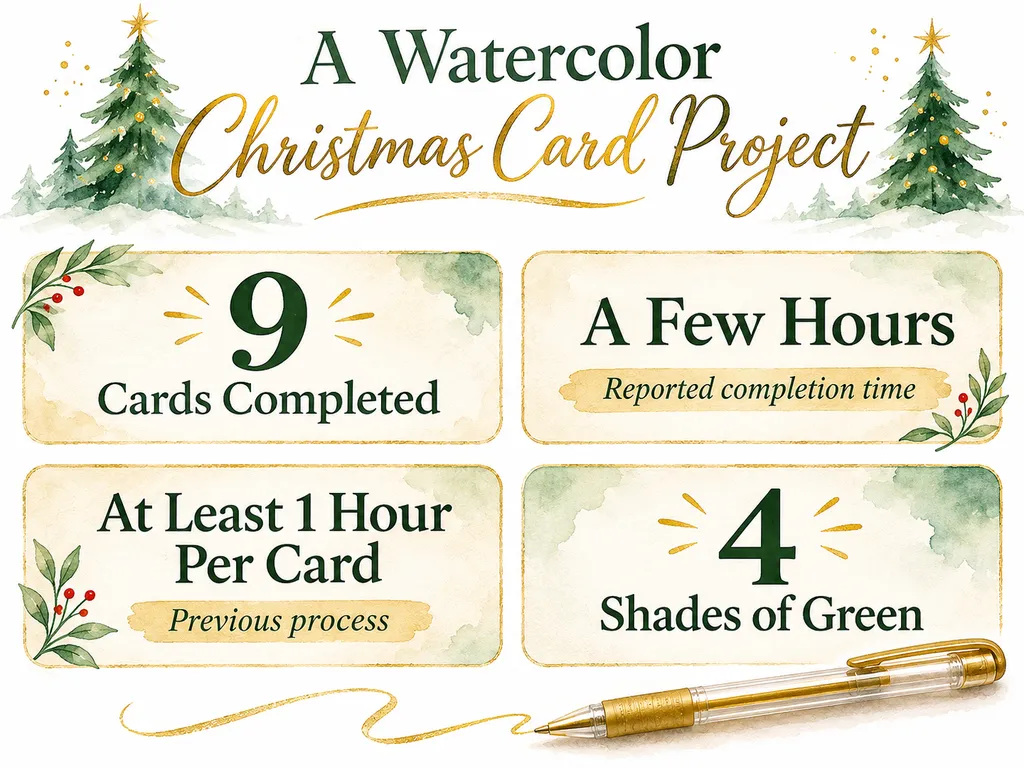
A creator sharing a Christmas card project in the watercolor community reported completing nine cards in a few hours, compared with spending at least an hour on each card previously. The revised process used wet-on-wet painting, four shades of green, metallic gold paint, and a gold gel pen.
This community-reported example shows how simplifying a painting technique can make repeated designs more manageable. The exact revised production time was not provided, so a precise efficiency improvement cannot be calculated.
5. Minimalist Christmas Illustrations (5 Ideas)
Minimalist Christmas illustrations use simple shapes, negative space, and restrained colors to create distinctive festive artwork.
- Single Christmas Tree: Use one elegant evergreen silhouette with minimal ornamentation.
- Botanical Christmas Branch: Illustrate a single pine or holly branch against a clean background.
- Minimal Christmas Star: Create a simple geometric star with subtle metallic accents.
- Simple Christmas Ornament: Focus on one decorative bauble with a clean outline and controlled shading.
- Winter Silhouette: Illustrate a quiet forest or village using simple dark silhouettes against a pale winter sky.
Are minimalist Christmas illustrations too boring? Not necessarily. A simple composition can communicate peace, elegance, and nostalgia. Instead of filling every empty space, introduce a few meaningful details, such as delicate snowfall, warm lighting, or a contrasting focal point.
6. Vintage Christmas Illustrations (5 Ideas)
Vintage Christmas artwork is suitable for nostalgic greeting cards, retro packaging, and traditional holiday decorations.
- Retro Santa Claus: Illustrate Santa using mid-century-inspired colors, simplified shapes, and playful expressions.
- Vintage Christmas Toys: Create an arrangement of wooden trains, toy soldiers, rocking horses, and antique decorations.
- Old Christmas Postcard: Recreate a traditional holiday postcard using ornamental borders and aged paper textures.
- Retro Christmas Market: Illustrate a nostalgic festive market with vintage signage, decorated stalls, and warm lights.
- Nostalgic Christmas Decorations: Combine antique bells, ribbons, candles, and glass ornaments.
7. Modern Vector Christmas Illustrations (4 Ideas)
Vector illustrations are useful for digital campaigns, scalable graphics, website decorations, and commercial design projects. Understanding how to use AI for graphic design can also help creators explore different visual treatments and develop digital artwork more efficiently.
- Geometric Christmas Tree: Build a Christmas tree using triangles, circles, and overlapping shapes.
- Festive Icon Collection: Create coordinated Christmas icons, including stars, presents, bells, and snowflakes.
- Abstract Christmas Ornaments: Reinterpret traditional decorations using simplified shapes and unexpected color combinations.
- Flat Winter Landscape: Illustrate snowy mountains, evergreen trees, and small houses using clean vector shapes.
8. Storybook Christmas Illustrations (4 Ideas)
Storybook illustrations use characters, environments, and visual storytelling to create imaginative festive scenes.
- Magical Christmas Forest: Create an enchanted forest with glowing trees, tiny lights, and snowy pathways.
- Santa's Workshop: Illustrate Santa's workshop filled with presents, toys, and busy little helpers.
- Christmas Train Journey: Draw a festive train traveling through snowy mountains and illuminated villages.
- Woodland Animals Celebrating Christmas: Show foxes, rabbits, deer, and bears gathering around a decorated forest tree.
9. Elegant Christmas Illustrations (4 Ideas)
Elegant Christmas illustrations rely on refined details, controlled compositions, and sophisticated color palettes.
- Gold Botanical Christmas Art: Combine detailed evergreen foliage with muted gold accents and an ivory background.
- Luxury Christmas Ornaments: Illustrate sophisticated glass ornaments with reflective surfaces and delicate decorative patterns.
- Dark Green Christmas Composition: Create an arrangement of deep green branches, candles, and subtle golden highlights.
- Monochrome Christmas Artwork: Use different shades of one color to create a refined seasonal illustration with strong tonal contrast.
How to Choose the Right Christmas Illustration Style
The best illustration style depends on your audience, intended application, and production requirements.
Style | Best For | Main Advantage |
|---|---|---|
Cute | Stickers and children's products | Expressive characters |
Cozy | Family greeting cards | Warmth and storytelling |
Watercolor | Personalized cards | Organic textures |
Minimalist | Modern stationery | Clean compositions |
Vintage | Traditional packaging | Nostalgic atmosphere |
Vector | Digital campaigns | Scalable artwork |
Storybook | Editorial and children's books | Narrative depth |
Elegant | Premium holiday branding | Refined visual details |
If you are creating multiple cards, prioritize a style that can be reproduced consistently. A simple botanical wreath may be easier to repeat than a highly detailed winter village, while the latter may work better as a single centerpiece illustration.
Christmas Illustration Color Palettes That Work
Color selection influences the mood of an illustration as much as its subject. These six suggested palettes provide starting points for different creative directions.
Palette | HEX Colors | Best Application |
|---|---|---|
Classic Christmas | #AA2735, #214E34, #D5B66B, #F8EFE0 | Traditional cards |
Cozy Christmas | #713C32, #B76D42, #E8B968, #F3E4CD | Warm interiors |
Winter Wonderland | #243E55, #7398B1, #CEDFE8, #FAFAF5 | Snowy landscapes |
Vintage Christmas | #984D44, #53745F, #D1A775, #EFE1C2 | Retro artwork |
Cute Christmas | #E8A0A8, #B8D7BE, #F3D78F, #FFF1ED | Character illustrations |
Elegant Christmas | #153B35, #C6A66B, #242727, #F4EFE4 | Premium packaging |
These are suggested design combinations, not measured community preferences.
How to Make a Christmas Illustration Feel Warmer
A warm Christmas atmosphere does not depend on using red and green everywhere.
- Introduce golden light around windows, candles, and decorations.
- Contrast warm foreground elements with cool blue or gray winter backgrounds.
- Use subtle shadows to give objects depth.
- Add small details such as glowing fairy lights, falling snow, or reflections.
- Avoid excessive decoration that competes with the main subject.
For watercolor artwork, metallic gold paint and gold gel pens can introduce festive highlights without requiring a completely different painting technique.
How to Create an Original Christmas Illustration
Following tutorials is useful when learning a new technique, but developing original compositions requires understanding how individual elements work together.
Follow this practical workflow:
- Choose a subject and emotional direction. Start with a snowy cottage, Christmas tree, or wreath. Decide whether the artwork should communicate warmth, nostalgia, playfulness, or elegance.
- Build the composition. Identify the main subject, supporting elements, and background. For a snowy cottage, use pine branches in the foreground, the cottage in the middle ground, and distant mountains in the background.
- Select a color palette. Choose complementary colors before starting. Keep the main subject visually distinct from the background.
- Choose your drawing technique. Use watercolor or gouache for expressive textures, or digital illustration tools for editable artwork.
- Add atmosphere and details. Introduce light, texture, snowfall, and carefully placed decorations.
- Review the composition. Check the focal point, contrast, and visual balance. Remove details that do not contribute to the design.
The key to original illustration is learning how to combine familiar subjects in your own way rather than copying an existing finished composition.
How to Create Christmas Illustrations Faster
Creating a collection of Christmas illustrations can become time-consuming when every design is treated as a separate project.
A more efficient approach is to develop reusable subjects and simplify repetitive production steps.
Practical techniques include:
- Reuse existing sketches: Adapt an existing pet or character drawing by adding seasonal details.
- Repeat successful compositions: Develop variations from one established layout.
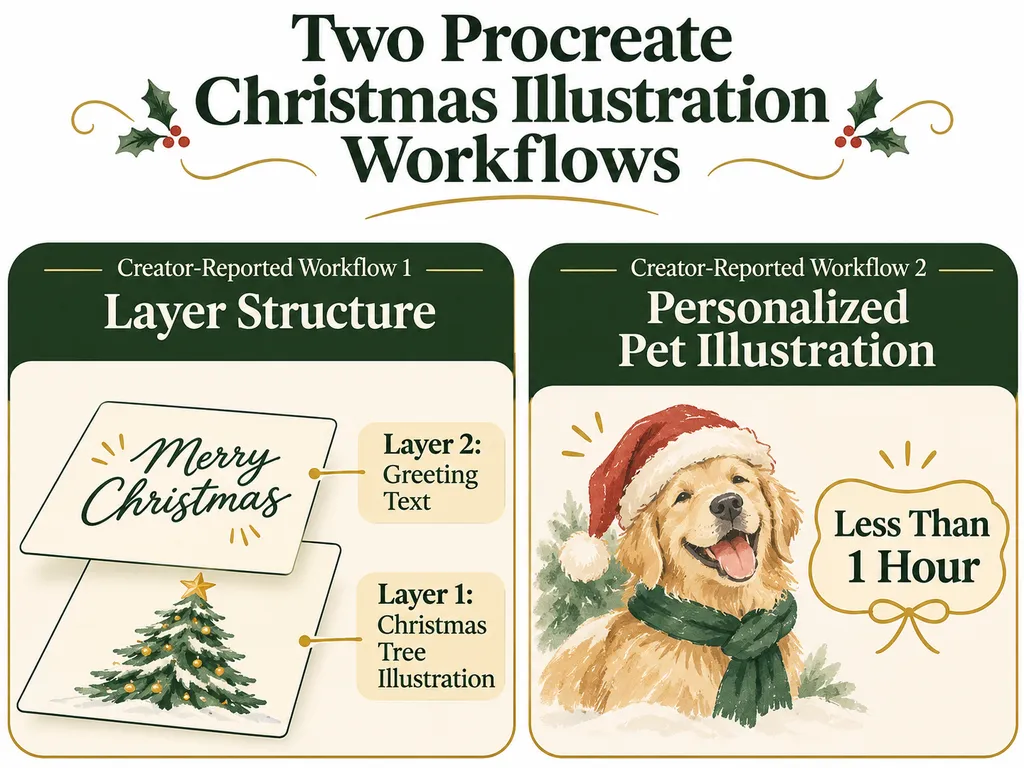
- Separate illustration and typography: Keep artwork and greeting text on different layers.
- Use a limited palette: Reduce the number of colors that need to be mixed or adjusted.
- Create reusable decorative assets: Prepare stars, snowflakes, foliage, and ornaments separately.
Another community-reported example involved a creator adapting an existing dog sketch in Procreate. By adding stars, a border, and lettering, the creator completed a personalized Christmas illustration in less than an hour.
This demonstrates how reusing original artwork can reduce repetitive work while preserving a personal touch.
How to Create Christmas Illustrations with AI
AI-assisted design can help creators explore compositions, generate visual references, and experiment with different artistic styles. Exploring different AI design tools can provide additional ways to develop visual concepts and experiment with creative workflows.
However, generating an image is only one part of the creative process. AI-generated artwork may contain inconsistent details, awkward compositions, or generic visual elements.
For better results:
- Define the subject and intended application.
- Specify an artistic style rather than simply requesting Christmas artwork.
- Include a consistent color palette and lighting direction.
- Describe the foreground, background, and focal point.
- Review generated details and refine areas that look incorrect.
- Adapt the final artwork for its intended format.
For an AI-assisted creative workflow, explore Virse. If you want to turn festive artwork into a greeting card, try the AI Christmas Card Generator.
8 Christmas Illustration Prompts You Can Customize
Use these prompts as starting points for AI-assisted creative exploration.
1. Cozy Christmas Cottage
Create a cozy Christmas illustration featuring a small snow-covered cottage, glowing golden windows, pine trees, gentle snowfall, warm interior lighting, and a peaceful winter evening. Use a painterly storybook style with deep forest green, warm cream, and muted gold.
2. Cute Christmas Animals
Create a cute Christmas illustration featuring adorable woodland animals decorating a small Christmas tree. Include a fox, rabbit, and baby reindeer with expressive faces, rounded shapes, soft pastel colors, and charming festive accessories.
3. Watercolor Christmas Wreath
Create a delicate watercolor Christmas wreath featuring holly leaves, pine branches, red berries, and subtle golden details. Use transparent watercolor washes, organic brushwork, textured paper, and an elegant cream background.
4. Minimalist Christmas Tree
Design a minimalist Christmas illustration featuring one elegant geometric evergreen tree, subtle gold ornaments, a warm ivory background, and generous negative space. Use clean shapes and restrained festive colors.
5. Vintage Christmas Postcard
Create a nostalgic vintage Christmas postcard illustration featuring a traditional snowy village, antique decorations, ornamental borders, muted red and green colors, and aged paper texture.
6. Magical Winter Forest
Create a magical Christmas illustration featuring a snow-covered forest, glowing lanterns, illuminated trees, distant mountains, and gentle snowfall. Use layered composition, atmospheric lighting, and a detailed storybook painting style.
7. Elegant Christmas Botanical Art
Create a sophisticated botanical Christmas illustration featuring evergreen branches, pinecones, mistletoe, and gold accents. Use fine detailed linework, deep green tones, and a clean ivory background.
8. Personalized Christmas Pet Illustration
Create a personalized Christmas illustration based on a pet sketch. Preserve the recognizable characteristics of the original subject while adding a festive scarf, decorative stars, a hand-drawn border, and a warm seasonal color palette.
Prompt customization tip: Change the subject, background, color palette, and artistic medium independently. This makes it easier to explore variations without losing the original creative direction.
How to Prepare Christmas Illustrations for Printing
Digital artwork and printed illustrations do not always look identical. Paper color, ink coverage, color separation, and image contrast can all affect the final result.
One creator documented experimenting with Risograph printing for a Christmas card using Procreate artwork. The design measured 20 × 9 cm and used two printing colors: teal and orange.
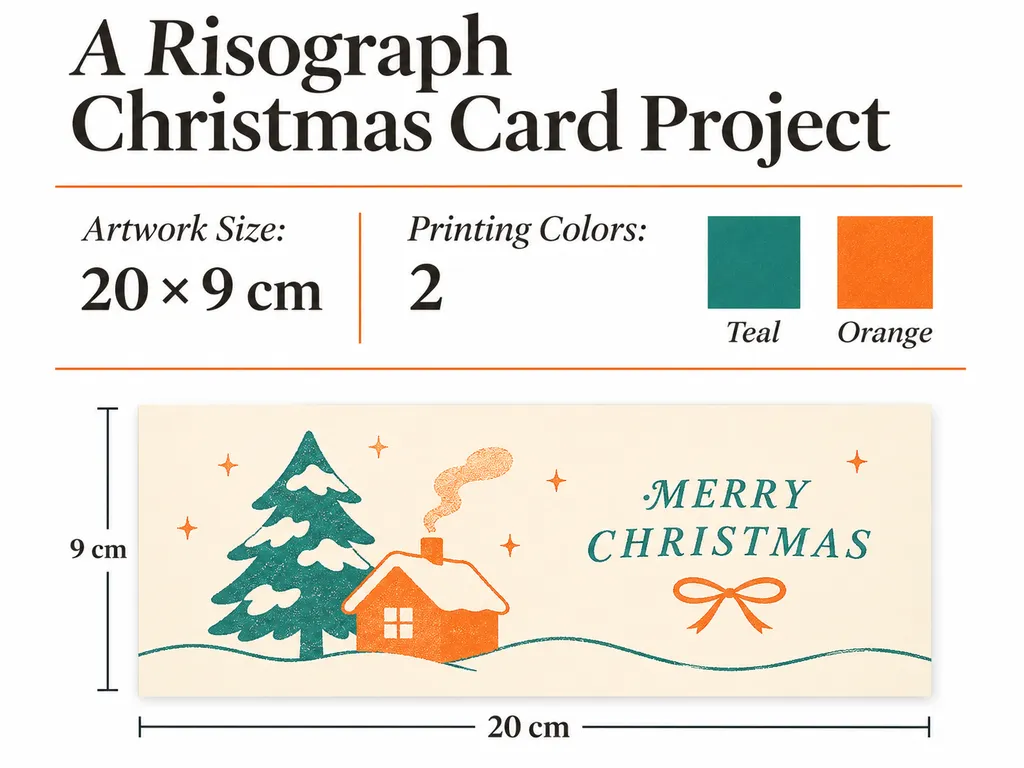
The creator identified a contrast issue between the character's face and the background. The final printing outcome was not reported, so this example should be understood as a documented preparation challenge rather than a confirmed successful print.
Before printing your artwork:
- Check whether your colors suit the selected printing method.
- Review contrast between characters and backgrounds.
- Keep important text and visual details separate from decorative artwork when possible.
- Confirm paper color and printing specifications with the provider.
- Preview the composition at its intended physical size.
Separating illustration and greeting text into different layers also makes later revisions easier. One Procreate creator documented a Christmas design using two layers: one for the Christmas tree and another for the greeting text.
Common Christmas Illustration Mistakes to Avoid
Mistake | Why It Happens | How to Improve It |
|---|---|---|
No festive atmosphere | Artwork relies only on recognizable symbols | Add lighting, storytelling, and seasonal details |
Overcomplicated composition | Too many decorations compete for attention | Establish one focal point |
Generic artwork | Design follows familiar templates too closely | Introduce personal details and original compositions |
Flat winter landscapes | Foreground and background lack contrast | Use layered scenery and tonal variation |
Inconsistent AI details | Generated objects and characters may not align | Review and refine individual elements |
Poor print contrast | Screen colors differ from printed results | Test color relationships before printing |
Excessive decoration | Every empty area is filled | Use negative space intentionally |
A successful Christmas illustration should be visually recognizable while retaining a distinctive personality.
Frequently Asked Questions
What are some easy Christmas illustration ideas for beginners?
Start with simple subjects such as Christmas trees, snowflakes, pinecones, holly branches, wreaths, and ornaments. These motifs can be simplified into basic shapes and repeated across multiple cards. Watercolor washes and flat digital illustrations are useful starting points because they allow beginners to focus on composition without requiring highly detailed drawing techniques.
How do you make a Christmas illustration look festive?
Combine recognizable seasonal elements with warm lighting, appropriate colors, and storytelling details. For example, a snowy cottage becomes more inviting when its windows glow with golden light. Falling snow, decorative foliage, and subtle shadows can also make a winter scene feel more distinctly Christmas-themed.
Can I create Christmas illustrations without drawing skills?
Yes. AI image generators, digital design platforms, editable templates, and simple vector tools can help you create festive artwork without advanced drawing experience. Start with a specific subject and visual style, then refine the composition, colors, and details to make the result more personal.
What are the best colors for Christmas illustrations?
Traditional red, green, gold, and cream remain versatile choices. For a cozy atmosphere, consider warm brown, muted orange, and golden yellow. Winter landscapes often benefit from navy, pale blue, and white, while cute illustrations can use pastel pink, mint green, and soft yellow.
How can I create Christmas illustrations faster?
Use repeatable compositions, limited color palettes, reusable sketches, and simplified painting techniques. One creator documented completing nine watercolor Christmas cards in a few hours using a wet-on-wet technique, compared with spending at least an hour on each card previously. Reusing existing artwork and separating text from illustrations can also reduce repetitive work.
How do I make an original Christmas illustration without copying tutorials?
Start with a subject you want to communicate and identify the emotional direction of the artwork. Sketch several possible compositions, experiment with foreground and background arrangements, and combine familiar Christmas elements in your own way. Tutorials can help you learn techniques, but the final composition should reflect your own creative decisions.
Conclusion
Creating memorable Christmas illustrations means combining familiar festive subjects with original ideas, thoughtful composition, and emotional atmosphere. From cute woodland animals and cozy snowy cottages to watercolor wreaths and minimalist Christmas trees, these 50 Christmas illustration ideas provide a starting point for different creative projects. Whether you work with traditional materials, Procreate, or AI-assisted design tools, focus on developing a recognizable visual style, making artwork easier to reproduce, and ensuring the final illustration works for its intended application.
More from the Virse Blog
Inspiration

50 Christmas Card Ideas for 2026 (Designs You Can Make Today)
November 24, 2026 by Vincent
Inspiration
Business Christmas Cards: 30 Corporate Holiday Card Ideas, Wording and Etiquette
November 24, 2026 by Yifan Zhao
Inspiration

Christmas Card Design: 40 Creative Layouts, Color Combos and Photo Card Tips
November 24, 2026 by Yifan Zhao