Basketball Jersey Design: Rules, Templates, Ideas
Vincent13 min read ·
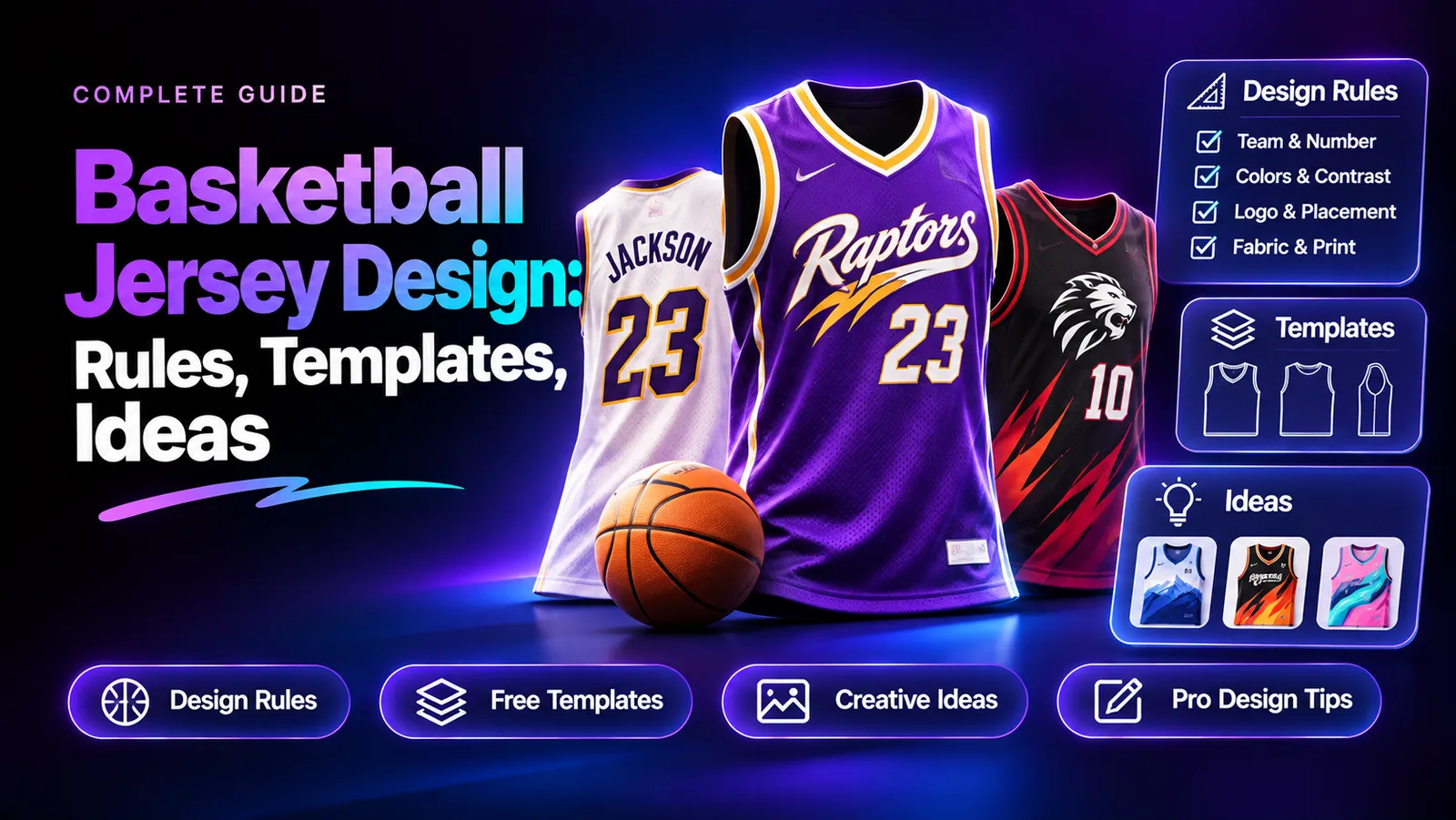
A great basketball jersey design combines recognizable team colors, readable player numbers, balanced typography, and production-ready artwork. Start with a front-and-back template, establish a consistent visual style, follow your league's uniform rules, and verify the final design before printing. Explore different clothing mockup creation techniques to understand how your design will look on an actual garment.
But a jersey that looks impressive in a digital mockup may not work equally well on the court. Poor number contrast, misplaced lettering, incompatible templates, and cracking graphics can turn a promising design into a costly mistake. Our review of customization questions reveals why both visual appeal and production details deserve attention. Learn how to preserve design accuracy in AI mockups before committing to a final concept.
With Virse, you can explore basketball jersey ideas without starting from scratch or mastering complex design software. Its Infinite Canvas, multiple AI image models, reference-image inputs, and targeted image editing let you experiment with team colors, typography concepts, and graphic styles in one creative workspace. Compare creative directions, refine your favorite concept, and develop a distinctive jersey design before preparing it for production.
What Makes a Good Basketball Jersey Design?
A professional basketball jersey balances team identity, number readability, and manufacturing feasibility. Every design element should improve recognition, reinforce the team's identity, or support the garment's construction.
Make Basketball Jersey Numbers Easy to Read
Player numbers must remain recognizable during movement and against the jersey background. A visually impressive font is ineffective if spectators, teammates, or referees cannot distinguish the digits.
Four design decisions matter most:
- Contrast: Use light numbers on dark fabric or dark numbers on light fabric.
- Typography: Choose bold digits with distinct, recognizable shapes.
- Outlines: Add contrasting borders when they improve separation from the background.
- Alignment: Keep number positions consistent across uniforms.
Visual feedback on LA Clippers jersey lettering provides a useful example: a simple contrasting outline was proposed to improve visibility without changing the entire uniform.
Before-and-after design comparison:
- Weak design: Thin numbers placed over a busy gradient with little contrast.
- Improved design: Bold numbers with clear spacing and a restrained contrasting outline.
Practical test: View your jersey at full size and as a small thumbnail. If the numbers become difficult to distinguish, simplify the typography or increase contrast. Test both sides separately, particularly when they use different backgrounds.
Balance Team Colors, Logos, and Graphics
Start with one dominant color, one supporting color, and one accent. This three-color framework is a useful design recommendation, not an official competition rule.
For example, a Thunder-themed jersey could combine navy fabric, electric-blue numbers, and restrained lightning graphics along the side panels.
Our review of beginner design questions highlights a recurring challenge: adding too many decorative elements can weaken the visual hierarchy.
An effective design makes the team name and player number immediately recognizable. Introduce patterns only where they strengthen the overall composition.
Design the Front, Back, and Shorts Together
The front communicates team identity, while the back prioritizes player identification. Side panels and shorts should follow the same color and graphic system.
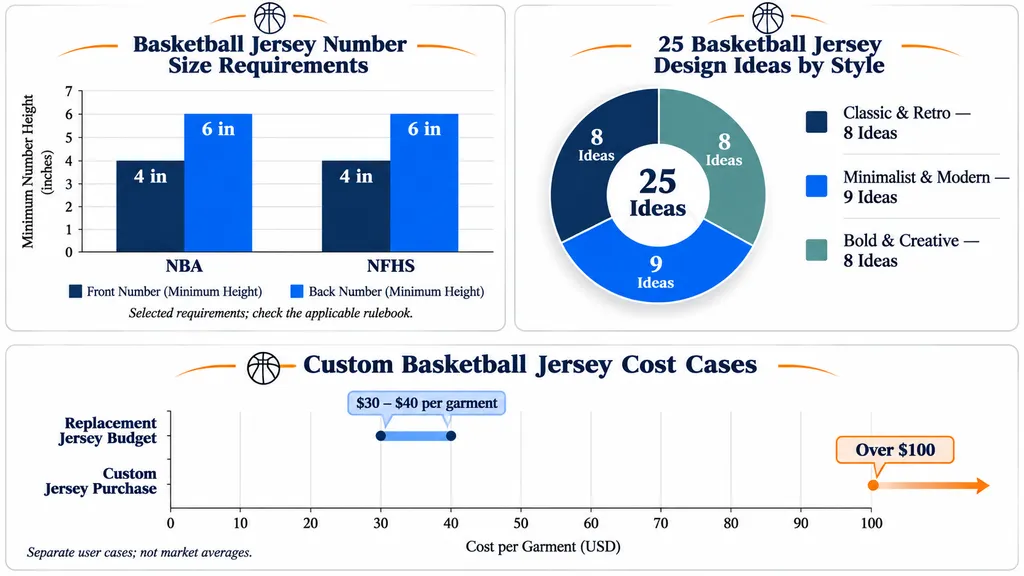
One custom jersey purchase documented in our research exceeded $100, yet the delivered garment had number-alignment or name-curvature problems.
The case illustrates why attractive mockups cannot replace production checks.
Before approval, inspect both sides for number centering, name curvature, consistent spacing, seam alignment, and graphic placement.
Review the complete uniform rather than approving individual panels independently.
What Are the Official Basketball Jersey Design Rules?
Basketball jersey rules depend on the competition. The NBA, NCAA, NFHS, and local leagues have different requirements for numbers, lettering, colors, and permitted graphics.
Always identify the governing organization before creating final production artwork.
Basketball Jersey Number Size and Placement
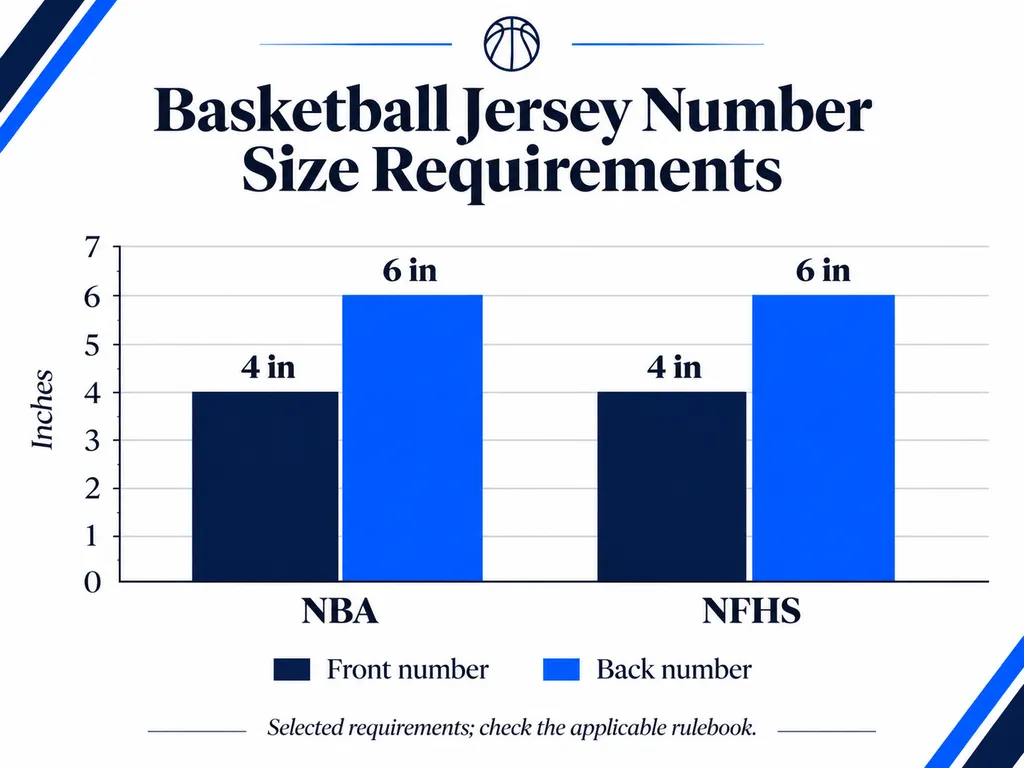
The NBA's 2025–26 official playing rules specify the following minimum dimensions:
- Front numbers: 4 inches high.
- Back numbers: 6 inches high.
- Number width: 3¾ inches.
- Player surnames: Generally 2½ inches high, subject to exceptions.
NCAA men's basketball has separate requirements concerning number dimensions, contrast, and designated uniform areas.
NFHS high-school guidance specifies front numbers at least 4 inches high and back numbers at least 6 inches high, with additional restrictions on number width, styles, and permitted combinations.
For exact requirements, consult the NBA Official Playing Rules, NCAA Men's Basketball Rules, and NFHS Basketball Guidance.
Important: These are selected requirements, not complete compliance specifications. Confirm the applicable season, division, and tournament regulations before manufacturing uniforms.
Team Colors, Logos, and Graphic Restrictions
Different competitions regulate where decorative artwork may appear.
NCAA men's basketball defines a central neutral zone with restrictions on decoration, while NFHS guidelines regulate the torso appearance, number contrast, and permitted uniform designs.
NFHS 2026–27 guidance also emphasizes traditional white home uniforms and contrasting dark visiting uniforms.
These requirements matter when working with gradients, oversized logos, background patterns, and sponsor graphics.
Design recommendation: Reserve regulated identification areas before adding decorative elements. If a graphic interferes with required lettering or numbers, reposition or simplify it.
Common Basketball Uniform Rule Mistakes
Three preventable mistakes can create production problems:
- Selecting player numbers without checking competition restrictions.
- Placing decorative artwork inside regulated uniform areas.
- Assuming professional and school competitions follow identical rules.
Before ordering, verify the applicable rulebook, uniform colors, number dimensions, placement, lettering, and tournament-specific requirements.
Treat uniform compliance as a separate approval stage, not something to check after the artwork is finished.
How to Design a Basketball Jersey Step by Step
Creating a basketball jersey involves three essential stages: choosing a suitable template, developing the visual concept, and preparing accurate production artwork.
You can explore the creative direction without advanced illustration skills, but manufacturing requires additional technical checks.
Step 1: Choose a Blank Basketball Jersey Template
Start with a front-and-back template showing the neckline, armholes, side panels, and shorts.
Choose the template based on your intended output:
- Image mockup: Best for exploring colors, graphics, and initial concepts.
- Editable vector template: Suitable for adjusting lettering, numbers, and scalable graphics.
- Manufacturer template: Designed around specific garment panels, sizes, and production requirements.
For beginners, a simple blank jersey mockup is sufficient to explore visual ideas.
For manufacturing, request the supplier's actual production template before completing detailed artwork.
A PNG preview may communicate the design clearly but lack the editable panels required for printing.
Step 2: Create Team Colors and Graphics
Develop several visual directions rather than committing immediately to one.
For example, compare:
- Retro: Traditional athletic typography and contrasting trim.
- Minimalist: Bold numbers, limited colors, and clean panels.
- Modern geometric: Angular graphics and distinctive color blocking.
AI-assisted tools can accelerate this exploration.
With Virse, designers can compare AI-generated concepts, reuse visual references, and refine individual elements within the same creative canvas.
However, AI-generated artwork may contain distorted letters, incorrect numbers, or inconsistent front-and-back details.
Use AI images as creative references, not verified manufacturing files.
For additional inspiration, explore fashion design sketches to experiment with different visual directions before finalizing your uniform concept.
Step 3: Customize Names, Numbers, and Final Artwork
Build a consistent typography system across the entire roster.
Maintain a player list containing each person's name, jersey number, size, and customization requirements. Keep these elements editable so individual changes don't require rebuilding the design.
Pay particular attention to longer player names. Letter spacing that works for a short name may become uneven when applied to curved lettering.
Before exporting, check name spelling, number alignment, graphic boundaries, and front-to-back consistency.
Approve a master design first, then apply it consistently to each player's uniform.
25 Basketball Jersey Design Ideas for Every Team Style
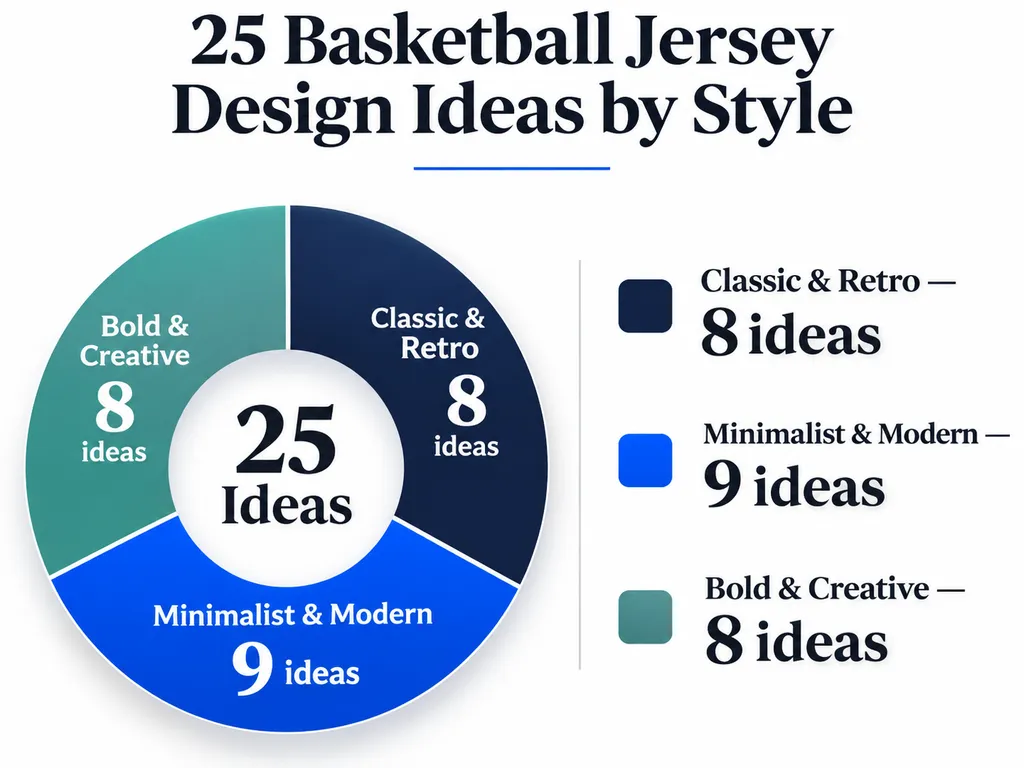
The best basketball jersey design ideas combine distinctive aesthetics with practical readability. These 25 concepts offer creative directions for school teams, recreational leagues, and custom uniforms.
Classic and Retro Basketball Jersey Ideas
- Vintage Varsity: Traditional block numbers, contrasting trim, and heritage colors.
- 90s Throwback: Oversized lettering and energetic color combinations.
- College Heritage: Arched team names and collegiate typography.
- Classic Pinstripe: Fine vertical stripes and clear player numbers.
- Championship Gold: Black or navy fabric with restrained gold accents.
- Old-School Red: Red-and-white colors with traditional athletic lettering.
- Retro Sunset: Orange, burgundy, and cream with geometric graphics.
- Heritage Monogram: Interlocking initials representing the team.
Best for: School teams, alumni events, and organizations seeking a recognizable identity across multiple seasons.
Retro designs work particularly well when typography becomes the main visual feature. Avoid excessive gradients or futuristic details that conflict with the intended classic appearance.
Minimalist and Modern Basketball Jersey Ideas
- Monochrome Black: Black fabric with high-contrast white numbers.
- Modern Geometric: Angular panels and structured graphic shapes.
- Clean Two-Tone: Two primary colors with limited decoration.
- Gradient Fade: A controlled transition between team colors.
- Neon Accent: Dark fabric with small fluorescent highlights.
- Asymmetric Stripe: One prominent diagonal or side-panel graphic.
- Whiteout: White fabric with strong contrasting identification.
- Pastel Modern: Soft colors balanced with readable typography.
- Technical Grid: Subtle geometric patterns inspired by precision.
Best for: Contemporary recreational teams, youth leagues, and organizations seeking a clean athletic identity.
Minimalist designs simplify visual consistency when producing multiple sizes and number combinations.
Practical tip: Check gradients behind both single-digit and two-digit numbers to ensure readability remains consistent.
Bold Typography and Creative Jersey Concepts
- Statement Typography: Large, distinctive team lettering.
- Mascot Graphic: A prominent animal or character emblem.
- City Skyline: Graphics inspired by local architecture.
- Lightning Energy: Directional shapes suggesting speed.
- Graffiti-Inspired: Street-art lettering balanced with clear numbers.
- Digital Pixel: Pixel graphics with a modern gaming aesthetic.
- Topographic Lines: Contour patterns inspired by local geography.
- Reversible Contrast: Coordinated visual identities on opposite sides.
Best for: Community leagues, youth teams, creative tournaments, and organizations seeking memorable graphics.
Complex artwork often works better on secondary panels, leaving player numbers and names easier to read.
For reversible jerseys, develop both sides as independent uniforms rather than simply changing the background color.
Design takeaway: A strong jersey remains recognizable without relying on tiny decorative details.
What Are the Best Basketball Jersey Templates and Design Tools?
The best basketball jersey design software depends on whether you need visual inspiration, editable artwork, or manufacturer-approved production files.
Our review of user questions highlights an important distinction: not every tool that creates attractive previews can deliver manufacturing-ready artwork.
Free and Editable Basketball Jersey Design Tools
Useful options include:
- Inkscape: Free vector editing for scalable artwork and typography.
- Adobe Illustrator: Advanced vector-design and layout workflows.
- CorelDRAW: Editable sportswear artwork and production-oriented layouts.
- Online jersey makers: Quick customization of colors, names, and numbers.
- Virse: AI-assisted visual exploration, concept generation, and image refinement.
For beginners, Inkscape is a practical free option when editable vector artwork is required.
For concept development, an online jersey maker or AI creative workspace can simplify experimentation.
For actual production, prioritize the manufacturer's required template and export format.
Editable Templates vs. Print-Ready Files
Production-ready templates must support more than realistic previews.
A sportswear design brief captured in our research requested editable front and back panels, shorts artwork, adult and youth sizes, and replaceable names and numbers.
This illustrates why professional customization requires structured artwork rather than a flattened image.
A practical production file should preserve:
- Editable names and player numbers.
- Separate artwork for required panels.
- Consistent colors and typography.
- Manufacturer-approved dimensions.
- Compatible export formats.
The key difference: A mockup shows what a jersey could look like; a production-ready file provides the artwork required to manufacture it.
For a more detailed understanding of production specifications, see this tech pack guide.
How Do You Print Basketball Jerseys That Last?
Basketball jersey durability depends on fabric compatibility, printing methods, manufacturing quality, and garment care.
Our research is based on documented customization questions and individual purchasing experiences, not controlled laboratory testing or direct product trials. The cases below illustrate practical risks rather than industry-wide averages.
Case Study: Jersey Numbers Cracking After Three Years
One team-equipment case involved jerseys used for approximately three years.
The purchaser reported that more than half the jerseys developed cracked numbers and was exploring replacements with a budget of approximately $30–$40 per garment.
These figures describe one purchasing experience, not a measured industry failure rate.
The practical lesson is to confirm decoration materials, fabric compatibility, expected washing conditions, and supplier quality before purchasing replacement uniforms.
Durability should influence supplier selection, not become a consideration only after printed numbers begin to deteriorate.
Case Study: Reversible Basketball Jersey Printing
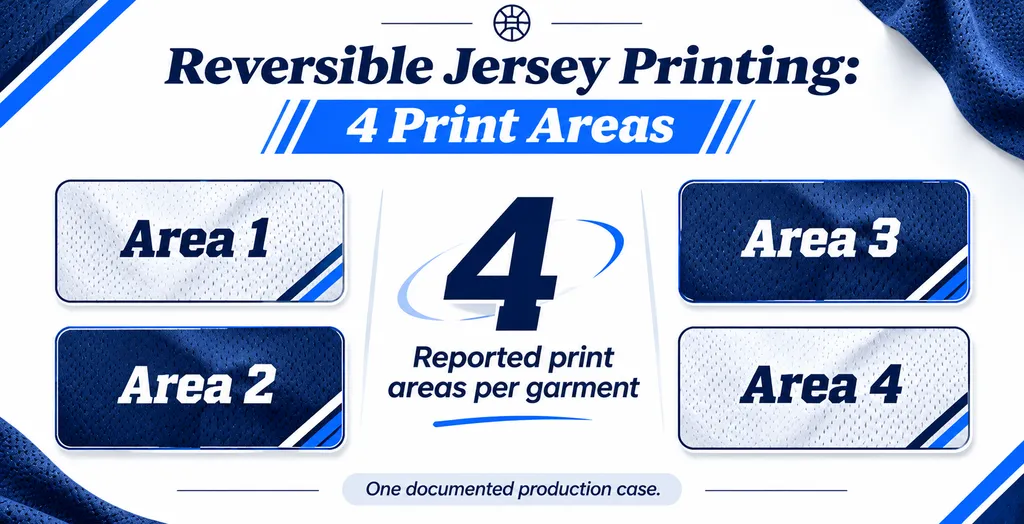
Another production case involved reversible jerseys with four print areas per garment.
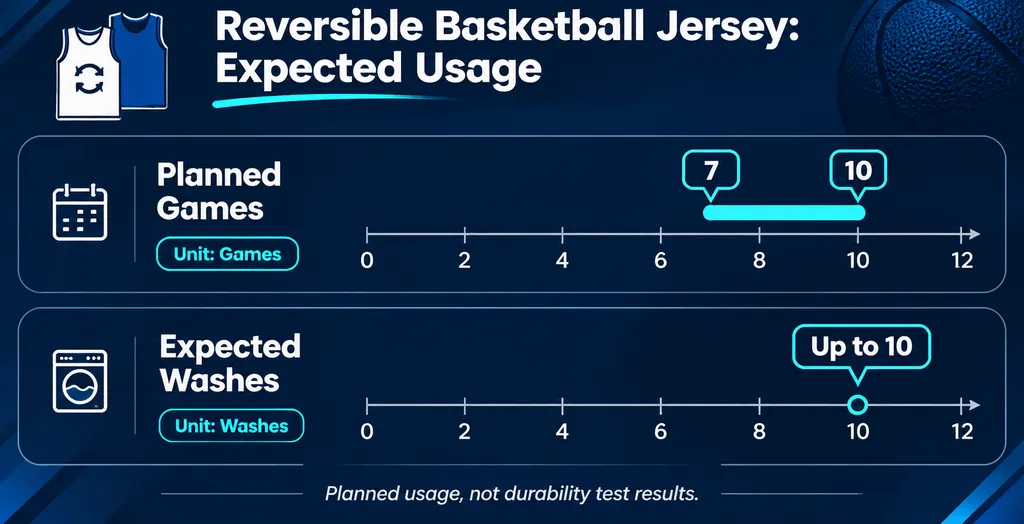
The planned usage included 7–10 basketball games and up to 10 washes.
The challenge was identifying a suitable decoration process for both sides while managing potential durability problems.
These were expected usage conditions, not completed performance-test results.
For reversible jerseys, review garment construction, print placement, material compatibility, and sample quality before ordering.
Practical takeaway: Both sides must function as complete uniforms. Never approve reversible jersey production based solely on one attractive mockup.
Sublimation vs. Heat Transfer vs. Screen Printing
Three common decoration methods serve different production needs.
Sublimation printing transfers dye into compatible materials and is commonly associated with polyester sportswear. It can accommodate detailed graphics when the garment and manufacturing process are suitable.
Heat transfer applies graphics using heat and pressure. Results depend on transfer materials, application conditions, fabric compatibility, and garment care.
Screen printing applies ink through prepared screens. Its suitability depends on artwork complexity, garment construction, ink selection, and production setup.
No method is universally superior.
Final production checklist:
- Confirm player names and jersey numbers.
- Verify front and back alignment.
- Check colors and graphic placement.
- Review sizes and panel dimensions.
- Confirm fabric and printing compatibility.
- Approve the final production artwork.
- Review a proof or physical sample whenever possible.
The most important principle is to design for the actual garment, not just the digital mockup. A successful jersey must remain readable, accurately produced, and appropriate for its intended use.
FAQ
How can I design a basketball jersey for free?
Start with a blank front-and-back template and a free vector editor such as Inkscape. Add team colors, logos, names, and numbers, then compare several layouts. AI creative tools can help explore concepts, but manufacturing files must still meet supplier requirements.
What fonts are best for basketball jersey numbers?
Bold athletic block fonts and clearly structured geometric fonts are practical choices. Prioritize recognizable digits, sufficient contrast, and consistent spacing. Decorative lettering may work for team names, but player numbers must remain readable and comply with applicable competition rules.
Why do basketball jersey numbers crack or peel?
Cracking or peeling can result from incompatible materials, application problems, repeated wear, or washing conditions. Our research includes a three-year equipment case in which more than half the jerseys developed cracked numbers. This individual experience supports careful material selection but does not establish a universal failure rate.
Can AI make a basketball jersey ready for printing?
AI can generate jersey concepts, color variations, and graphic directions. However, generated mockups may contain incorrect lettering, inconsistent numbers, or artwork that doesn't match manufacturing templates. Use AI for creative exploration, then refine editable artwork and obtain production approval before printing.
Conclusion
A successful basketball jersey design combines strong team identity, readable player numbers, official-rule compliance, and reliable production planning. Start with an appropriate template, explore creative directions, refine typography and graphics, and verify every detail before manufacturing. Our review of customization cases shows that alignment, material compatibility, and editable production files matter just as much as visual appearance. By combining AI-assisted concept development through Virse with careful design validation, teams can create distinctive uniforms that are better prepared for real-world use.