
What Is Product Design in 2026? What Product Designers Actually Do
Vincent11 min read ·
Product design is the end-to-end process of identifying a user problem, deciding what should be built, designing how the product works, validating the solution, and improving it after launch. It brings together user needs, business goals, UX, UI, and technical feasibility. In 2026, the challenge is no longer simply creating polished screens—it is making the right product decisions across an increasingly complex workflow.
Product Designers now move between research, UX, visual design, prototyping, engineering collaboration, and AI-assisted production. When these stages are split across disconnected tools, context gets lost, work is repeated, and design consistency becomes harder to maintain. As AI makes execution faster, speed becomes less of a bottleneck; product judgment, creative direction, and consistency become more important.
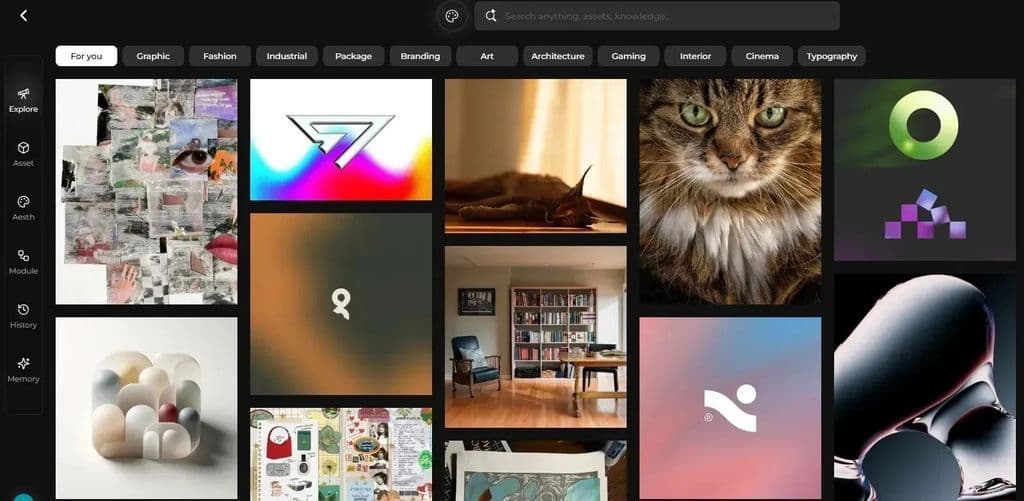
Virse is built for this new Product Design workflow. With an infinite canvas, collaborating AI Agents, shared project context, and long-term design memory, it reduces repetitive work and helps designers focus on what problem to solve, which direction to pursue, and what should change based on evidence.
What Is Product Design and Why Does It Matter?
Product Design is broader than visual interface design because a polished interface can still solve the wrong problem.
Imagine a delivery app considering an “Order Again” feature. A UI Designer may focus on layout, hierarchy, typography, and component states. A UX Designer may examine whether users can find previous orders and complete the flow efficiently.
A Product Designer asks additional questions: Do users actually need this feature? Which users need it most? Is it worth prioritizing? What happens when an item is unavailable? What technical dependencies exist? What should the team measure after launch?
That is the difference between designing a screen and designing a product decision.
Why Product Design Is More Than UI Design
Strong Product Design balances four questions and connects them across an end-to-end design workflow:
Is it useful? Does it solve a meaningful user problem within the broader Product Design process?
Is it usable? Can people understand and complete the task?
Is it viable? Does it support relevant product and business goals?
Is it feasible? Can the team build and maintain it?
This combination of user value, usability, business context, and technical feasibility is what makes Product Design an end-to-end discipline rather than a visual production task.
What Does a Product Designer Actually Do?
A Product Designer turns ambiguous problems into concrete product decisions and helps carry those decisions into a working experience.
Depending on the company, responsibilities can include research, feedback analysis, workshops, journey mapping, user flows, wireframes, interaction design, UI, prototypes, usability testing, engineering collaboration, QA, and post-launch iteration.
Our review of practitioner cases found substantial variation between companies. Some Product Designers work across almost the entire product lifecycle, while others focus mainly on UI execution.
The practical lesson is simple: scope and ownership tell you more about a Product Designer role than the title alone.
What Does End-to-End Product Design Look Like?
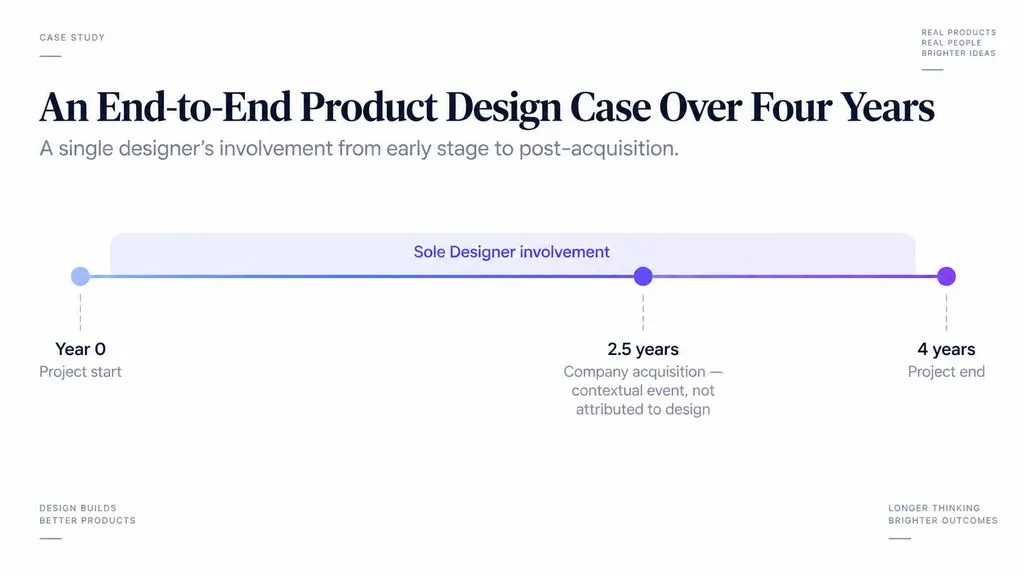
One practitioner case in our source review followed a sole designer working on a product for roughly four years. The role covered stakeholder feedback, customer feedback analysis, workshops, research, user testing, journey improvements, UI, and direct collaboration with developers.
The workflow was effectively:
Feedback and evidence → research → problem exploration → testing → journey changes → UI → engineering collaboration
The company was acquired roughly 2.5 years into the period described, but there is no evidence that design caused the acquisition. The case is useful because it shows the breadth of real Product Design ownership without turning correlation into a business-impact claim.
How to Evaluate Product Design Ownership
A useful way to evaluate a Product Designer role is to ask:
- Does the designer help define the problem?
- Can the designer challenge or reshape requirements?
- Does the role include both UX and UI decisions?
- Does the designer collaborate with engineering during implementation?
- Does design ownership continue after launch?
The more of these responsibilities the role includes, the closer it is to end-to-end Product Design.
What Is the Product Design Process?
A practical Product Design process moves from understanding a problem to validating, building, and improving a solution.
The process is iterative rather than perfectly linear.
Define the Product Problem
Start with the problem rather than a predefined interface.
“Design a dashboard” assumes a solution.
“Users cannot identify which projects require attention without opening several pages” defines a problem.
The second framing creates room to explore different solutions before committing to one.
Research Users and Existing Behavior
Research may include interviews, analytics, support requests, observation, surveys, usability sessions, and competitor analysis.
The objective is not research documentation for its own sake. Useful research changes a product decision.
Turn Research Into Product Decisions
Research tells a team what is happening. Product judgment determines what to do next.
Designers need to decide which problem matters most, which users should be prioritized, which assumptions remain uncertain, and which constraints cannot be ignored.
Research is evidence. It is not automatically a decision.
Explore UX Before Polishing UI
Low-fidelity wireframes and flows make structural changes cheaper.
Teams can compare different approaches to navigation, task sequence, information hierarchy, and error recovery before investing heavily in visual polish.
This avoids a common failure pattern: making the first idea progressively prettier without proving it is the right idea.
Prototype, Test, and Refine
Prototypes turn assumptions into something users can experience.
Low-fidelity prototypes help test structure. Higher-fidelity prototypes can test interaction behavior, hierarchy, comprehension, and realistic tasks.
Testing exposes the gap between what seems obvious to the product team and what users actually understand.
Collaborate With Engineering and Iterate
Product Design should not end at handoff.
Implementation introduces loading states, errors, permissions, empty states, real data, responsive behavior, accessibility, and technical constraints that static mockups may not reveal.
Product Design therefore continues through engineering collaboration, QA, launch, and iteration.
Product Designer vs UX Designer vs UI Designer: What Is the Difference?
The main difference is usually scope, not seniority.
A UI Designer focuses primarily on interface appearance and visual behavior, including typography, layout, components, hierarchy, and states.
A UX Designer typically focuses on research, IA, flows, interaction, usability, and the overall experience.
A Product Designer may cover both areas while also participating in problem definition, product tradeoffs, engineering collaboration, and post-launch iteration.
Why Product Designer and UX Designer Roles Overlap
Our review of practitioner questions found both extremes: UX Designers responsible for complete product lifecycles and Product Designers whose daily work was largely UI design.
That means rigid statements such as “Product Designers always own strategy” are unreliable. Actual responsibilities often depend on the broader design workflow.
A better working model is:
UI focuses on the interface. UX focuses on the experience. Product Design focuses on the product problem and the complete solution.
Actual responsibilities still depend on team structure.
What Should a Product Design Portfolio Show?
A strong Product Design portfolio should demonstrate how evidence became decisions and how decisions became a product.
Our review identified a recurring hiring tension. One designer had experience across feedback analysis, workshops, research, user testing, journey redesign, developer collaboration, and UI but remained concerned that the portfolio was not visually strong enough. Another practitioner reported that a research-heavy portfolio struggled in Product Designer applications despite roles requiring both UX and UI skills.
These cases are not universal hiring benchmarks, but they reveal an important pattern.
Connect Research Directly to Design Decisions
A strong case study should make this progression clear:
Problem → evidence → decision → UX → UI → constraints → collaboration → outcome
If a portfolio shows only research, reviewers may struggle to evaluate craft.
If it shows only polished screens, they cannot see whether the designer understood the problem.
The strongest portfolios demonstrate both decision quality and visual execution.
How Do Product Designers Work With Jira, Agile, and Engineering?
Design and engineering often operate at different rhythms.
Engineering tasks benefit from defined scope and completion criteria. Design exploration contains more uncertainty because research, testing, or engineering feedback can invalidate an approach.
Our workflow review found teams connecting Jira tasks with research and Figma artifacts. Some kept design approximately one sprint ahead of development, while one practitioner reported keeping individual design tickets within roughly two weeks.
These are workflow examples, not universal benchmarks.
Why Product Design Is Not a Linear Production Line
Research can invalidate a feature. Testing can invalidate a flow. Engineering can expose a constraint. New evidence can change priorities.
Project-management tools work best when they provide visibility into problems, decisions, dependencies, and readiness rather than forcing exploration into a fixed sequence.
How Is AI Changing Product Design in 2026?
AI is reducing the cost of moving from an idea to an interactive product, which is changing the boundary between design and development.
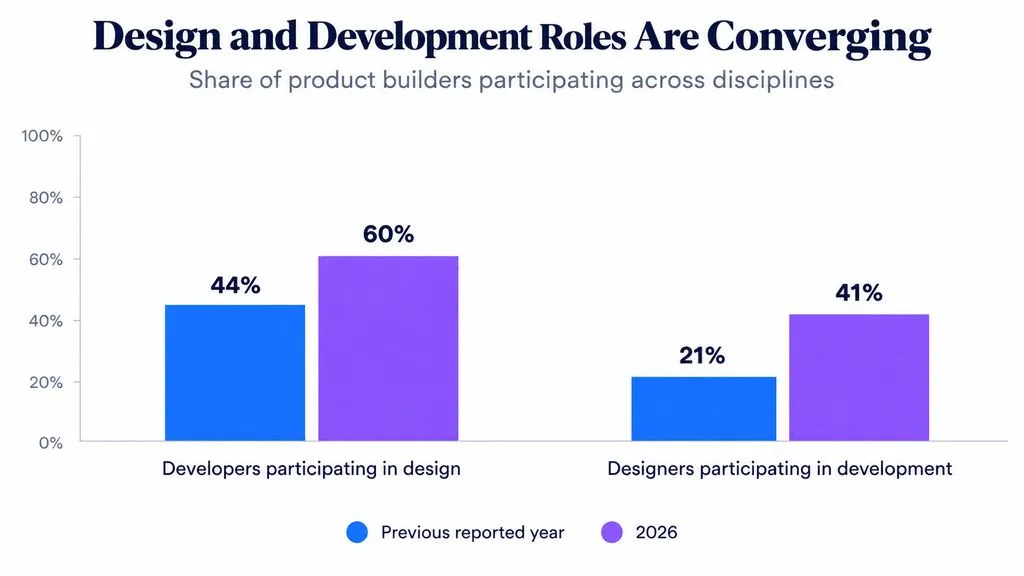
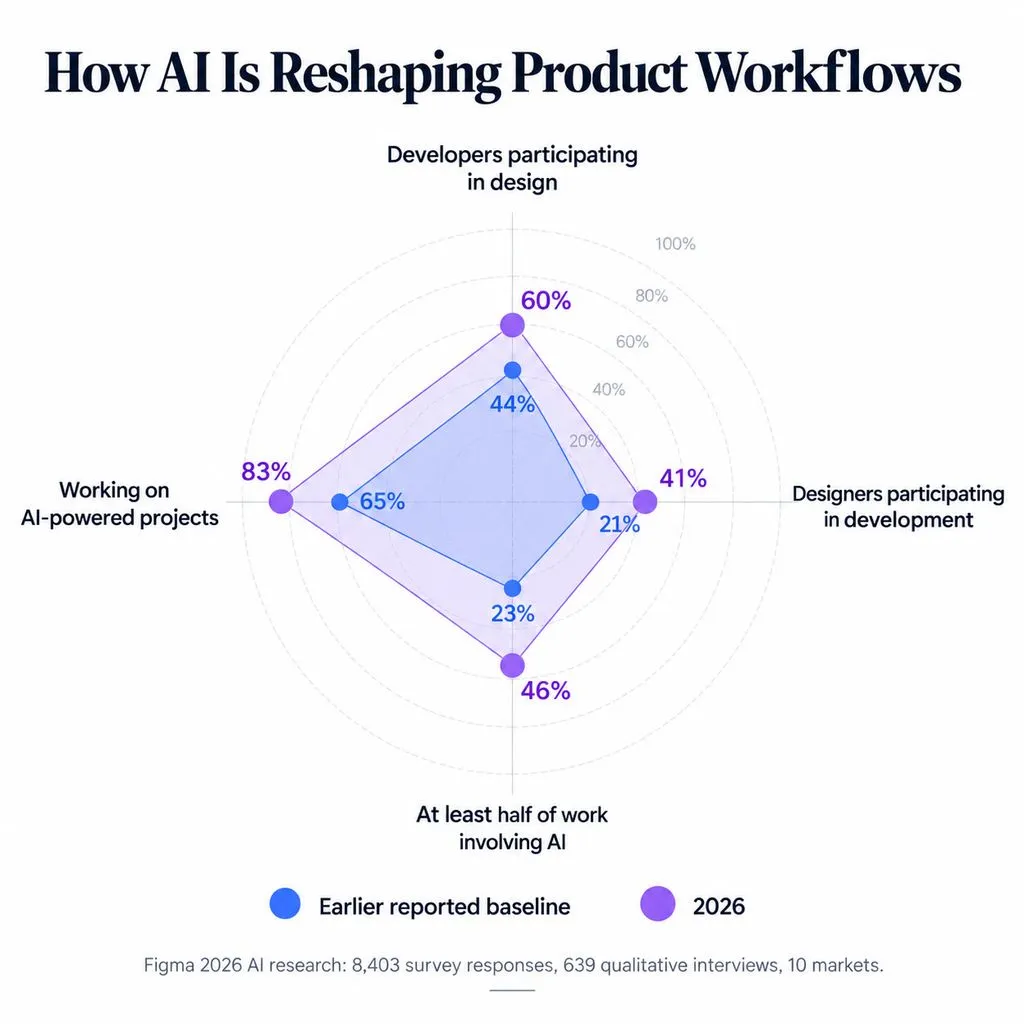
Figma’s 2026 AI research included 8,403 survey responses and 639 qualitative interviews across 10 markets. It found that developer participation in design increased from 44% to 60%, while designer participation in development increased from 21% to 41% in one year.
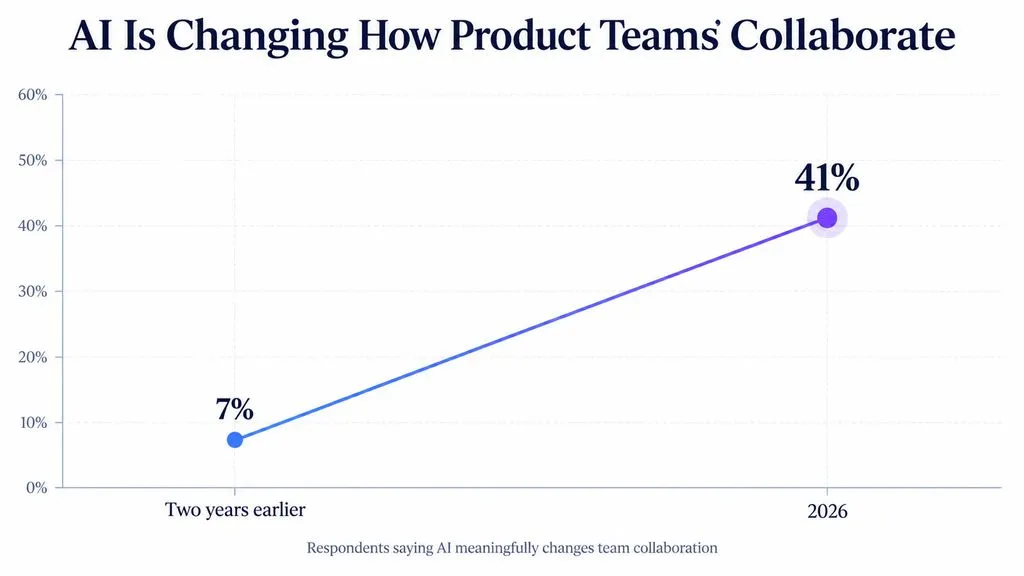
The same research found that 41% of respondents said AI meaningfully changes how teams collaborate, compared with 7% two years earlier.
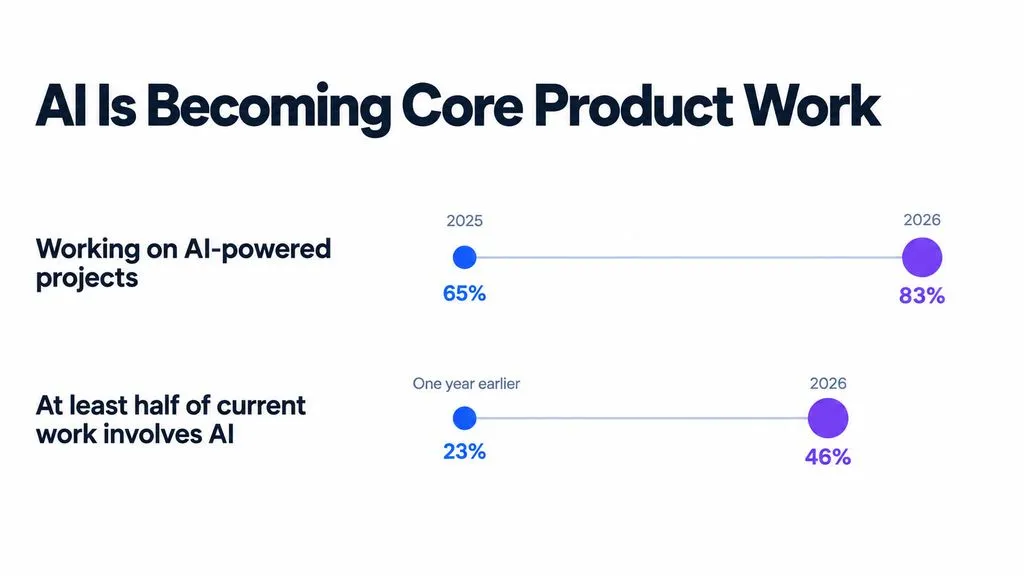
Figma also reports that 83% of product builders are working on AI-powered projects, up from 65% in 2025, while 46% say at least half of their work involves AI products or features, compared with 23% a year earlier.
From Figma Prototype to Functional Prototype
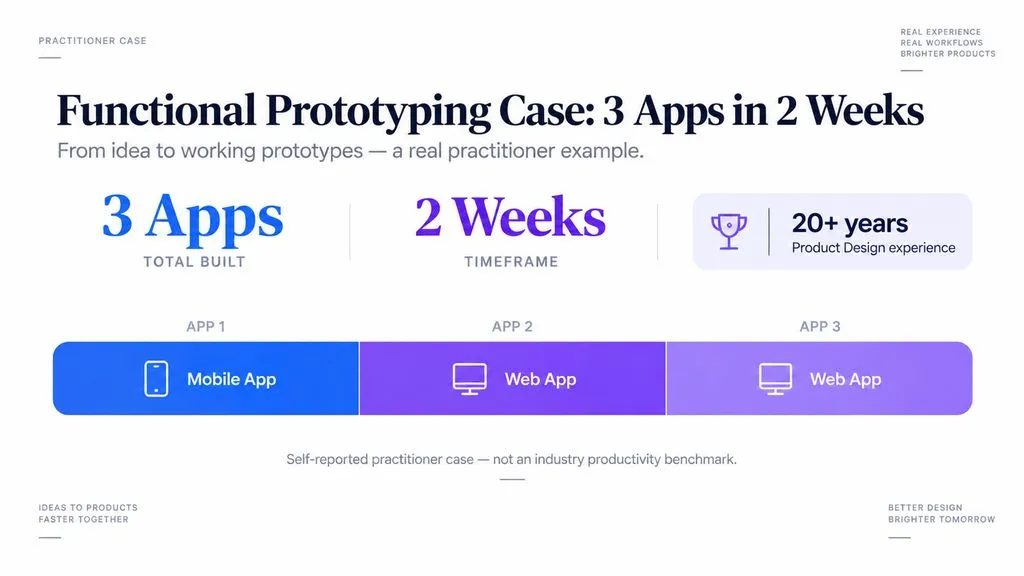
One practitioner case involved a Product Designer with 20+ years of experience experimenting with Cursor. The designer reported creating three apps in two weeks: one mobile app and two web apps.
This is a self-reported case, not an industry productivity benchmark. The available evidence does not provide independent comparisons of complexity, production readiness, quality, or business impact.
Its value is the workflow change.
Traditional workflow:
Design → prototype → handoff → engineering translation
Emerging AI-assisted workflow:
Idea → functional prototype → test → refine with engineering
Functional prototypes let interaction behavior become part of design exploration earlier.
AI Speeds Up Execution but Not Product Discovery
Faster interface generation creates a new risk: moving directly from requirements to generated solutions.
Our review of emerging workflows repeatedly surfaced concerns about skipped research, weak problem definition, and premature commitment to generated UI.
My practical rule is simple: use AI to reduce the cost of generating, comparing, and testing solutions, not to remove the work required to understand the problem.
As execution gets cheaper, product judgment becomes more valuable.
What Product Design Skills Matter Most Today?
The most durable Product Design skills are not tied to a specific tool.
- Research and synthesis separate evidence from assumptions.
- Problem framing turns vague feature requests into useful product questions.
- UX thinking structures information, flows, and interactions.
- Visual design creates hierarchy, consistency, clarity, and trust.
- Prototyping makes assumptions testable before implementation.
- Product judgment helps teams choose among competing solutions and constraints.
- Technical literacy improves collaboration with engineering.
- Communication helps designers explain why a decision exists rather than simply presenting the output.
AI can accelerate production, but it increases the number of possible solutions. That makes evaluation, prioritization, and judgment even more important.
FAQ
Is Product Design the Same as UX?
No. UX generally focuses on research, IA, user flows, interaction, and usability. Product Design can include those responsibilities while extending into product decisions, UI, technical tradeoffs, engineering collaboration, and post-launch iteration. In practice, UX and Product Designer roles often overlap.
Does a Product Designer Need to Know UI?
For many digital Product Designer roles, yes. Our review of hiring-related practitioner questions found that candidates are often expected to demonstrate both UX reasoning and polished UI execution. The exact balance varies by company, but portfolios focused only on research or only on visual work may not communicate full end-to-end capability.
Does a Product Designer Need to Code?
Not necessarily. Coding is not a universal requirement, but technical literacy is increasingly useful. Figma’s 2026 research found designer participation in development rising from 21% to 41% in one year. AI-assisted development also makes functional prototyping more accessible without requiring every designer to become a production engineer.
How Can I Tell Whether a Product Designer Job Is Really Product Design?
Look beyond the title. Check whether the role participates in problem definition, research, UX and UI, engineering collaboration, and post-launch iteration. Also ask whether designers can challenge requirements or only execute predefined solutions. Broader responsibility across the lifecycle usually indicates stronger Product Design ownership.
Conclusion
Product Design is the end-to-end discipline of connecting user problems, evidence, product decisions, UX, UI, technical feasibility, implementation, and continuous learning. A Product Designer is not defined by Figma, a job title, or the ability to create polished screens, but by how effectively they move from understanding a problem to shaping, validating, shipping, and improving a solution. As AI makes interfaces and functional prototypes faster to produce, the differentiating skill becomes even clearer: knowing what problem deserves attention, which solution is worth pursuing, what tradeoffs to make, and what evidence should change the decision.
More from the Virse Blog
Product
GPT Image 2.5 Pricing: Flare vs Sunburst & the Real Cost per Image
September 14, 2026 by Vincent
Product
GPT Image 2.5 Review: Does It Finally Fix AI Image Editing Drift?
September 14, 2026 by Vincent
Product
How Much Is Kling 3.0? 2026 Pricing, Credits, and Real Cost per Video
September 8, 2026 by Yifan Zhao